
Best time to travel in Alpe di Siusi (Seiser Alm)?
→ The detailed month-by-month page, with 2015-2024 averages
Best time: June to September
Best avoided if possible: November to April (less pleasant weather or big crowds).
Temperatures and rainfall modelled for Compaccio · averages over recent years, Open-Meteo data (ERA5 reanalysis).
Sunny, windswept high pasture: mild summers, late-afternoon storms, spectacular wildflowers in June and snow cover from December to April. The best time to visit the Alpe di Siusi is June, July, August and September, with temperatures reaching 18-23°C (summer on the plateau). Conversely, January, February, March, April, May, October, November and December are generally less favourable (less pleasant weather or heavy crowds, depending on the destination), although a trip is still possible with some planning. In high season, book early: prices and crowds climb fast.
Go against the flow. To avoid the crowds without sacrificing too much on the weather, aim for May and October: the crowds thin out, prices drop too, and the climate stays pleasant.
Do these months appeal to you? See what's best elsewhere too: where to go in June · where to go in July · where to go in August · where to go in September.
At a glance
Why go to Alpe di Siusi (Seiser Alm)?
The scale is what strikes you first. Fifty-six square kilometres of unbroken grassland, rolling between 1,680 and 2,350 m, without a single fence or electricity pylon across it: this is the largest high-altitude alpine meadow in Europe, and you can see it with your own eyes. The paths are wide, gently sloping and often passable by vehicles, so you can walk for four hours without ever suffering. It is one of the few high mountain areas where you can hike for a long time with young children or grandparents.
The second asset is the ban on cars. From 9 am to 5 pm every day, the road climbing from Siusi to Compaccio is closed to private vehicles, except residents and guests of the hotels on the plateau. So you go up by gondola or by bus, and once there you get around on foot, by shuttle or by lift. The result is a silence that is rare for somewhere this busy: no engines, no horns, just cowbells and the wind.
Finally, the scenery is framed by three very different massifs, all visible at once. The Sassolungo and Sassopiatto close off the east at 3,181 m, the Sciliar raises its two distinctive teeth above a massive base to the west, and the Denti di Terrarossa bristle to the south. Walking from one end of the plateau to the other means watching these three silhouettes slowly turn around you for hours.
Tourist map of Alpe di Siusi (Seiser Alm): what's where?
The map below pinpoints the 6 places covered in this guide: a handy way to picture the distances between each stop and plan your route in Alpe di Siusi (Seiser Alm).
- Compaccio
- Siusi allo Sciliar
- Rifugio Sanon
- Saltria
- Rifugio Zallinger
- Rifugio Alpe di Tires
How much does a trip to Alpe di Siusi (Seiser Alm) cost in 2026? Budget calculator
Estimate your budget for Alpe di Siusi (Seiser Alm) based on your travel style: accommodation, meals, activities and local transport included (flights excluded). Adjust the length and the number of travellers, and the totals update.
Totals for all travellers over the chosen length; the daily amount is per person. Flights extra, indicative amounts to adjust depending on the season.
Cards are accepted everywhere at the lifts and in the main huts, but keep some cash for the small malghe that sell milk, cheese and speck directly.
Safety in Alpe di Siusi (Seiser Alm): should you be worried?
The Alpe di Siusi is one of the safest areas in the Dolomites: wide paths, gentle slopes, huts close together and decent phone coverage. Two caveats all the same. Afternoon storms arrive fast and the plateau is completely exposed, with no trees or shelter for kilometres: set off early and watch the sky from 1 pm. The second point concerns the cows, roaming freely everywhere from June to September: keep your distance from calves, keep dogs on a short lead and give herds a wide berth rather than walking through them. Finally, check the time of the last shuttle to Compaccio, often 5.30 pm, or you will have to walk back from Saltria.
Things to see and do in Alpe di Siusi (Seiser Alm)
Our first-hand favourites, and the great classics:
- Compaccio, gateway to the plateau
- Siusi-Compaccio gondola
- Rifugio Sanon
- The Puflatsch and the witches' throne
- Saltria at the foot of the Sassolungo
- Rifugio Zallinger
- Rifugio Alpe di Tires
- Mont Sëuc, the way in from Ortisei
What to book before you go to Alpe di Siusi (Seiser Alm) →
🧭 Discover the Alpe di Siusi (Seiser Alm) itinerary, day by dayMap, timings, budget and where to stay: free to access, to fit your dates. Create my tailor-made itinerary →Compaccio, the gateway to the plateau
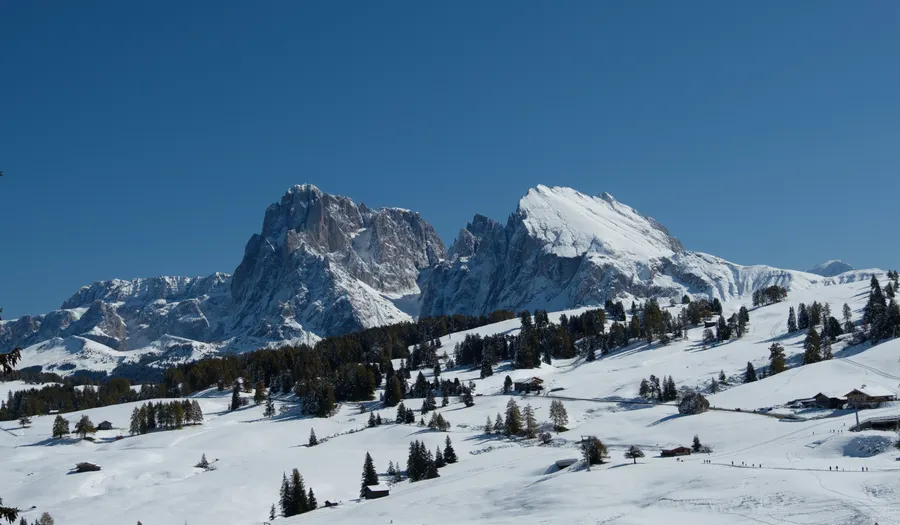
The hamlet of Compaccio, at 1,857 m, is where the gondola from Siusi arrives and the hub of the entire shuttle network. You will find a tourist office, a few hotels, e-bike hire shops and the start of most trails. It is not the prettiest spot on the plateau, more of a logistics base, but everything starts here. The gondola covers the 4.4 km and 800 m of ascent from Siusi in 15 minutes, for about €20 for an adult return and €13.50 single. The 2026 summer season runs from 21 May to 1 November.
The car ban
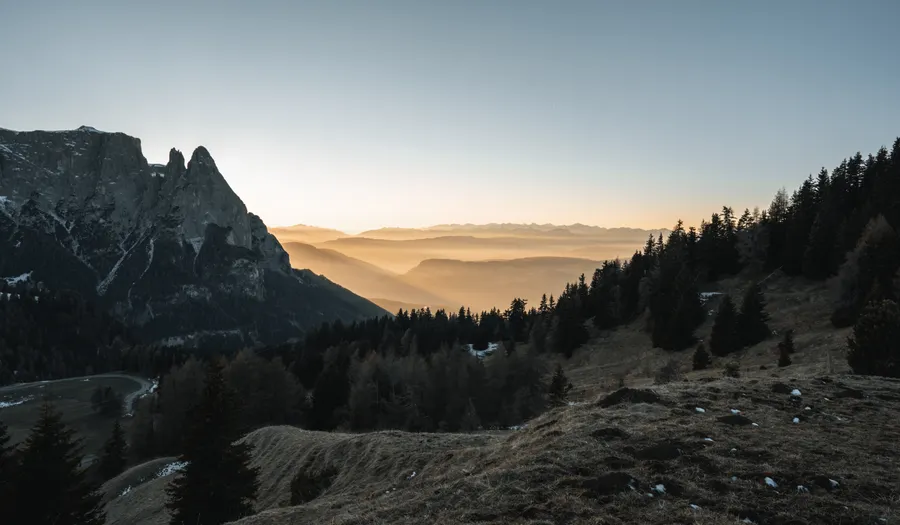
This rule shapes the whole visit: from 9 am to 5 pm, every day in summer and winter alike, the Siusi-Compaccio road is closed to private vehicles. Only residents and guests staying in accommodation on the plateau get a pass, and even then with set times for driving through. Outside these hours the road is open to all, which explains the stream of cars at 8.30 am and 5.05 pm. Note the seasonal nuance: in spring and late autumn, when the gondola stops running, the road is open all day again. A shuttle links Castelrotto, Fiè, Siusi and Passo Pinei to the valley station.
The Puflatsch
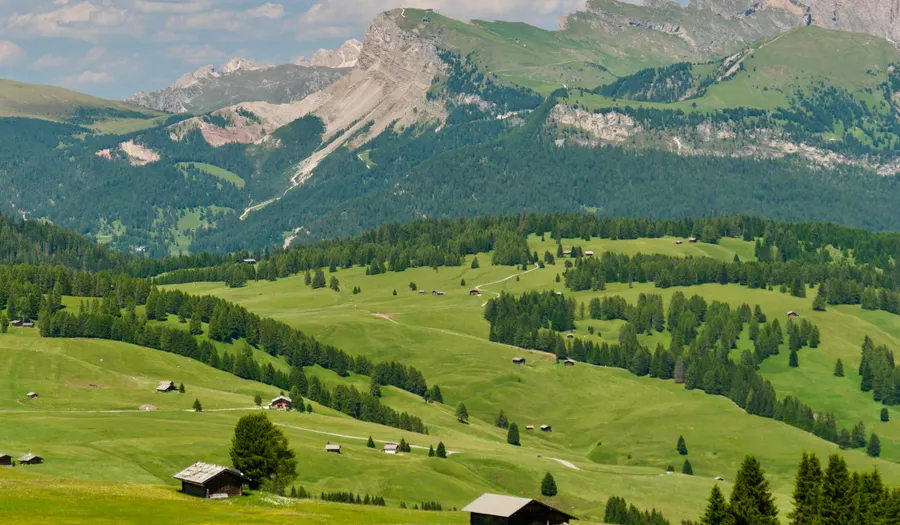
The grassy hump north of Compaccio, topping out at 2,177 m, reached by chairlift from 1,801 m or on foot in an hour. The summit plateau is flat and deserted as soon as you move away from the lift, and it offers the best overall view of the whole plateau, with the Sassolungo opposite. Here you will find the Hexenbänke, the witches' benches, a series of flat stone slabs linked to the Sciliar witch trials of the 16th century. The full loop of the plateau is about 6 km with 250 m of ascent, taking two hours on easy terrain.
Saltria and the foot of the Sassolungo
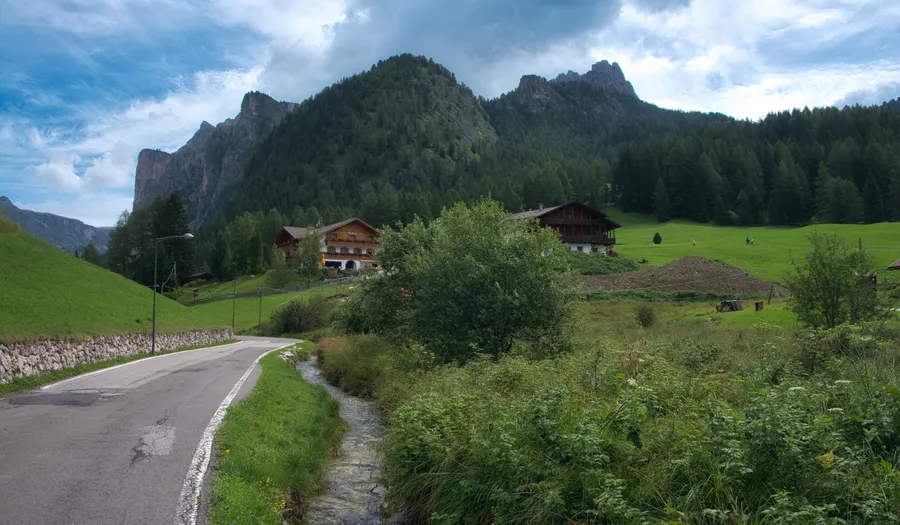
At the eastern end of the plateau, at 1,680 m, Saltria is the lowest point and the terminus of the shuttle from Compaccio. The contrast with the entrance to the plateau is striking: the larches return, the meadows narrow and the Sassolungo rises right above, enormous. It is the best starting point for the climb to Rifugio Zallinger and the Sassopiatto, and one of the most photogenic places on the plateau in the late afternoon, when the light slips through the pass between the Sassolungo and the Sassopiatto. The little Zallinger chapel, higher up, has become a much-copied image.
Rifugio Zallinger
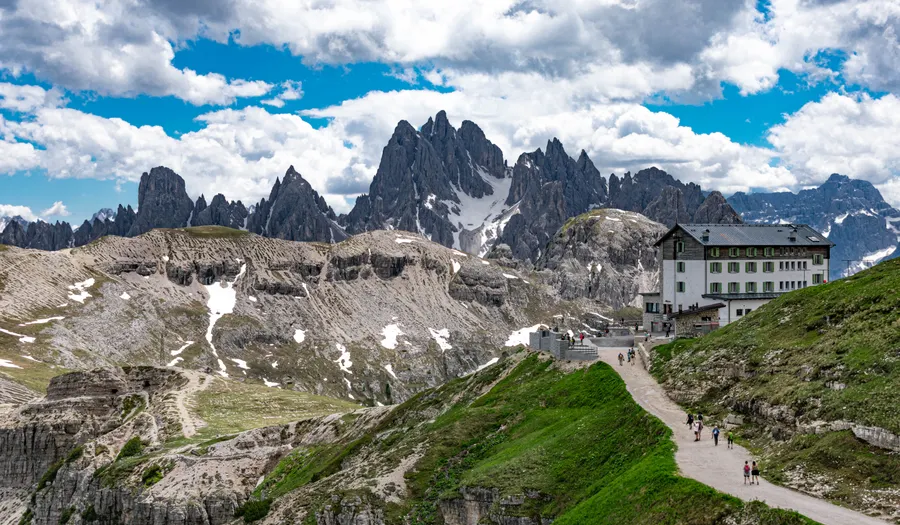
Perched at 2,054 m on the south-eastern slope of the plateau, this wooden hut-hotel is one of the most sought-after addresses in the area. You walk up from Saltria in an hour and a quarter on a wide path, or take a chairlift for part of the way. The terrace faces the Sassopiatto, and the place has moved towards a level of comfort unusual for a mountain hut, with private rooms and a sauna. Right next door, the Zallinger chapel, tiny and set in the grass, is everyone's favourite photo subject. Book several months ahead to stay here in August.
Rifugio Alpe di Tires

The high point of the plateau, at 2,440 m, in the pass separating the Sciliar from the Denti di Terrarossa. The building with its bright red roof can be seen from far away and marks the way through to Val di Tires and the Catinaccio. You climb up from Saltria or Compaccio in 2h30 to 3 hours, with 600 to 700 metres of ascent, on a path that becomes distinctly stony in the last hour. It is the most demanding route on the plateau and the one that gives the strongest feeling of high mountains, with the Denti di Terrarossa rising just above.
How many days, and which itinerary in Alpe di Siusi (Seiser Alm)?
One day lets you cross the plateau from Compaccio to Saltria; two days with a night in a hut add the Puflatsch and the Alpe di Tires without rushing.
🗺️ Day-by-day Alpe di Siusi (Seiser Alm) itinerary · 📓 Printable Alpe di Siusi (Seiser Alm) travel guide (PDF) · 🌍 Discover all of the Dolomites
The classic traverse (1 day)
First gondola from Siusi to Compaccio, walk east via Rifugio Sanon and the central meadows, lunch in a hut, down to Saltria and back by shuttle. Around 12 km, almost flat, five hours with breaks, doable with a family.
A night on the plateau (2 days)
Drive up in the late afternoon with your hotel's pass, have dinner and spend the night at Rifugio Zallinger or in a hotel in Compaccio, watch the sunrise on the Sassolungo with not a soul around, then a big loop via the Alpe di Tires the next day. The format that changes everything.
Plateau and Sciliar (3 days)
A warm-up day on the Puflatsch, a full traverse to Saltria and Zallinger, then the ascent of the Sciliar via Rifugio Bolzano at 2,457 m. Stay in Siusi or Castelrotto, both much cheaper than Val Gardena.
How to get to Alpe di Siusi (Seiser Alm) and get around?
The Siusi-Compaccio road is closed to cars from 9 am to 5 pm every day, except residents and guests of accommodation on the plateau holding a pass.
Siusi-Compaccio gondola: 4.4 km and 800 m of ascent in 15 minutes, about €20 return and €13.50 single, running from 21 May to 1 November 2026.
On the plateau, a shuttle links Compaccio to Saltria all day, backed up by several chairlifts (Panorama, Puflatsch, Spitzbühl) included in the day passes.
A second way in from the north: the Mont Sëuc gondola from Ortisei arrives at 2,005 m on the edge of the plateau, for around €35-40 return.
Where to stay in Alpe di Siusi (Seiser Alm)?
Rifugio Zallinger, at 2,054 m facing the Sassopiatto: €110-180 half board with a private room and sauna, to be booked months ahead.
Hotels in Compaccio, on the plateau itself: €150-260 a night, but they issue the pass that lets you drive up outside the closure hours.
Rifugio Alpe di Tires, 2,440 m up in the pass: €60-80 half board, the choice for hikers continuing towards the Catinaccio.
Siusi allo Sciliar and Castelrotto, lower down: €90-160 a night, with the Combi Card that includes the gondola and local buses.
Our picks stop by stop, in three price ranges →
What to eat in Alpe di Siusi (Seiser Alm)?
Spätzle and Schlutzkrapfen in the malghe on the plateau, between €12 and €15, with the view thrown in for free.
Graukäse, the fermented grey cheese of South Tyrol, served as a salad with onion and vinegar, €9-12 and very distinctive.
Home-smoked speck and crunchy rye bread, the late-afternoon Marende served by almost every baita, around €14.
Fresh milk and alpine yoghurt sold directly at some farms on the plateau, €2 to €4, to enjoy on the spot.
Which kind of traveller is it for?
The Alpe di Siusi lends itself to a nature-focused, relaxing and active trip. Whether you go with family, as a couple or even with friends, everyone can find their own pace there. As for accommodation, it is mostly classic hotels, lodges and boutique hotels.
Entry requirements & practical info
Schengen area: an ID card or passport for EU citizens, 90 days visa-free for UK, US, Canadian and Australian passports.
Rules change: before you leave, check your country's official travel advice.
Frequently asked questions about Alpe di Siusi (Seiser Alm)
Can you drive up onto the Alpe di Siusi?
Not between 9 am and 5 pm: the Siusi-Compaccio road is then closed to private vehicles. Only residents and guests of accommodation on the plateau have a pass. Before 9 am and after 5 pm, the road is open to everyone.
How do you get up there and how much does it cost?
The gondola from Siusi reaches Compaccio in 15 minutes for about €20 for an adult return and €13.50 single, from 21 May to 1 November 2026. From Ortisei, the Mont Sëuc gondola arrives at the north of the plateau for €35 to €40 return.
Is it suitable for children or less experienced walkers?
Yes, it is in fact one of the few areas of the Dolomites that genuinely is. The paths are wide and gently sloping, the huts are close together and the shuttles let you cut a route short at any time.
How long does it take to cross the plateau?
From Compaccio to Saltria, allow about 12 km and five hours with breaks, on almost flat terrain. The shuttle then takes you back to Compaccio in around twenty minutes.
What is the best time to go?
Late June for the meadows in flower, or late September for the low light and golden pastures. July and August are still very beautiful, but visitor numbers double and accommodation on the plateau is booked months in advance.
Similar destinations
 Region
🇫🇷 The French Basque Country
 City
🇮🇪 Donegal
 City
🇮🇪 The Ring of Kerry
 City
🇮🇪 Galway and Connemara
 City
🇦🇹 Hallstatt and the Salzkammergut
 City
🇫🇷 Annecy
 Region
🇸🇮 Lake Bled
 Region
🇭🇷 Plitvice Lakes
 Region
🇫🇷 The Ardèche
 Region