When to go to Luxor and the Nile Valley?
→ The detailed month-by-month page, with real weather records
Best time: October to March
At a glance
Why go to Luxor and the Nile Valley?
Luxor is an open-air museum, often described as the greatest concentration of ancient monuments in the world. Built on the site of ancient Thebes, capital of the pharaohs, the city lines up colossal temples and fabulous tombs. Here you literally walk in the footsteps of Egypt's kings, between the Nile and the desert. No other destination offers such a deep dive into pharaonic civilisation.
The Nile Valley unrolls a timeless backdrop, where feluccas and green fields line the life-giving river. The east bank gathers the temples of the living, while the west bank holds the royal necropolises. This symbolic layout, between the rising and setting sun, still shapes a visit today. The Nile remains the thread running through any exploration.
Travelling to Luxor also means living suspended moments, from a hot-air balloon flight at sunrise to a peaceful cruise on the river. The golden light brings out the ancient hieroglyphs and gigantic columns. The emotion runs high in front of treasures more than three thousand years old. You come home lastingly marked by the grandeur of ancient Egypt.
Map of Luxor and the Nile Valley: what is where?
The map shows the 6 places covered in this guide, to picture the distances and plan your route.
- Karnak Temple
- Valley of the Kings
- Luxor Temple
- Temple of Hatshepsut
- Colossi of Memnon
- Nile Corniche (Luxor)
How much does a trip to Luxor and the Nile Valley cost?
Luxor is an inexpensive destination where temple visits are the main expense.
| Style | Per day | What it covers |
|---|---|---|
| Backpacker | €30-50/day | hostel, local meals and a few major sites |
| Comfort | €90-150/day | hotel with a view, guide and entry to most sites |
| Premium | €300+/day | luxury hotel, hot-air balloon and private cruise |
Bring Egyptian pounds in cash for tips, entrance fees and small purchases.
Is Luxor and the Nile Valley safe?
Luxor is a generally safe tourist city, with a strong police presence around the sites. The main annoyance comes from very pushy vendors and touts, especially near the temples and on the west bank, who should be turned down firmly and courteously. The summer heat means staying well hydrated and protecting yourself from the sun. It is advisable to check official travel advice before leaving and to respect local customs.
What to see and do in Luxor and the Nile Valley
- the Valley of the Kings
- Karnak Temple
- Luxor Temple
- a Nile cruise
- a hot-air balloon flight
Karnak Temple
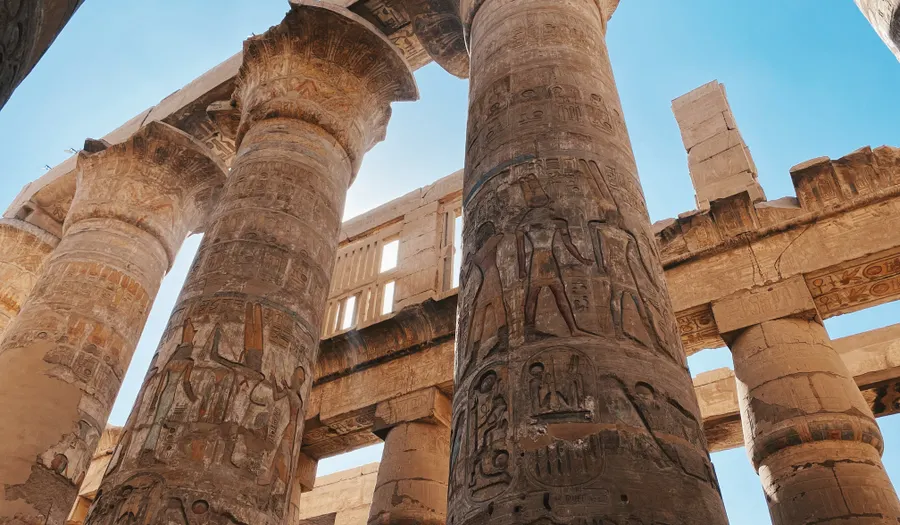
The Karnak complex is the largest religious ensemble of antiquity, dedicated to the god Amun. Its hypostyle hall lines up a hundred and thirty-four gigantic columns of dizzying height. Built over nearly two thousand years, the site impresses with its colossal proportions. A visit at sunset or during the night show is spellbinding.
Valley of the Kings

This west-bank necropolis holds the tombs of the New Kingdom pharaohs, including Tutankhamun. Cut into the rock, the burial chambers reveal frescoes and hieroglyphs with their colours preserved. Several tombs are open to visitors, each telling the story of the journey to the afterlife. The site remains one of the most fascinating in Egypt.
Luxor Temple

In the very heart of the city, Luxor Temple is linked to Karnak by a recently restored avenue of sphinxes. Its monumental pylons, its colossi of Ramesses II and its obelisk are hugely impressive. Lit up at night, it puts on a magical show on the banks of the Nile. It is a must-see, easily reached on foot.
Temple of Hatshepsut
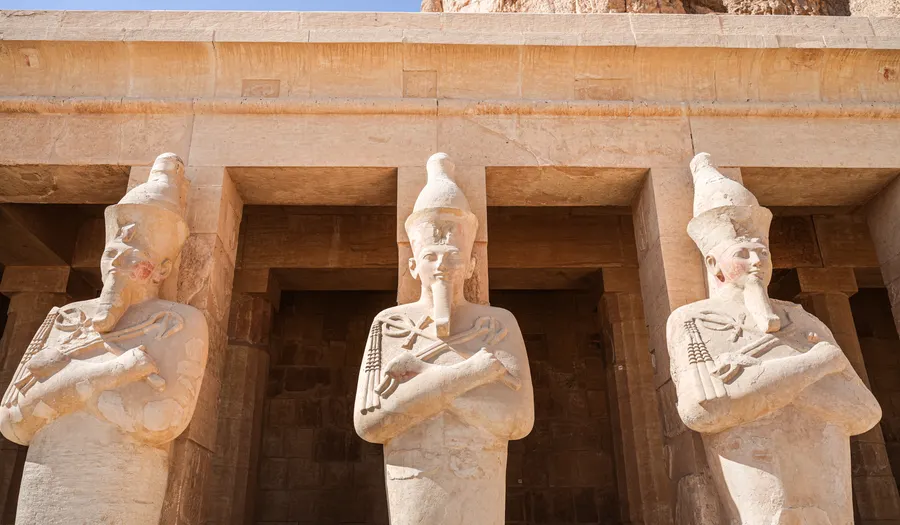
Set against the cliffs of Deir el-Bahari, the temple of Queen Hatshepsut wins you over with its terraced architecture. Its vast ramps and colonnades blend beautifully into the desert landscape. This masterpiece honours one of the rare female pharaohs. The morning light reveals it in all its splendour.
Colossi of Memnon

These two monumental statues, more than eighteen metres tall, have watched over the west bank for three thousand four hundred years. They once guarded the entrance to the mortuary temple of Amenhotep III, which has since vanished. Their imposing silhouettes mark the entrance to the Theban necropolis. They are an essential photo stop on the west bank.
West bank and feluccas on the Nile

A felucca crossing links the two banks in a peaceful, timeless atmosphere. You watch the sun set over the river, among white sails and green banks. Sailing gives you a unique view of Luxor. It is the ideal complement to the temple visits.
How many days, and which itinerary?
Three to four days let you discover both banks of Luxor and the Nile Valley.
🗺️ Day-by-day itinerary · 📓 Free printable Luxor and the Nile Valley guide (PDF) · 🌍 All of Egypt
Essential Luxor (2 days)
Explore the east bank with the temples of Karnak and Luxor on the first day. Devote the second to the west bank, taking in the Valley of the Kings, the Temple of Hatshepsut and the Colossi of Memnon.
Luxor and the Nile (4 days)
Add a hot-air balloon flight at sunrise, a felucca trip and a more in-depth visit of the tombs. The pace leaves room for contemplation.
Nile cruise (5 days)
Board a cruise from Luxor to Aswan with stops at Edfu and Kom Ombo. This option combines comfort, sailing and the valley's major temples.
Getting there and getting around
Taxis and horse-drawn carriages handle short trips on Luxor's east bank.
A public ferry and boats link the two banks of the Nile for a few Egyptian pounds.
Hiring a driver for the day makes visiting the west-bank sites easier.
The night train links Cairo with Luxor, while flying cuts the journey to one hour.
Where to stay in Luxor and the Nile Valley?
Hostels and simple hotels: €15-35 a night, often with a Nile view.
Comfortable mid-range hotels: €50-100 for a double room.
Historic hotels and upmarket resorts: €150-300 a night.
All-inclusive Nile cruises: €80-200 per person per night.
Our places to stay, stop by stop, at three budgets →
What to eat in Luxor and the Nile Valley?
Koshari, the national dish of rice, pasta and lentils, is filling and cheap.
Grilled chicken and stuffed pigeon are served in local restaurants.
Ful medames, a spiced fava bean purée, is a staple of the Egyptian breakfast.
Sugar cane and hibiscus juices refresh you on hot days.
Entry requirements
A visa is needed by EU, UK, US, Canadian and Australian passports: an e-visa bought online before you fly, or a visa on arrival paid in US dollars cash at the airport kiosks. The e-visa saves the queue.
Rules change: check your own government's travel advice before you go.
Frequently asked questions about Luxor and the Nile Valley
When is the best time to visit Luxor?
From November to February, the climate is pleasant and ideal for outdoor visits. Avoid summer, when the heat can exceed forty degrees and make the days exhausting.
How many days should I spend in Luxor?
Three to four days are enough to explore both banks without rushing. Add time for a Nile cruise to Aswan if you wish.
What is the daily budget in Luxor?
Allow around €40 a day as a backpacker, €120 for a comfortable stay and over €300 at the top end. Site entrance fees are the main expense.
How do I get around Luxor?
On the east bank, taxis and horse-drawn carriages cover short trips, while a ferry crosses the Nile. For the west bank, it is best to hire a driver for the day to link the sites.
Which area should I stay in in Luxor?
The east bank, near the Corniche and Luxor Temple, is ideal for buzz and amenities. The quieter west bank appeals to those looking for calm and proximity to the tombs.
Similar destinations
 City
City🇲🇦 Marrakech
 City
City🇬🇧 Edinburgh
 Country
🇲🇦 Morocco
 City
City🇲🇦 Merzouga and Erg Chebbi
 Country
🇹🇳 Tunisia
 City
City🇪🇬 Cairo
 Country
🇯🇴 Jordan
 Country
🇨🇳 China
 Country
🇺🇸 The American West
 Country