When to go to Merzouga and Erg Chebbi?
→ The detailed month-by-month page, with real weather records
Best time: March to April and October to November
At a glance
Why go to Merzouga and Erg Chebbi?
The Merzouga desert is the Moroccan Sahara just as you picture it, with the immense golden dunes of Erg Chebbi. These mountains of sand, rising to more than a hundred and fifty metres, change colour throughout the day. People come for the magical experience of a night under the stars, far from any light pollution. It is an unforgettable encounter with vastness and silence.
Merzouga is the gateway to a living desert, home to Berber nomads and dromedary caravans. Crossing the dunes at sunset, then spending the night in a bivouac tent, ranks among the most powerful memories of any trip to Morocco. Sunrise over Erg Chebbi is a magnificent spectacle. The hospitality of the locals adds to the magic of the place.
Beyond the dunes, the region hides oases, seasonal lakes and mud-brick villages to explore. Gnawa culture, the rhythm of the drums and nomadic traditions enrich the experience. Whether you come for 4x4 adventure, meditation or stargazing, Merzouga leaves a lasting mark. It is somewhere utterly other, on the edge of the world.
Map of Merzouga and Erg Chebbi: what is where?
The map shows the 6 places covered in this guide, to picture the distances and plan your route.
- Erg Chebbi dunes
- Merzouga village
- Lake Dayet Srji
- Khamlia
- Erg Chebbi (north summit)
- Hassilabied
How much does a trip to Merzouga and Erg Chebbi cost?
A stay in Merzouga can be very affordable or far more luxurious depending on the type of bivouac you choose.
| Style | Per day | What it covers |
|---|---|---|
| Backpacker | €40-70/day | simple guesthouse and standard bivouac with meals |
| Comfort | €100-160/day | comfortable camp, 4x4 excursion and guide |
| Premium | €280+/day | luxury camp, private transfers and tailor-made experiences |
Bring cash in dirhams, as ATMs are rare and cards are seldom accepted.
Is Merzouga and Erg Chebbi safe?
The Merzouga desert is a safe destination, as long as you rely on trustworthy guides and agencies. The main risks are heat, dehydration and disorientation: never venture into the dunes alone. Bring plenty of water, sun protection and warm clothes for the chilly nights. If you follow your guides' instructions, the experience is entirely stress-free.
What to see and do in Merzouga and Erg Chebbi
- the Erg Chebbi dunes
- a dromedary ride
- a bivouac under the stars
- sunrise over the dunes
- Gnawa music
Erg Chebbi dunes

Erg Chebbi is the jewel of the Merzouga desert, an ocean of dunes rising to more than a hundred and fifty metres. Their colour shifts from gold to pink and then ochre with the daylight. Climbing to the top of a dune at sunset is a magical moment. It is the dream setting of the Moroccan Sahara.
Desert bivouac

Spending the night in a Berber camp deep in the dunes is the signature Merzouga experience. In a comfortable tent, you dine to the sound of Gnawa drums before gazing at an exceptional starry sky. The silence of the desert envelops everything. Waking up to the sunrise rewards every traveller.
Dromedary ride

A dromedary caravan is the traditional way to reach the bivouac at sunset. Lulled by the animals' slow gait, you cross the dunes in an unreal golden light. Nomad guides share their knowledge of the desert. The experience immerses you in the authentic atmosphere of the Sahara.
Merzouga village
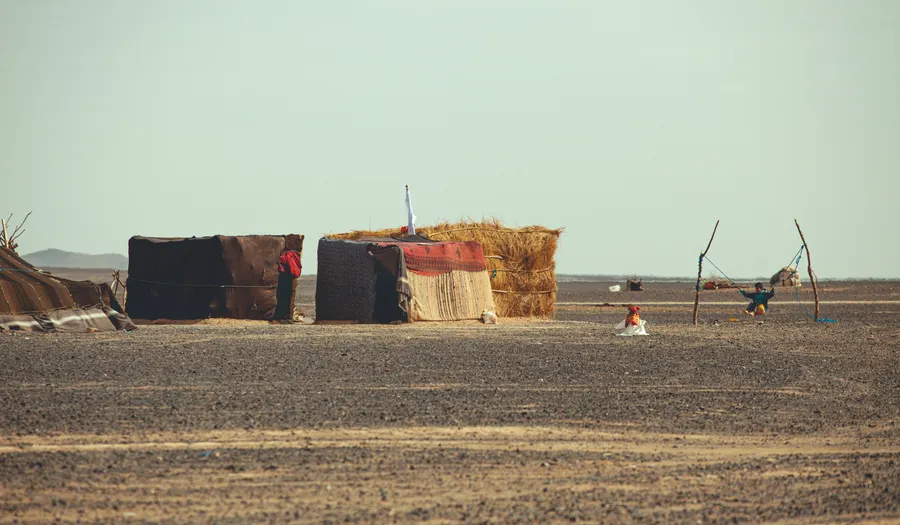
The starting point for excursions, Merzouga village gathers guesthouses, stalls and cooperatives. You get a feel for daily life on the edge of the desert, among earthen houses and palm groves. It is the ideal place to kit yourself out and get organised before the adventure. The locals give you a warm welcome.
Lake Dayet Srji

This seasonal lake, which fills after the winter rains, attracts surprising wildlife in the middle of the desert. In spring you can spot pink flamingos and many migratory birds. The contrast between water, sand and dunes is striking. Birdwatchers love the site.
Khamlia and Gnawa music

The small village of Khamlia, south of Merzouga, is famous for its Gnawa culture. Descended from sub-Saharan slaves, its inhabitants keep alive hypnotic songs and dances. You can attend intimate concerts over a glass of mint tea. The place offers a moving insight into a living tradition.
How many days, and which itinerary?
Two days with one night in a bivouac is the ideal way to discover Merzouga.
🗺️ Day-by-day itinerary · 📓 Free printable Merzouga and Erg Chebbi guide (PDF) · 🌍 All of Morocco
A night in the dunes (2 days)
Ride a dromedary to the bivouac at sunset, dine under the stars and watch the day break over Erg Chebbi. You head back the following morning.
Saharan immersion (3 days)
Add a day exploring by 4x4 the nomad villages, Lake Dayet Srji and Khamlia for a Gnawa concert. You take time to really feel the culture of the desert.
Desert road from Marrakech (4 days)
Drive from Marrakech to Merzouga through the Dades Valley and the Todgha Gorge, with a night in a bivouac. The spectacular journey is an integral part of the adventure.
Getting there and getting around
Most travellers arrive on an organised tour from Marrakech or Fez.
The drive from Marrakech takes about nine hours via Ouarzazate and the Dades Valley.
Once there, outings are by dromedary or by 4x4 with a local guide.
A flight to Errachidia followed by a road transfer significantly cuts the journey time.
Where to stay in Merzouga and Erg Chebbi?
Simple guesthouses in Merzouga: €20-40 a night before or after the bivouac.
Standard bivouac in the dunes: €40-80 per person, meals included.
Luxury camps with furnished tents and private bathrooms: €120-250.
Kasbahs and charming guesthouses on the edge of the desert: €60-130.
Our places to stay, stop by stop, at three budgets →
What to eat in Merzouga and Erg Chebbi?
Tagine simmered under the tent is the convivial dish shared at the bivouac.
Madfouna, known as Berber pizza, is a stuffed speciality baked under the sand.
Mint tea punctuates every break and seals nomadic hospitality.
Local dates and olive oil accompany desert meals.
Entry requirements
90 days visa-free with a passport for EU, UK, US, Canadian and Australian citizens. An ID card is not accepted.
Rules change: check your own government's travel advice before you go.
Frequently asked questions about Merzouga and Erg Chebbi
When is the best time to visit Merzouga?
Autumn, from October to November, and spring, from March to April, offer ideal temperatures. Summer is scorching by day, while winter brings very cold nights but superb skies.
How many days should I spend in Merzouga?
Two days with one night in a bivouac are enough to enjoy the essence of the experience. Add a day to explore the surrounding villages, the lake and Gnawa culture.
What is the daily budget in Merzouga?
Allow around €60 a day on a simple package, €130 for a comfortable stay and over €280 for a luxury camp. The price depends mainly on the standard of the bivouac.
How do I get around Merzouga?
Most visitors arrive on an organised tour from Marrakech or Fez. Once there, getting around the dunes is by dromedary or by 4x4 with a guide.
Where should I stay in Merzouga?
You either sleep in a guesthouse or kasbah in the village, or right in a bivouac deep in the dunes. A night in a Berber camp remains the most memorable experience.
Similar destinations
 Region
🇪🇬 The Egyptian Red Sea
 City
City🇳🇦 Sossusvlei
 City
City🇪🇬 Luxor and the Nile Valley
 Country
🇹🇿 Tanzania
 Country
🇳🇦 Namibia
 City
City🇨🇱 The Atacama Desert
 Region
🇲🇽 Baja California
 City
City🇲🇬 Nosy Be
 Region
🇧🇼 The Okavango Delta
 Region