When to go to Edinburgh?
→ The detailed month-by-month page, with real weather records
Best time: May to September
At a glance
Why go to Edinburgh?
Few capitals offer such a spectacular setting. Edinburgh is built on ancient volcanoes: the castle dominates the city from its basalt crag, Arthur's Seat rises to 251 metres right in the centre and Calton Hill lines up its neoclassical monuments facing the North Sea. The result: every street corner opens onto a view straight out of a romantic engraving, mist included.
It is also a city in two halves, listed twice over by UNESCO. The medieval Old Town tumbles down from the castle along the Royal Mile, a labyrinth of closes (narrow alleys) and stairways haunted by the ghosts of Burke and Hare. Opposite, the 18th-century Georgian New Town unfolds its elegant squares, the shops of George Street and its perfect crescents. Two cities, two moods, ten minutes apart on foot.
Finally, Edinburgh is a permanent celebration of culture. Home of whisky tasting, Walter Scott and Inspector Rebus, every August it hosts the Fringe, the largest performing arts festival in the world, which doubles the population. The rest of the year, pubs with live music, bookshops and free museums keep the flame alive.
Map of Edinburgh: what is where?
The map shows the 6 places covered in this guide, to picture the distances and plan your route.
- Edinburgh Castle
- Royal Mile
- Arthur's Seat
- Calton Hill
- Dean Village
- Victoria Street
How much does a trip to Edinburgh cost?
Edinburgh remains more affordable than London, but accommodation weighs heavily, especially in August during the Fringe. The free national museums and open-access hills balance the bill.
| Style | Per day | What it covers |
|---|---|---|
| Backpacker | €70-100/day | Old Town hostel, pubs and meal deals, free museums, hills and walks open to all |
| Comfort | €150-220/day | Georgian B&B in the New Town, the castle and Britannia, gastropub dinners, whisky tasting |
| Premium | €300+/day | charming hotel (The Witchery, Balmoral), Michelin-starred tables in Leith, private tour and rare whiskies |
The currency is the pound sterling (GBP, €1 is worth about £0.85); Scottish banknotes are valid throughout the United Kingdom, and contactless cards pay for everything, buses included.
Is Edinburgh safe?
Edinburgh is a very safe city, including at night in the central districts. Basic vigilance is enough: pickpockets are possible on the Royal Mile in high season and around some lively pubs at weekends. The real danger is the weather: violent wind on the heights and sudden rain, so pack a windproof jacket and good shoes for Arthur's Seat, especially on wet rock.
What to see and do in Edinburgh
- Edinburgh Castle
- Royal Mile
- Arthur's Seat
- Calton Hill
- Dean Village
- Whisky tasting
- Victoria Street
- Princes Street Gardens
Edinburgh Castle

A fortress perched on its extinct volcano, the castle has watched over the city for more than 900 years. Inside you will find the Honours of Scotland, the oldest crown jewels in Britain, the Stone of Destiny and the tiny 12th-century St Margaret's Chapel. Every day except Sunday, the One O'Clock Gun fires at 13:00 precisely, a tradition since 1861. The views over the city and the Firth of Forth alone justify the climb.
Royal Mile
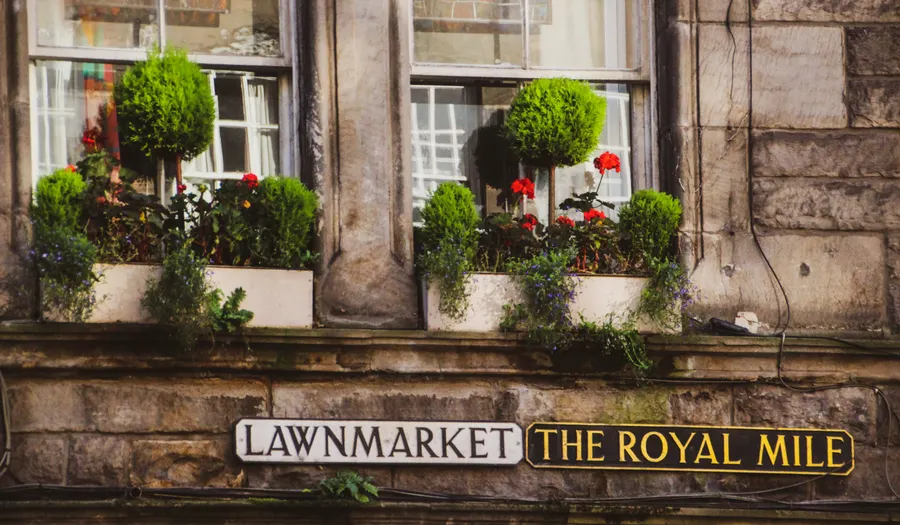
The historic thoroughfare links the castle to the Palace of Holyroodhouse, the King's official residence in Scotland. Along one Scots mile you pass St Giles' Cathedral and its stone crown, dozens of mysterious closes and the underground streets of Mary King's Close, frozen in the 17th century. Bagpipes, tartan shops and historic pubs such as the World's End set the rhythm of the descent. Touristy, yes, but genuinely spectacular.
Arthur's Seat

This 251-metre extinct volcano rises in the middle of Holyrood Park, fifteen minutes' walk from the Royal Mile. The climb takes 45 minutes to an hour depending on the path and rewards you with a 360-degree panorama over the city, the Firth of Forth and the Pentland Hills. Along the way, the ruins of St Anthony's Chapel and the cliffs of Salisbury Crags form a miniature Highlands setting. A wild hike without leaving the capital.
Calton Hill
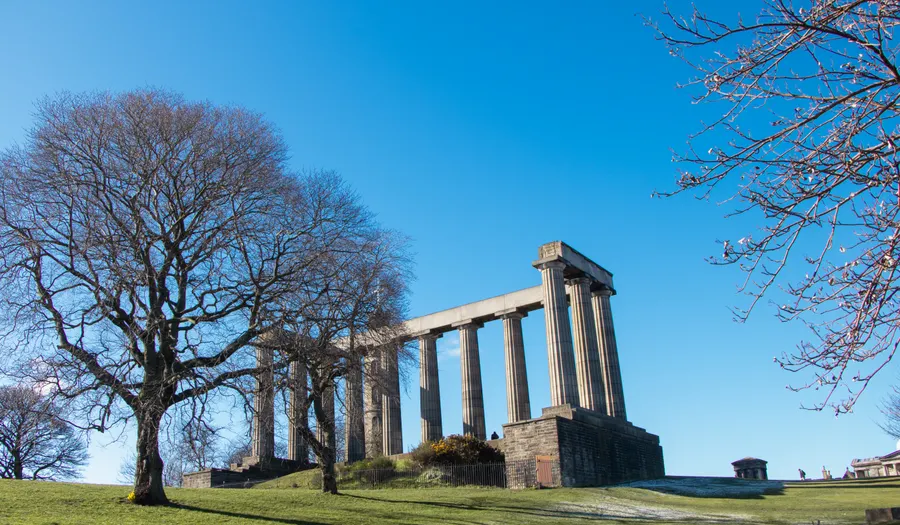
Photographers' favourite hill is a ten-minute climb from Princes Street. At the top, the unfinished, Parthenon-like National Monument, the Nelson Monument and the observatory earned Edinburgh its nickname, the Athens of the North. At sunset, the view takes in the castle, Arthur's Seat and the North Sea in a single frame. It is the most accessible and rewarding panorama in the city.
Dean Village

Ten minutes from the New Town, this 19th-century millers' hamlet seems beamed straight out of a fairy tale. The gabled houses of Well Court are reflected in the Water of Leith, followed by a shady path leading to the National Gallery of Modern Art. No shops, no attractions, just a village within the city, peaceful and photogenic. Carry on to the Dean Bridge, a vertiginous work by Thomas Telford.
Leith and the port

Edinburgh's old port, made famous by Trainspotting, has become the city's food district. Along the Shore, former warehouses house Michelin-starred restaurants such as The Kitchin, sailors' pubs and brunch cafes. You can visit the Royal Yacht Britannia, the Queen's former state yacht, moored at Ocean Terminal. On Saturdays, the Leith Market farmers' market livens up the docks.
How many days, and which itinerary?
Three days let you cover the Old Town, the New Town and Arthur's Seat without rushing; four let you add Leith or an excursion.
🗺️ Day-by-day itinerary · 📓 Free printable Edinburgh guide (PDF) · 🌍 All of United Kingdom
The great classic (2 days)
Day 1: the castle at opening time, down the Royal Mile, St Giles', Victoria Street and an evening in a Grassmarket pub. Day 2: Arthur's Seat in the morning, the Palace of Holyroodhouse, then the New Town, Calton Hill at sunset and a whisky tasting.
Edinburgh in full (4 days)
The two classic days, then Dean Village and the Water of Leith walkway to the Gallery of Modern Art. On the last day, Leith: the Royal Yacht Britannia, lunch on the Shore, and the National Museum of Scotland on the way back.
Edinburgh and the coast (5 days)
The full programme, extended with a day trip: the village of North Berwick and its gannets, the Forth rail bridge at South Queensferry, or a coach trip to the Highlands and Loch Lomond.
Getting there and getting around
The centre can be explored entirely on foot: the Old Town and the New Town fit within a 25-minute radius, hills included.
Very efficient Lothian buses: a single journey costs around €2.30, with a daily cap of €5.50 and contactless payment on board.
The tram links the airport to the centre (Princes Street) in 35 minutes for around €8, then continues to Leith.
No need to hire a car in the city; for the Highlands, choose coach day trips or ScotRail trains.
Where to stay in Edinburgh?
Old Town: sleep inside history, guesthouses and characterful hotels from €130 to €200 for a double.
New Town and Stockbridge: Georgian elegance, B&Bs and boutique hotels from €120 to €180.
Leith: excellent value 15 minutes away by bus, doubles from €90 to €130.
In August (Fringe), prices triple: book six months ahead or aim for June and September.
Our places to stay, stop by stop, at three budgets →
What to eat in Edinburgh?
Haggis, a stuffed sheep's stomach served with neeps and tatties: try it in a bistro version, or fried as part of a Scottish breakfast.
The historic pubs (the Sheep Heid Inn, dating from 1360, the Café Royal with its ceramic tiles) serve fish and chips and pies for around €15-18.
A booming food scene: Michelin-starred lunch menus from €40 in Leith, creative brunches in Stockbridge.
A cream tea or a scone at Mimi's Bakehouse, and a morning porridge, go for around €6-8.
Entry requirements
A passport is required: EU ID cards are no longer accepted. EU, US, Canadian and Australian visitors travel without a visa but must apply online for an Electronic Travel Authorisation (ETA) before departure. Irish citizens need neither.
Rules change: check your own government's travel advice before you go.
Frequently asked questions about Edinburgh
When is the best time to visit Edinburgh?
May to September for long days and mild temperatures. August is unique thanks to the Fringe festival but packed and expensive; June and September offer the best balance. Winter, short on daylight, has a Gothic charm.
What daily budget should I plan for in Edinburgh?
Allow €70-100 a day as a backpacker (hostel, pubs, free museums), €150-220 in comfort with a B&B and restaurants. Note that in August accommodation prices double or triple, so book well ahead.
How do I get around?
On foot above all, as the city is compact. Lothian buses (daily cap of around €5.50 contactless) and the tram fill in, notably for the airport (35 minutes) and Leith. A car is pointless in the city.
How many days do you need to visit Edinburgh?
Three days for the Old Town, the New Town, Arthur's Seat and Calton Hill without rushing. Four to five days let you add Leith, Dean Village and an excursion to the Forth Bridge or the Highlands.
Should I book Edinburgh Castle in advance?
Yes, absolutely: dated online tickets are cheaper and morning slots go fast in season. Aim for opening time at 9:30am to enjoy the ramparts before the crowds, and stay for the 13:00 gun.
Similar destinations
 Country
🇮🇪 Ireland
 Country
🇫🇷 France
 Country
🇪🇸 Spain
 Country
🇮🇹 Italy
 Region
🇮🇹 The Amalfi Coast
 City
City🇮🇹 Pompeii and Vesuvius
 Region
🇮🇹 Sicily
 Country
🇭🇷 Croatia
 City
City🏴 Scotland
 City
City