When to go to United Kingdom?
→ The detailed month-by-month page, with real weather records
Best time: May to September
At a glance
Why go to United Kingdom?
The United Kingdom fits into a pocket handkerchief, yet every bend in the road brings a new backdrop. You can go from the theatres of London's West End to the green hills of the Cotswolds in an afternoon, then to the dark lochs of the Highlands the next day. This density of landscapes and stories, packed into four nations, makes you feel you are crossing several countries without ever changing official language.
Here, history is not filed away in museums; it lines the pavements. A five-century-old pub stands next to a glass tower, a Neolithic stone circle holds court in the middle of a sheep field, a medieval castle still keeps watch over its estuary. The British cultivate this blend of eccentricity and tradition with disarming composure, somewhere between teatime and underground gigs.
And then there is the countryside, so often underrated. The cliffs of Cornwall, the lakes of the Lake District beloved of poets and the empty beaches of western Scotland offer a wild escape two hours by train from the big cities. The fickle weather is part of the charm: a bright spell after a shower turns any landscape into a painting.
Map of United Kingdom: what is where?
The map shows the 6 places covered in this guide, to picture the distances and plan your route.
- London
- Edinburgh
- Loch Ness
- Cotswolds (Bourton-on-the-Water)
- St Ives (Cornwall)
- Stonehenge
How much does a trip to United Kingdom cost?
The United Kingdom ranks among the most expensive destinations in Europe, London above all, but free museums and pubs lighten the bill.
| Style | Per day | What it covers |
|---|---|---|
| Backpacker | €60-90/day | dorm, public transport, meals on the go and free museums |
| Comfort | €130-200/day | B&B or mid-range hotel, restaurants, a few shows and excursions |
| Premium | €250+/day | boutique hotels, fine dining, taxis and private guided tours |
The pound sterling is the currency; contactless cards are accepted almost everywhere, even for small amounts.
Is United Kingdom safe?
The United Kingdom is a safe country, where the main risks are pickpocketing in London's tourist areas and left-hand traffic for distracted pedestrians. No particular vaccinations are required and healthcare is good, but since Brexit the European Health Insurance Card no longer guarantees full cover: take out travel insurance. The changeable weather calls for waterproofs and layers, even in summer. The emergency numbers are 999 and 112.
What to see and do in United Kingdom
- London and its museums
- the Scottish Highlands
- Stonehenge
- Oxford and Cambridge
- a village pub
London

The capital is best devoured on foot, from one neighbourhood to the next. Stroll along the Thames between Tate Modern and the Millennium Bridge, lose yourself in the markets of Borough or Camden, climb Greenwich hill for the view. The major museums (British Museum, National Gallery) are free, which leaves the budget for shows and pubs. Allow at least three days just to scratch the surface.
Edinburgh

The Scottish capital spreads its Old Town along a volcanic ridge, crowned by its castle. Walk up the Royal Mile to the Palace of Holyroodhouse, then climb Arthur's Seat to take in the city and the sea. In August, the Fringe turns every corner into a stage. The grey stone and drifting mist lend the city an almost novelistic character.
The Highlands and Loch Ness

Northern Scotland is a land of bare mountains, deer-filled glens and deep lochs. The road to Glencoe crosses scenery that has served as the backdrop to countless films. The Glenfinnan Viaduct, crossed by the Jacobite steam train, draws Harry Potter fans. Hiring a car remains the best way to cover the distances.
The Cotswolds
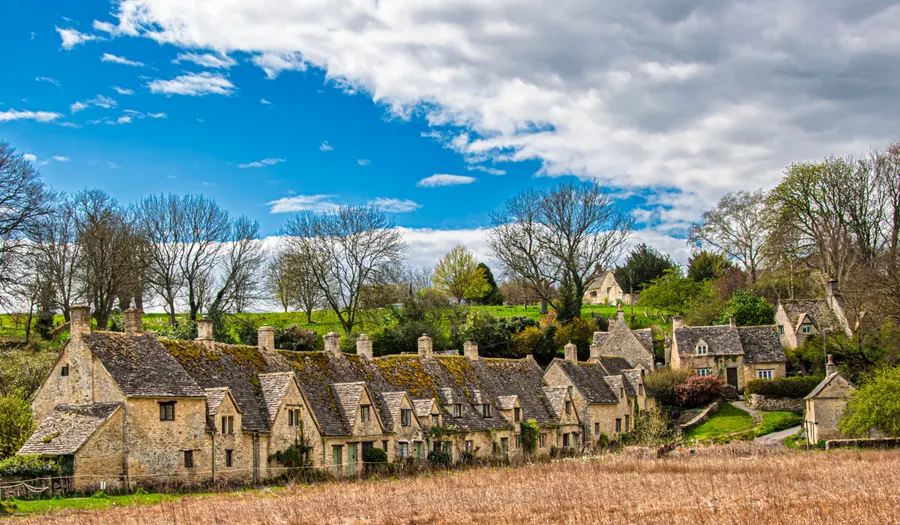
This stretch of south-west English countryside lines up honey-coloured stone villages, clipped hedgerows and pubs with roaring fireplaces. Bourton-on-the-Water, Bibury and Castle Combe look like postcards frozen in time. People come to walk the waymarked paths between tea rooms. It is bucolic England at its most polished, ideal for a day or two from Oxford.
Cornwall

The south-western tip offers a ragged coastline, sandy coves and a light that drew painters to St Ives. Try the famous pasties (filled pastry parcels) and the clotted cream of neighbouring Devon. The Minack Theatre, carved into the cliff facing the ocean, stages breathtaking performances. The water stays cool, but surfers brave the Atlantic all year round.
Bath and Stonehenge

Bath charms with its Roman baths and its UNESCO-listed Georgian crescents. An hour away, the stone circle of Stonehenge is as intriguing as ever, standing in the middle of Salisbury Plain. The two combine easily in a day trip from London. Book Stonehenge tickets in advance to visit the monument without stress.
How many days, and which itinerary?
One to two weeks lets you combine London, an escape to the English countryside and a hop up to Scotland without rushing.
🗺️ Day-by-day itinerary · 📓 Free printable United Kingdom guide (PDF)
London and England (7 days)
Three days in London, a day in Bath and Stonehenge, then two days in the Cotswolds or in Oxford and Cambridge. An easy pace by train and bus, ideal for a first visit.
Essential Scotland (7 days)
Two days in Edinburgh, a day in Glasgow, then a driving loop through the Highlands, Glencoe, Fort William and Loch Ness. Pack rain gear whatever the season.
Grand British tour (14 days)
London, the Cotswolds, the Lake District, then Scotland from Edinburgh to the Highlands. Two weeks to grasp the diversity of the four nations, combining train and car.
Getting there and getting around
Trains link the major cities efficiently, but fares climb fast: book ahead and aim for Advance fares, or a BritRail Pass for longer stays.
In London, a contactless card or contactless bank card is all you need on the Underground and buses, with an automatic daily fare cap.
A hire car is essential for the Highlands, the Cotswolds or Cornwall; watch out for driving on the left and narrow single-track roads.
Long-distance coaches (National Express, Megabus) are far cheaper than the train for tight budgets, at the cost of slower journeys.
Where to stay in United Kingdom?
Youth hostels and dorms: €25 to €45 a night, mainly in the big cities and national parks (the YHA chain is reliable).
Bed and breakfasts: €70 to €120 for a double room, often with a hearty full English breakfast included, a local institution.
Mid-range hotels: €100 to €180 a night in London and Edinburgh, less in the countryside; prices leap during festivals.
Cottages and holiday lets: good value from €90 a night for families or groups, especially in the Cotswolds and Scotland.
Our places to stay, stop by stop, at three budgets →
What to eat in United Kingdom?
Fish and chips is a rite of passage, best near the coast; have it with malt vinegar and mushy peas.
The Sunday roast (roast meat, Yorkshire pudding, vegetables) is enjoyed at the pub at Sunday lunchtime, in a convivial atmosphere.
Afternoon tea, with scones, clotted cream and jam, is an indulgent break worth treating yourself to at least once.
In Scotland, try haggis (stuffed sheep's stomach) and a single malt whisky at a distillery; in London, the Indian food scene (curry, balti) is unmissable.
Entry requirements
A passport is required: EU ID cards are no longer accepted. EU, US, Canadian and Australian visitors travel without a visa but must apply online for an Electronic Travel Authorisation (ETA) before departure. Irish citizens need neither.
Rules change: check your own government's travel advice before you go.
Cities and regions to discover
 City
City🇬🇧 London
 City
City🏴 Scotland
 City
City🇬🇧 Edinburgh
 Region
🇬🇧 Cornwall
Frequently asked questions about United Kingdom
When is the best time to go?
From May to September, for long days and milder weather; August buzzes with festivals but is very busy. Spring and early autumn offer a good compromise between crowds and weather.
What daily budget should I plan?
Allow around €60 to €90 a day travelling on a shoestring, and €130 to €200 for a comfortable trip. London and Edinburgh push the bill up, the countryside brings it back down.
Is it easy to get around without a car?
Yes, between the big cities thanks to trains and coaches, but a car becomes invaluable for exploring the Highlands, the Cotswolds or Cornwall. Book train tickets early for the best fares.
Is the language barrier a problem?
English is of course the national language, but regional accents (Scottish, Welsh) can take you by surprise. School-level English is plenty to get by day to day.
Similar destinations
 Country
🇮🇪 Ireland
 City
City🇮🇪 Galway and Connemara
 Country
🇦🇹 Austria
 Region
🇫🇷 Béarn
 Country
🇫🇷 France
 Region
🇮🇹 Sicily
 Country
🇭🇷 Croatia
 City
City🇮🇪 Donegal
 City
City🇮🇪 The Ring of Kerry
 City
City