When to go to Roanne and the Roannais?
→ The detailed month-by-month page, with real weather records
Best time: May to June and September to October
At a glance
Why go to Roanne and the Roannais?
The Roannais is best discovered at the table. Ever since the Troisgros family opened their restaurant opposite Roanne station, then moved it to Ouches, the town has been linked to one of the great dynasties of French cooking, and César Troisgros, the fourth generation, was named Gault et Millau's chef of the year for 2026. But Roanne's gastronomy is not just about three stars: pralines from the Pralus house, cheeses matured by Mons, the Halles Diderot food hall and the big Friday-morning market.
The landscape, for its part, comes down to two lines. First the Loire, wild in its gorges to the south where the Château de la Roche stands, tamed by the Villerest dam, then broad and slow at Roanne, where the Roanne-Digoin canal begins. Then the Monts de la Madeleine to the west, with their gamay slopes and villages of character, Ambierle, Saint-Haon-le-Châtel and Le Crozet, linked by a wine route.
It is a short-break destination for food-loving couples, who can string together wine cellars, markets and restaurants without ever driving more than thirty minutes. Families will find the beach at Lake Villerest, the theatrical tours of the Château de la Roche and the greenway along the Loire. And hikers have plenty of waymarked trails in the Monts de la Madeleine and the Bois Noirs.
Map of Roanne and the Roannais: what is where?
The map shows the 6 places covered in this guide, to picture the distances and plan your route.
- Le Central, Roanne
- Château de la Roche
- Lake Villerest
- Saint-Haon-le-Châtel
- Ambierle Priory
- Côte Roannaise wine route
How much does a trip to Roanne and the Roannais cost?
| Style | Per day | What it covers |
|---|---|---|
| Backpacker | €55-80 per day | chain hotel or camping at Lake Villerest, markets and food hall for meals, free villages, Loire banks and wine route, Château de la Roche at €8. |
| Comfort | €100-160 per day | three-star hotel or characterful B&B, lunch at Le Central, tastings with winegrowers, visits and an evening at a good Roanne restaurant. |
| Premium | €450 and up per day | a night at Le Bois Dormant or the Domaine de Champlong and dinner at Le Bois sans Feuilles, whose tasting menu costs €390 per person excluding drinks. |
Cards are accepted everywhere in town and by most winegrowers. Keep a little cash for small market producers and the most modest cellars.
Is Roanne and the Roannais safe?
The Roannais poses no particular risk, but the Loire is a powerful river with treacherous currents and shifting sandbanks: only swim at supervised beaches, such as Villerest, and check the water quality before going in, as temporary bans are possible in hot weather. When water is released from the dam, the river level downstream can rise quickly. On the narrow roads of the wine slopes, have a sober driver. In summer, heatwaves regularly exceed 35°C on the plain: visit early in the morning. Ticks are present in the meadows and woods of the Monts de la Madeleine.
What to see and do in Roanne and the Roannais
- Le Central, the Troisgros table in Roanne
- Port of Roanne and the Loire banks
- Château de la Roche
- Lake Villerest
- Saint-Jean-Saint-Maurice-sur-Loire
- Saint-Haon-le-Châtel
- Ambierle Priory
- Côte Roannaise wine route
Le Central, the Troisgros table in Roanne
The Troisgros story begins in Roanne, opposite the station, in the family hotel where Jean and Pierre, and later Michel, forged a cuisine that left its mark on Nouvelle Cuisine and beyond. Four generations have followed one another; today Michel and his sons César and Léo represent the third and fourth, and the family has moved its three-star restaurant, Le Bois sans Feuilles, to a country estate in Ouches, a few kilometres from town. Gault et Millau named César chef of the year for 2026, after his grandfather Pierre in 1987 and his father Michel in 2003. The eleven-course tasting menu at Le Bois sans Feuilles costs €390 excluding drinks, and a six-course lunch menu is offered at €170 on Thursday and Friday lunchtimes. For a first taste, Le Central, a restaurant and delicatessen opened in a former 1920s hotel opposite Roanne station, serves homely yet inventive cooking from €36 at lunch. The menu changes every week, following the Friday market.
Château de la Roche
The Château de la Roche occupies a rocky outcrop in the middle of the Loire, at Saint-Priest-la-Roche, south of Roanne, where it has stood with its tower and keep since the 13th century. Its silhouette, feet in the water between the wooded slopes of the gorges, makes it one of the most photographed sites in the Roannais. The interior has been recreated as it was in the Belle Époque, when Monsieur and Madame Roustan, owners between 1900 and 1930, came here to spend the summer away from their house in Roanne. Tours are led by guide-actors who play the couple and tell the story of the place from the 13th century to the present day, with a few ghostly appearances that delight children. Two escape rooms challenge you to solve puzzles in under 60 minutes. In 2026 the château's surroundings were completely redesigned, with planted car parks, new paths and better access for visitors with reduced mobility; tours in English are offered from June to August, and a treasure hunt on the Baludik app rounds off the visit. The site is run by the Pays entre Loire et Rhône group of communes.
Lake Villerest
The Villerest dam was built between 1978 and 1984, despite strong opposition, to cap the Loire's floods and sustain its flow in summer, alongside the Naussac dam; the flood of 1856 was still remembered as far away as Orléans and Tours. It is a concrete arch-gravity dam 59 metres high and 469 metres long, paired with a 60-megawatt hydroelectric plant. Filling it drowned part of the Loire gorges and created a 770-hectare reservoir stretching several dozen kilometres to near Balbigny. The lakeside communes have developed leisure activities around it: marinas and slipways, golf, campsites and restaurants. At Villerest, the beach has been redeveloped since 2021 with sand, picnic areas, play equipment, loungers, water slides and trampolines, and a 405-space car park. Swimming is supervised in summer. Trails on the heights show the lake from other angles, and the Pêt d'Âne site, further south, reveals the largest meander of the Loire.
Saint-Haon-le-Châtel
Saint-Haon-le-Châtel is an administrative curiosity: 87 hectares in area, making it the smallest commune in the Loire department, and just over 600 inhabitants. The town, fortified in the Middle Ages, overlooks the Roanne plain and has only Saint-Haon-le-Vieux to the north and Renaison to the south as neighbours. Before 954, Count Artaud I bequeathed its church to Cluny; around 1100, the town was the seat of a vicariate of the Counts of Forez, and in the 13th century the parish came under the prior of Ambierle. What remains is a medieval wall punctuated by towers, the Romanesque church of Saint-Eustache, the Manoir de la Fleur de Lys and the Hôtel Pelletier, along with many half-timbered houses. Ivy and wisteria climb the façades, and a medieval garden, created in 1996, displays more than a hundred plants and vegetables of old. The diplomat and historian Jean-Jules Jusserand, French ambassador to the United States for more than twenty years, owned a house in the village, which raised a monument to him. Saint-Haon is one of the five villages of character in the Roannais, along with Ambierle, Le Crozet, Perreux and Saint-Jean-Saint-Maurice-sur-Loire.
Ambierle Priory
Ambierle Priory, a former Benedictine abbey reduced to the rank of priory by Saint Hugh of Cluny in 1101, depended on Cluny for more than 850 years. In 1383 the prior Étienne Tachon signed a charter with the inhabitants, the original of which is held in the National Archives. Around 1441, a fire destroyed most of the priory and the church, except for two side chapels, and the prior Antoine de Balzac d'Entragues had everything rebuilt in the 15th century. The complex can be recognised from afar by its roof of glazed polychrome tiles in the Burgundian style. The church, whose lofty nave suggests a small cathedral, houses carved choir stalls, 15th-century stained glass and a listed Passion altarpiece donated by Michel de Chaugy, an officer of the Burgundian court who died in 1479; an inscription recorded in 1665 gave 1466 as the date of its dedication. From the 1960s, the local authorities, helped by the Region and the Department, restored the roof and the interior. The priory is one of the Loire sites associated with the bid to have the Cluniac sites listed as a UNESCO World Heritage Site.
Côte Roannaise wine route
The Côte Roannaise is one of the most under-the-radar vineyards of the Loire valley: 215 hectares spread over 13 communes at the foot of the Monts de la Madeleine, west of Roanne. Recognised as an appellation d'origine contrôlée since 1994, it grows almost exclusively gamay, known locally as gamay Saint-Romain, on granite soils that give fragrant, fresh and light red wines. The Bouthéran hill, facing south above Saint-André-d'Apchon, is its most renowned slope. The wine route, waymarked over 55 kilometres from La Pacaudière to Saint-Jean-Saint-Maurice-sur-Loire, can be followed by car, by bike or even on foot, and passes through Ambierle, Saint-Haon-le-Châtel, Renaison and Saint-André-d'Apchon, where winegrowers open their cellars. As a land dear to the Troisgros family, the Roannais readily serves its wines on the town's tables.
How many days, and which itinerary?
Two or three days are enough for Roanne, a meal at the Troisgros, the Château de la Roche and the Côte Roannaise. Allow five days to a week to add the villages of character, Lake Villerest, the canal by bike and a hike in the Monts de la Madeleine.
🗺️ Day-by-day itinerary · 📓 Free printable Roanne and the Roannais guide (PDF) · 🌍 All of France
weekend (2 days)
Day 1: Roanne, the Halles Diderot and the Friday-morning market, lunch at Le Central, a stroll along the Loire and around the port, then dinner in town. Day 2: the Château de la Roche in the morning, a picnic at Lake Villerest, Saint-Jean-Saint-Maurice-sur-Loire and its keep late in the day.
4-5 days
Day 1: Roanne, the Joseph-Déchelette museum, the port and the Loire banks. Day 2: the Loire gorges and the Château de la Roche, Villerest beach in the afternoon. Day 3: Saint-Jean-Saint-Maurice-sur-Loire, then the wine route towards Renaison and its dams. Day 4: Saint-Haon-le-Châtel, Ambierle and its priory, a tasting with a winegrower. Day 5: Le Crozet, then dinner at Le Bois sans Feuilles in Ouches for those who have booked.
one week
Days 1 to 5 as above. Day 6: cycling along the Roanne-Digoin canal or on the Loire greenway. Day 7: a hike in the Monts de la Madeleine, then back via the Pêt d'Âne site and the Loire's largest meander, or Perreux, the last village of character on the circuit.
Getting there and getting around
From Paris, the fastest route goes via Lyon: TGV to Lyon Part-Dieu in about 2 hours, then a TER regional train to Roanne, for about 3h30 in total. By car, allow just over 4 hours via the motorway and then the N7, on which Roanne is a historic stop.
The town is easily explored on foot. For the villages, the Côte Roannaise wine cellars, Lake Villerest and the Château de la Roche, you need a car or an e-bike: everything is less than thirty minutes' drive from the centre.
By bike, the Loire greenway, the Véloire, and the canal towpath offer long flat, car-free stretches; the roads on the wine slopes, on the other hand, are more demanding.
Where to stay in Roanne and the Roannais?
Budget: Roanne has several chain hotels and independent three-star hotels around the station and the centre, with rooms for €55-90. The campsites at Lake Villerest and the gîtes of the Côte Roannaise are a good option for families.
Comfort: for €100-180, the hotel-restaurants of Mably and Charlieu, as well as B&Bs in châteaux and manor houses around Roanne, offer more character. Book ahead for spring weekends.
Our pick: stay at Le Bois Dormant, the Troisgros hotel in Ouches, awarded two Keys by the Michelin Guide, with a heated pool and Nordic bath, to follow dinner at Le Bois sans Feuilles with breakfast on the estate. Further south, the Domaine de Champlong, in Villerest, combines a four-star hotel, spa and golf course above the lake.
Our places to stay, stop by stop, at three budgets →
What to eat in Roanne and the Roannais?
Roanne is a town of markets and artisans: the Halles Diderot bring producers together, notably the Mons cheese shop and the Pralus house, and the big market takes place on Place du Marché on Friday mornings, with a smaller one on Tuesdays.
The Praluline, a brioche studded with pink pralines from the Pralus house, is the town's sweet souvenir, and Révillon papillotes are among its other gourmet emblems. In restaurants, Roanne cooking relies on river produce, Charolais beef and cheeses from the nearby hills.
Côte Roannaise wines, light and fresh gamay reds, are drunk young and go well with charcuterie and slow-cooked dishes. Buy them direct from the winegrowers on the wine route, between Ambierle and Saint-Jean-Saint-Maurice-sur-Loire.
Entry requirements
Schengen area: an ID card or passport for EU citizens, 90 days visa-free for UK, US, Canadian and Australian passports.
Rules change: check your own government's travel advice before you go.
Frequently asked questions about Roanne and the Roannais
When is the best time to visit the Roannais?
May-June and September-October, when temperatures are mild for the villages and slopes and the vines turn from green to gold. Summer suits swimming at Lake Villerest but can be very hot on the plain.
Can you eat at Troisgros without spending a fortune?
Yes, at Le Central, the family's restaurant and delicatessen opposite Roanne station: the weekday lunch menu starts at €36. The three-star Le Bois sans Feuilles, in Ouches, offers a tasting menu at €390 and a six-course lunch at €170 on Thursdays and Fridays.
Is the Château de la Roche open all year?
No. In 2026 it opens Wednesday to Sunday in September, at weekends in early October, then every afternoon of the All Saints' school holidays until 1 November; groups are welcomed from April to November. Tours are guided and theatrical, at €8 full price; booking is required.
Which wines should you taste on the Côte Roannaise?
Reds and rosés made from gamay, known locally as gamay Saint-Romain, grown on granite soils. The appellation, recognised since 1994, covers 13 communes, and its winegrowers often receive visitors by appointment.
How many days should you spend in the Roannais?
Two days for Roanne, the Troisgros and the Château de la Roche, four to five for the villages of character and the wine route, a week to add cycling along the Loire and hiking in the Monts de la Madeleine.
Similar destinations
 City
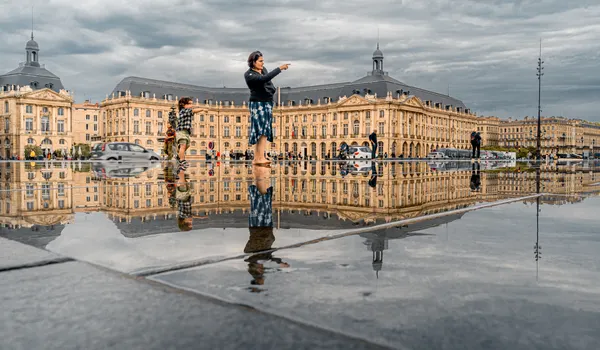
City🇫🇷 Bordeaux and Around
 City
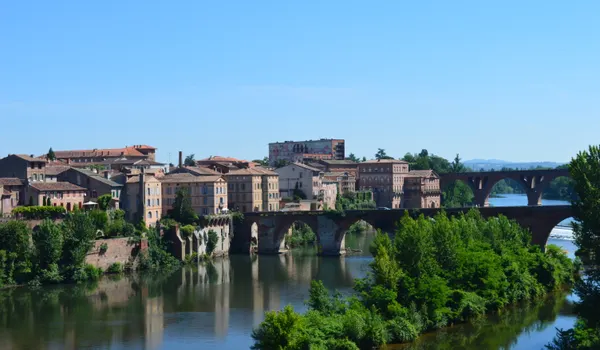
City🇫🇷 Albi and the Tarn Valley
 City
City🇫🇷 Rochefort and the Charente Estuary
 Region
🇭🇷 Istria
 City
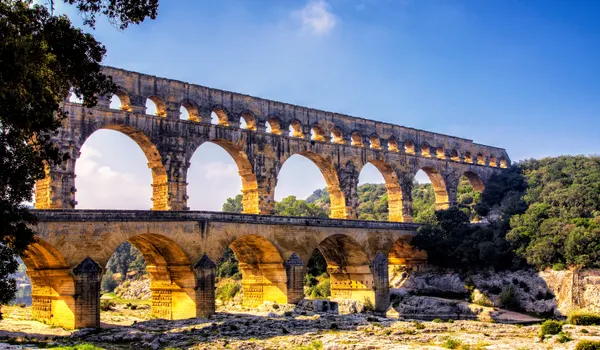
City🇫🇷 Uzès and the Pont du Gard
 Region
🇫🇷 Normandy
 Region
🇫🇷 Dordogne and the Périgord
 Region
🇫🇷 The Loire Valley
 Region
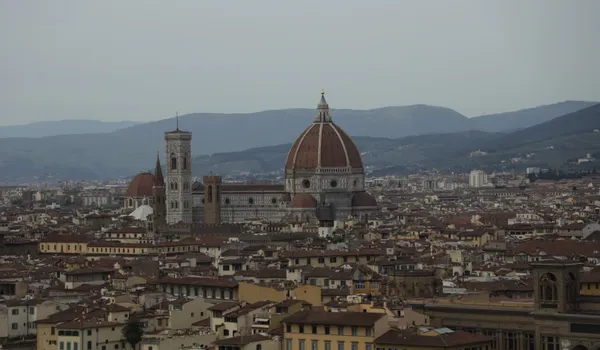
🇮🇹 Florence and Tuscany
 Country