When to go to Bangkok?
→ The detailed month-by-month page, with real weather records
Best time: November to February
At a glance
Why go to Bangkok?
Bangkok is an electric metropolis that never truly sleeps. Golden temples, floating markets, glittering skyscrapers and alleys teeming with food stalls collide in joyful chaos. The contrast between spirituality and frenetic modernity gives the city a unique energy. Many arrive sceptical and leave won over.
It is one of Asia's great food capitals, where you can eat anywhere, at any hour, for next to nothing. From pad thai stalls to Michelin-starred restaurants, the culinary scene is incredibly rich. Every district has its own specialities and smells. Eating in Bangkok is an adventure in itself.
Bangkok is also the ideal hub for Southeast Asia, connected to the whole country and the region. Culture, frenzied shopping, nightlife and cheap spas all come together here. The city remains very affordable and easy to explore despite its legendary traffic jams. It is an essential gateway to Thailand.
Map of Bangkok: what is where?
The map shows the 6 places covered in this guide, to picture the distances and plan your route.
- Grand Palace
- Wat Arun
- Wat Pho
- Chatuchak Market
- Khao San Road
- Damnoen Saduak Floating Market
How much does a trip to Bangkok cost?
Bangkok is very affordable and lets you travel well on a small budget.
| Style | Per day | What it covers |
|---|---|---|
| Backpacker | €20-35/day | Dorm, street food, public transport and low-cost temples. |
| Comfort | €50-90/day | Hotel with pool, varied restaurants, taxis and a few excursions. |
| Premium | €150+/day | Riverside palace hotel, fine dining and upmarket spa. |
Withdraw baht from ATMs and keep cash on you, essential for street food and markets.
Is Bangkok safe?
Bangkok is a safe city for travellers, where violence against tourists is rare. Be wary above all of the classic scams: fake agents offering tours, tuk-tuks that detour to shops, or temples that are supposedly closed. Keep an eye on your belongings in crowds and at markets. Traffic is the real danger: take care on a scooter and when crossing the street. A little common sense is enough for a trouble-free stay.
What to see and do in Bangkok
- the Grand Palace
- Wat Arun
- Chatuchak Market
- Khao San Road
- Chinatown
Grand Palace
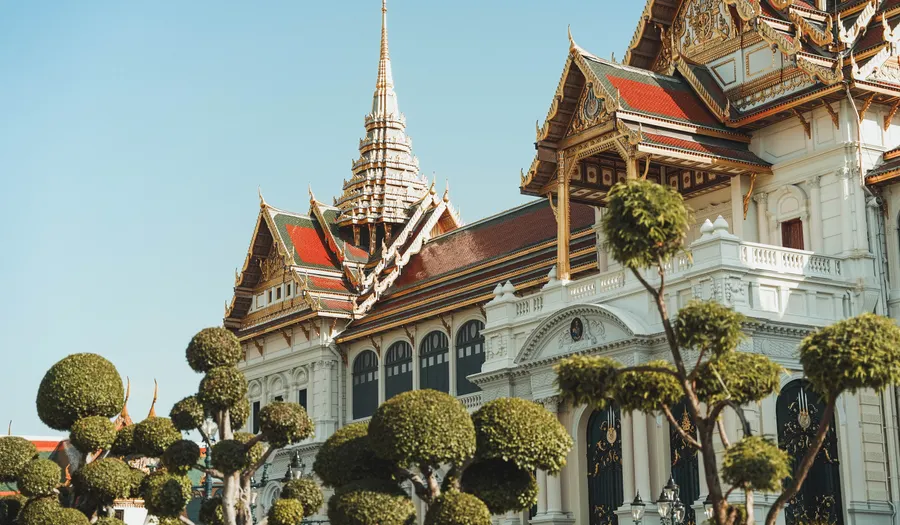
The former royal residence, this vast complex dazzles with its golden roofs and glittering mosaics. It houses Wat Phra Kaew and the revered Emerald Buddha, the most sacred site in the country. The architecture blends Thai and European influences with extreme refinement. Clothing covering shoulders and knees is compulsory.
Wat Arun
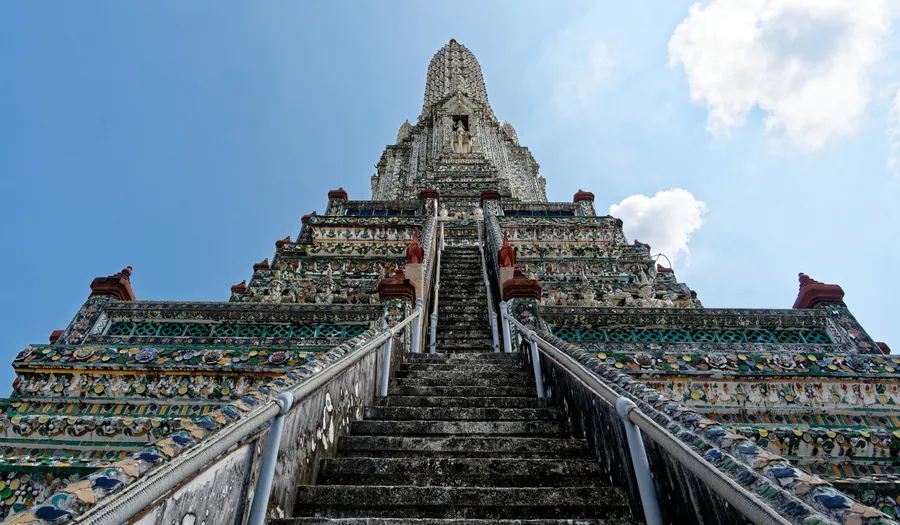
The Temple of Dawn raises its tall porcelain-encrusted tower on the bank of the Chao Phraya River. You can climb its steep steps for a fine view of the river. At sunset, it takes on spectacular golden reflections. A short ferry crossing gets you there easily.
Wat Pho

This temple houses an immense reclining Buddha covered in gold leaf, forty-six metres long. It is also the birthplace of traditional Thai massage, which you can try on site. The colourful stupas and gardens invite you to wander. It is easy to visit alongside the neighbouring Grand Palace.
Chatuchak Market
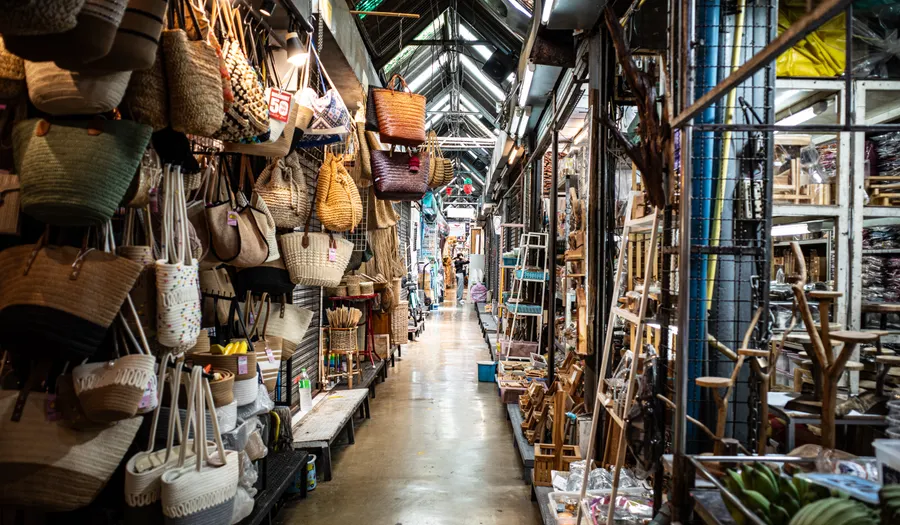
One of the largest markets in the world counts thousands of stalls at the weekend. You'll find clothes, crafts, plants, antiques and a profusion of food stands. It's best to get lost without any precise plan. Bring water and plenty of time, as the place is huge.
Khao San Road

This legendary backpacker street is packed with bars, stalls, tattoo artists and street vendors. The party atmosphere goes on until the small hours. It is the meeting point for travellers from all over the world. The most curious can also try grilled insects here.
Damnoen Saduak Floating Market

Around an hour and a half from the city, this market on the water showcases boats laden with fruit and dishes. Vendors in conical hats paddle between the canals. It is very touristy but visually striking. Set off early in the morning to avoid the crowds.
How many days, and which itinerary?
Three to four days let you grasp the essentials of Bangkok before heading off to the rest of the country.
🗺️ Day-by-day itinerary · 📓 Free printable Bangkok guide (PDF) · 🌍 All of Thailand
Bangkok express (2 days)
The first day covers the Grand Palace, Wat Pho and Wat Arun along the river. The second explores the markets, a modern district and the nightlife of Khao San or a rooftop bar.
Essential Bangkok (3 days)
Add a morning at Chatuchak Market, a boat trip on the klongs and a Thai cooking class. Keep an evening for a massage and dinner on a rooftop.
Bangkok and around (4 days)
Round it off with a trip to the Damnoen Saduak floating market and the ruins of Ayutthaya. This version offers a fine overview of the history and countryside around the capital.
Getting there and getting around
The BTS Skytrain and the underground MRT avoid the traffic jams and serve the modern districts.
Express boats on the Chao Phraya link the great temples in style.
Taxis and the Grab app are cheap; always insist on the meter in a taxi.
Tuk-tuks are picturesque but must be firmly negotiated, and are often pricier than a taxi.
Where to stay in Bangkok?
Hostels on Khao San or in Silom, dorm beds from €8 to €18 a night.
Comfortable mid-range hotels near the BTS, from €30 to €60.
Fine hotels with pools in Sukhumvit or on the riverfront, from €70 to €130.
Palace hotels on the Chao Phraya, often over €200 a night.
Our places to stay, stop by stop, at three budgets →
What to eat in Bangkok?
Pad thai, som tam and green curry are eaten everywhere for a few euros.
The street food in the sois of Yaowarat, Chinatown, is an evening essential.
Try mango sticky rice, a dessert of glutinous rice with mango and coconut milk.
Thai cooking classes let you take the recipes home.
Entry requirements
30 days visa-free for tourism with a passport for EU, UK, US, Canadian and Australian citizens, down from 60 days since 15 September 2026; an extension can be requested at an immigration office. Everyone must also fill in the free Thailand Digital Arrival Card online in the three days before arrival.
Rules change: check your own government's travel advice before you go.
Frequently asked questions about Bangkok
When is the best time to visit Bangkok?
The cool, dry season, from November to February, is the most pleasant. Avoid April, which is very hot, and the monsoon from June to October, which is more humid.
How many days should I spend in Bangkok?
Two to three days are enough for the great temples and markets, four if you add Ayutthaya or a floating market.
What daily budget for Bangkok?
Allow €25 a day as a backpacker, €50 to €90 for comfort and over €150 for a premium stay with palace hotels and fine dining.
How do I get around Bangkok?
Use the BTS and MRT to avoid the jams, the express boats on the river and the Grab app for door-to-door trips.
Which area should I stay in in Bangkok?
Sukhumvit is modern and well connected, Silom practical and central, Khao San ideal for backpackers and Riverside for river views.
Similar destinations
 Country
🇻🇳 Vietnam
 City
City🇻🇳 Hanoi
 City
City🇯🇵 Tokyo
 Country
🇮🇳 India
 Country
🇨🇴 Colombia
 Country
🇹🇷 Turkey
 Country
🇬🇪 Georgia
 City
City🇮🇩 Java
 City
City🇲🇾 Kuala Lumpur
 Region