When to go to Brussels?
→ The detailed month-by-month page, with real weather records
Best time: April to September
At a glance
Why go to Brussels?
Brussels is the most underrated capital in Europe, and so much the better for those who come. Stepping out of a side street onto the Grand-Place, the Baroque setting of gilded guildhalls that Victor Hugo considered the most beautiful square in the world, you grasp the scale of the misunderstanding. The city rewards the curious: the covered arcades of the Galeries Saint-Hubert, Victor Horta's Art Nouveau facades, Magritte's surrealism at every turn.
It is also a capital for eating and drinking like nowhere else. Exceptional chocolatiers around the Sablon (Marcolini, Wittamer, Mary), fries in a paper cone at Maison Antoine, mussels in a pot and carbonnade braised in brown beer in the estaminets. As for the glass, Belgium lines up Trappists, gueuzes and lambics: sipping a Westmalle in a century-old cafe such as La Mort Subite is a cultural ritual in its own right.
Finally, Brussels is the world capital of comics and tongue-in-cheek humour. Tintin, the Smurfs and Gaston were born here, a trail of giant murals runs across the city's gable walls, and the Belgian Comic Strip Center occupies a former Art Nouveau department store designed by Horta. Add the Manneken-Pis, dressed in costumes according to the calendar, and the flea markets of the Marolles: self-mockery is a municipal art here.
Map of Brussels: what is where?
The map shows the 6 places covered in this guide, to picture the distances and plan your route.
- Grand-Place
- Atomium
- Sablon
- Horta Museum
- Place du Jeu de Balle
- Belgian Comic Strip Center
How much does a trip to Brussels cost?
Brussels is one of the most affordable capitals in Western Europe, especially at weekends when business hotels slash their prices. Good beer costs less here than a soft drink in Paris.
| Style | Per day | What it covers |
|---|---|---|
| Backpacker | €60-90/day | central hostel, fries and sandwiches, museums free on the first Sunday of the month, flea markets and walks |
| Comfort | €120-180/day | 3-4-star central hotel, mussels and fries in the estaminets, the Atomium, Horta and Magritte, a box of pralines |
| Premium | €250+/day | boutique hotel in the Sablon, Michelin-starred table (Comme chez Soi, Bon Bon), private chocolate and lambic tastings |
Belgium is in the eurozone: no currency exchange needed and cards accepted almost everywhere; just keep a few coins for the flea markets and chip shops.
Is Brussels safe?
Brussels is a generally safe capital where you can move around calmly in all the tourist districts. Watch out for pickpockets on the Grand-Place, on public transport and at Gare du Midi, where it is best to keep an eye on your bag, especially when international trains arrive. At night, the immediate surroundings of the Midi and Nord stations are less inviting; the centre, the Marolles and Saint-Gilles remain lively and busy.
What to see and do in Brussels
- Grand-Place
- Atomium
- The Sablon and its chocolatiers
- Horta Museum
- Marolles flea market
- Belgian Comic Strip Center
- Mont des Arts
- Belgian beer tour
Grand-Place
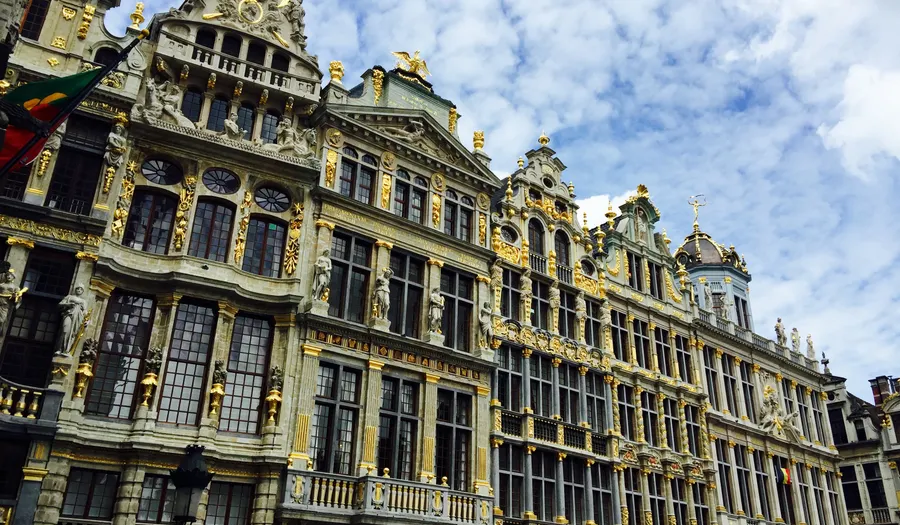
UNESCO-listed, the Grand-Place lines up the Gothic town hall and Baroque guildhalls with gilded facades, rebuilt in five years after the bombardment of 1695. Each building has a name (the Fox, the Swan, the Golden Tree) and tells the story of a guild. In the evening, the lighting turns the square into a theatre. Every two years, in mid-August, a carpet of 500,000 begonias covers it entirely.
Atomium
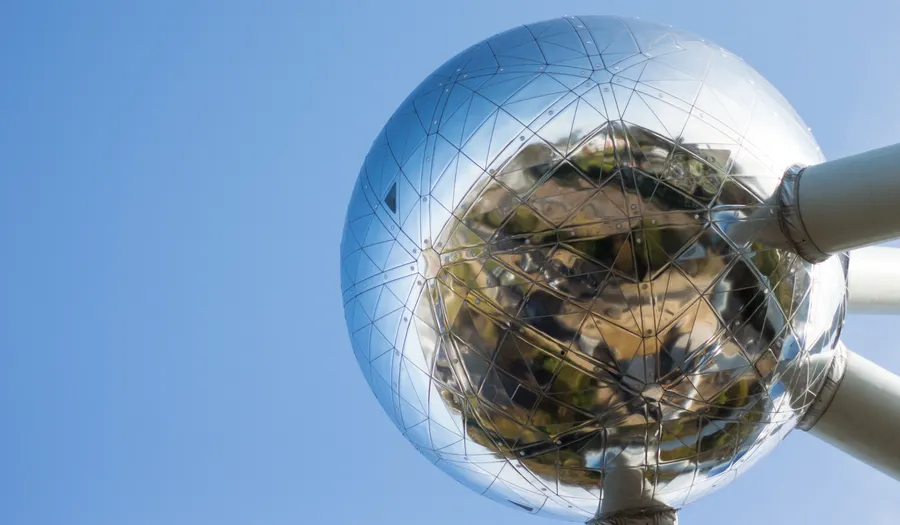
Built for the 1958 World's Fair, the Atomium represents an iron crystal magnified 165 billion times. Its nine steel spheres, linked by futuristic escalators, house exhibitions and a panoramic viewpoint at 92 metres. The monument was supposed to be dismantled after the Expo; the people of Brussels adopted it for good. At its foot, Laeken park and the Royal Greenhouses (open three weeks a year) round off the outing.
Sablon

The Sablon district is the golden triangle of Belgian chocolate: Pierre Marcolini, Wittamer, Mary and Neuhaus share the shopfronts around the church of Notre-Dame du Sablon and its flamboyant stained glass. Antique dealers and galleries complete the hushed atmosphere. At weekends, an antiques market sets up under red and green awnings. You climb up from the Marolles via the panoramic lift on Place Poelaert, opposite the gigantic Palace of Justice.
Horta Museum

Victor Horta's house and studio in Saint-Gilles is the manifesto of Art Nouveau: a plant-like wrought-iron staircase, a gilded glass roof, door handles designed to the millimetre. The master lived and worked here from 1901 to 1919, and every detail bears witness to a total work of art. The visit continues in the surrounding streets, where the facades of Rue Defacqz and Avenue Louise (Hôtel Tassel, Hôtel Solvay) unfold the best of the style. Booking online is essential, as visitor numbers are limited.
Marolles

Brussels' historic working-class district keeps its plain speaking and its daily flea market on Place du Jeu de Balle, where bargain hunters rummage from 6am among vinyl records, copperware and 1950s furniture. Rue Haute and Rue Blaes line up second-hand dealers, vintage shops and no-frills cafes. This is zwanze Brussels, the Brussels of jokes and the Brusseleir dialect. Finish with a carbonnade in a local estaminet.
Magritte Museum

On Place Royale, the museum brings together the world's largest collection of works by René Magritte: more than 200 paintings, gouaches and documents by the master of surrealism. The visit sheds light on the discreet man behind the bowler hats and the pipes that are not pipes. It is part of the Royal Museums of Fine Arts, whose Flemish Primitives and Bruegels are worth the combined ticket. Allow a good two hours, in the neoclassical setting of the Mont des Arts.
How many days, and which itinerary?
Two days are enough for the centre and the highlights; three let you add Art Nouveau, Magritte and a proper tour of the estaminets.
🗺️ Day-by-day itinerary · 📓 Free printable Brussels guide (PDF)
Express weekend (2 days)
Day 1: the Grand-Place and Galeries Saint-Hubert, the Manneken-Pis, the Mont des Arts and the Magritte Museum, a waffle along the way, an evening at the La Mort Subite estaminet. Day 2: the Marolles flea market in the morning, the lift up to the Sablon and its chocolatiers, then the Atomium in the afternoon.
Brussels for art and food lovers (3 days)
The express weekend, plus an Art Nouveau day: the Horta Museum and the facades of Saint-Gilles, the comic strip trail in the centre, and dinner around Place Sainte-Catherine, the kingdom of fish and natural wine bars.
Brussels and an escape (4 days)
The three-day programme, rounded off with a train excursion: Ghent and its medieval quays or romantic Bruges, each around 30-60 minutes away. Come back for a final round of lambics at Cantillon, a family gueuze brewery founded in 1900.
Getting there and getting around
The centre (the Pentagon) is best explored on foot: from the Grand-Place to the Marolles, nothing is more than 20 minutes away.
STIB metro, trams and buses: a ticket costs around €2.60, a day pass €8, useful mainly for the Atomium (Heysel metro) and Horta (tram 92).
The free Marolles lift links Place Breugel to the Sablon and Place Poelaert, with a panoramic view thrown in.
Where to stay in Brussels?
Historic centre (Grand-Place, Sainte-Catherine): everything on foot, doubles from €110 to €170.
Sablon and Marolles: charm, antiques and chocolate, boutique hotels from €130 to €190.
Saint-Gilles and Châtelain: a local Art Nouveau atmosphere, B&Bs and apartments from €80 to €130.
Weekend tip: business hotels in the European Quarter slash their room rates on Saturdays, with 4-star rooms from €90.
Our places to stay, stop by stop, at three budgets →
What to eat in Brussels?
Fries in a paper cone, double-fried, with an endless list of sauces: Maison Antoine or Frit Flagey, around €4-5.
Mussels and fries in a pot (€18-25), Flemish carbonnade with brown beer and stoemp with sausage in the estaminets.
Chocolate is best savoured in the Sablon: a box of pralines from Marcolini or Mary, allow €2 per exceptional praline.
Liège waffle (pearl sugar, to take away, €3-4) or Brussels waffle (light, eaten at the table): both schools deserve respect.
Entry requirements
Schengen area: an ID card or passport for EU citizens, 90 days visa-free for UK, US, Canadian and Australian passports.
Rules change: check your own government's travel advice before you go.
Frequently asked questions about Brussels
When is the best time to visit Brussels?
April to September for terraces and long evenings, with a special mention for mid-August in even-numbered years, when the flower carpet covers the Grand-Place. December also appeals with Plaisirs d'Hiver (Winter Wonders), one of Europe's finest Christmas markets.
What daily budget should I plan for in Brussels?
Allow €60-90 a day as a backpacker, €120-180 in comfort with a central hotel and restaurants. Tip: business hotels slash their rates at weekends, so a 4-star can drop below €100.
How do I get around?
On foot in the centre, where everything fits within a 20-minute radius. The STIB metro and trams (day pass around €8) are mainly useful for the Atomium and the Horta Museum.
How many days do you need to visit Brussels?
Two days cover the Grand-Place, the Marolles, the Sablon and the Atomium. Three days add Art Nouveau and Magritte, and four allow an escape to Ghent or Bruges, less than an hour away by train.
Where can I taste the best Belgian beers in Brussels?
In the historic estaminets: La Mort Subite for gueuze, the Poechenellekelder opposite the Manneken-Pis for its 150 beers, À la Bécasse for sweet lambic. To understand it all, visit the Cantillon brewery, a family lambic producer since 1900 (around €10 with a tasting).
Similar destinations
 Country
🇪🇸 Spain
 City
City🇪🇸 Barcelona
 City
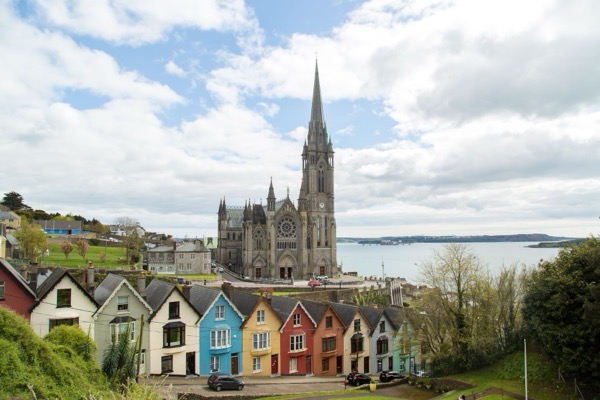
City🇮🇪 Cork
 City
City🇬🇧 Belfast
 City
City🇫🇷 Montpellier
 Region
🇫🇷 The French Riviera
 Region
🇫🇷 The Loire Valley
 City
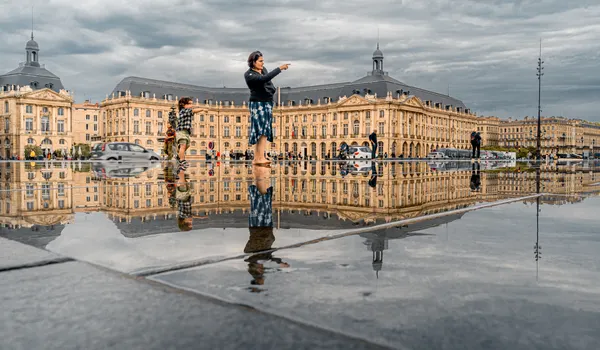
City🇫🇷 Bordeaux and Around
 City
City🇪🇸 Madrid
 Region