When to go to Montpellier?
→ The detailed month-by-month page, with real weather records
Best time: May to June and early September
At a glance
Why go to Montpellier?
Montpellier is a city for walkers. L'Écusson, the medieval centre laid out in the shape of a coat of arms, is a web of lanes cars cannot enter, lined with 17th-century mansions whose inner courtyards often stay hidden from the street. You move from one square to the next without ever walking more than five minutes, and the city makes sense within a day even though it has nearly 300,000 inhabitants.
Medicine shaped everything. The faculty founded in 1220 still occupies the former Saint-Benoît monastery next to the cathedral, the botanical garden created in 1593 for the study of medicinal plants is the oldest in France, and the anatomy museum holds collections few cities can match. Rabelais studied here, as did Nostradamus, and the university remains the area's largest employer today.
The rest is a matter of unapologetic contrasts. In the 1980s Ricardo Bofill designed the Antigone district, neoclassical in prefabricated concrete, extending the old town towards the Lez along a monumental one-kilometre axis. Jean Nouvel, Zaha Hadid and Sou Fujimoto went on to sign public buildings here, and the city keeps building while its winemakers harvest grapes seven kilometres from the end of the tram line.
Map of Montpellier: what is where?
The map shows the 6 places covered in this guide, to picture the distances and plan your route.
- Place de la Comédie
- Musée Fabre
- Promenade du Peyrou
- Saint-Pierre Cathedral
- Antigone
- Maguelone Cathedral
How much does a trip to Montpellier cost?
Montpellier is considerably cheaper than the Côte d'Azur and a little cheaper than Marseille for accommodation, with affordable museums and a centre that costs nothing to explore. The cost that catches people out is parking, if you arrive by car.
| Style | Per day | What it covers |
|---|---|---|
| Backpacker | €50-80/day | Studio on the outskirts or hostel, TaM tickets, free Jardin des Plantes and Peyrou, markets and tielles |
| Comfort | €100-160/day | Hotel in L'Écusson, Musée Fabre, Château de Flaugergues with tasting, Thau oysters and good bistros |
| Premium | €240+/day | Mansion hotel or wine estate, fine dining, a boat trip from Palavas and a private guide |
Everything can be paid by card, including TaM tickets bought on the app. Keep some change for the producers at the Arceaux market and for the beach car parks at Palavas and Villeneuve, often fitted with basic pay-and-display machines.
Is Montpellier safe?
Montpellier's crime figures are higher than the average for cities of its size, but most of it is concentrated far from the sightseeing areas, in the western districts of La Mosson and Petit-Bard, where a traveller has no reason to go. In L'Écusson, the real risk is pickpocketing: Place de la Comédie, the Polygone shopping centre and tram carriages at rush hour are the usual hunting grounds, and café terraces where people leave their phones on the table are targeted first. In the evening, the Plan Cabanes area, the lower end of the Faubourg du Courreau and the surroundings of Saint-Roch station are rowdy rather than dangerous, with crowds gathering and street dealing, while the tourist part of L'Écusson stays calm and well lit until late. One last point that is often forgotten: from September to November, the épisodes cévenols can dump several hundred millimetres of rain in a few hours, flooding basements and cutting off coastal roads, and Météo-France warnings should be taken seriously.
What to see and do in Montpellier
- Place de la Comédie
- Musée Fabre
- Promenade du Peyrou and the Saint-Clément aqueduct
- Montpellier's Jardin des Plantes
- Saint-Pierre Cathedral and the faculty of medicine
- Antigone district
- Château de Flaugergues
- Maguelone Cathedral and Villeneuve beach
L'Écusson and Place de la Comédie
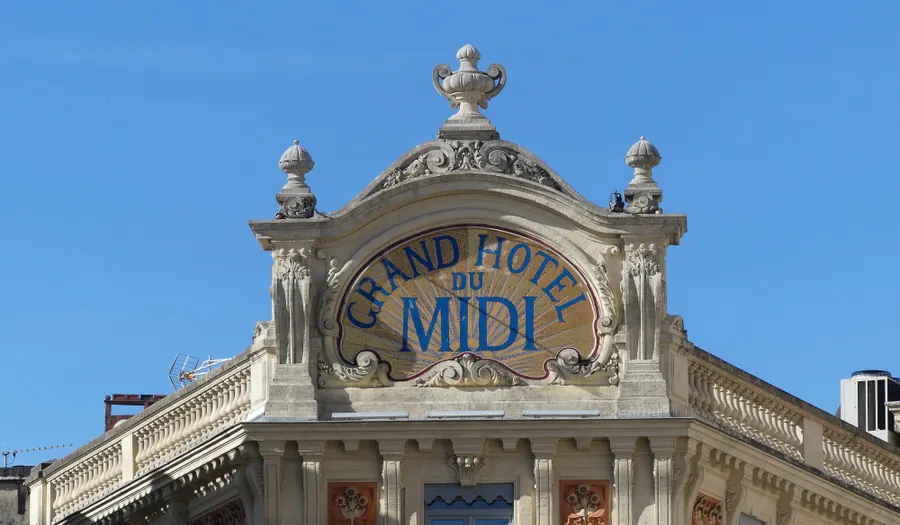
The historic centre fits into an oval about a kilometre across, ringed by the grand 19th-century boulevards. Place de la Comédie, nicknamed l'Œuf (the Egg) because of its former shape, marks the entrance, with the Opéra Comédie of 1888 and the Fountain of the Three Graces. Behind it begin Rue de l'Ancien-Courrier and Rue du Bras-de-Fer, the oldest streets in the city, lined with galleries and independent shops. The mansions of Rue du Cannau and Rue Jacques-Cœur hide grand staircases that the tourist office opens for tours on certain days. The whole area is pedestrianised and can be explored in a morning.
Le Peyrou, Les Arceaux and Saint-Pierre
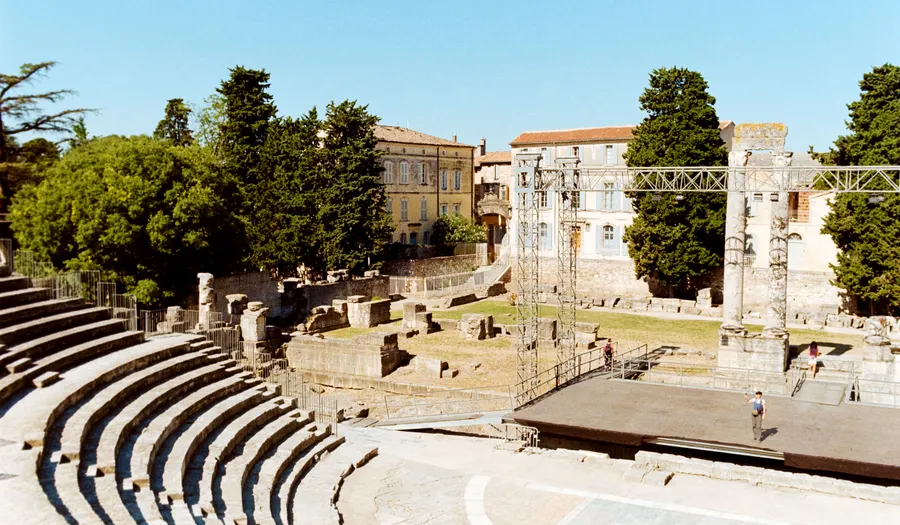
The Promenade du Peyrou, laid out as a terrace west of L'Écusson at the end of the 17th century, lines up a triumphal arch, an equestrian statue of Louis XIV and a water tower that marks the end point of the Saint-Clément aqueduct. The aqueduct unfurls some 880 metres of arches on two levels, directly inspired by the Pont du Gard, and carried water from a spring fourteen kilometres away. Beneath its arches the Arceaux market, the liveliest in the city, is held on Tuesday and Saturday mornings. A short walk away, Saint-Pierre cathedral and its porch with two conical pillars stand beside the faculty of medicine, housed in the former Benedictine monastery. Sunset from the Peyrou is the local end-of-day ritual.
The Jardin des Plantes and the Beaux-Arts district
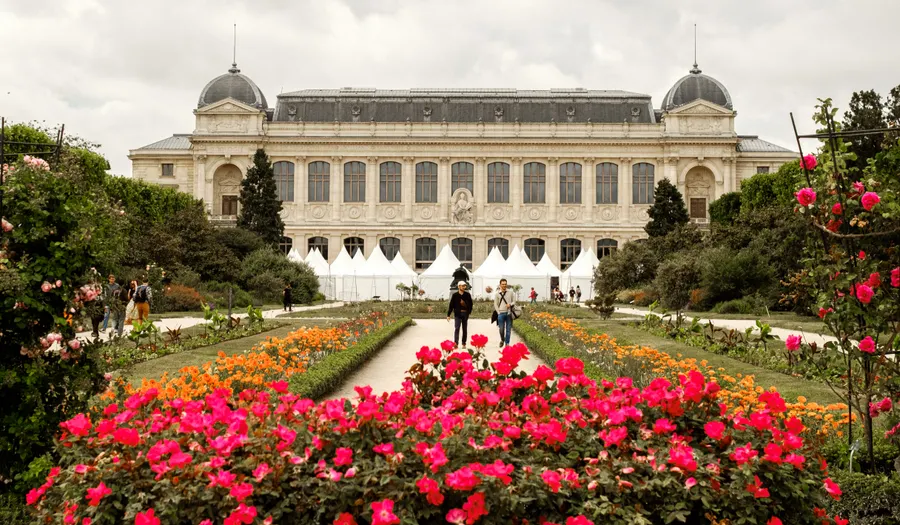
Created in 1593 on the orders of Henri IV for the teaching of medicinal botany, the Jardin des Plantes is the oldest botanical garden in France and keeps its terraced layout, glasshouses and orangery. Entry is free, except on Mondays and during maintenance closures, and the place is surprisingly peaceful for a site right in the centre. Just to the north begins the Beaux-Arts district, a grid of low early-20th-century streets that has become the area for neighbourhood bistros and bookshops. Boulevard Henri-IV separates the two, with the Tour des Pins, the last remnant of the medieval walls. This is the Montpellier of the locals, five minutes from the one the visitors see.
Antigone and the banks of the Lez
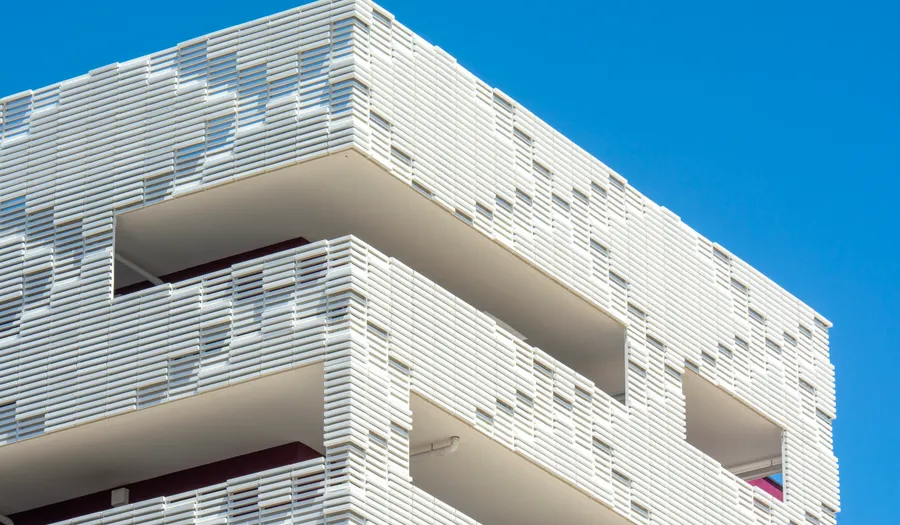
Commissioned in the late 1970s and designed by Ricardo Bofill, Antigone unfolds a kilometre of neoclassical squares in prefabricated concrete, from the Polygone to the Lez. The ensemble alternates columns, entablatures and pediments on a monumental scale, with social housing behind façades straight out of an ancient temple. The vista ends at the regional council building and the Bassin Jacques-Cœur, where the river has been widened into a reflecting pool. On the other side of the Lez, the newer districts line up Jean Nouvel's blue town hall and Sou Fujimoto's Arbre Blanc, whose rooftop is open to the public. Allow an hour's walk to cross it all.
Montpellier's folies
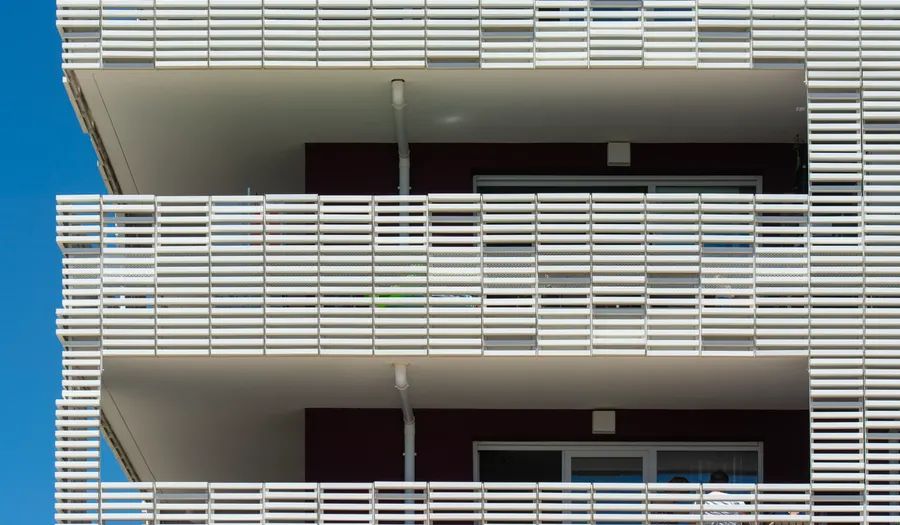
In the 18th century, the city's merchants built themselves country retreats among the vineyards, known as folies, of which some thirty survive on the outskirts. Flaugergues, the oldest, can be visited with its hanging staircase, its Flemish tapestries and its wine estate that is still in production. La Mogère, Alco and the Château de l'Engarran complete the circuit, some open only in summer or by appointment. All of them can be reached by tram or bus from the centre, which makes them easy half-days to fit in. This is Montpellier's least-known heritage and probably the most transporting.
The sea, from Palavas to Maguelone
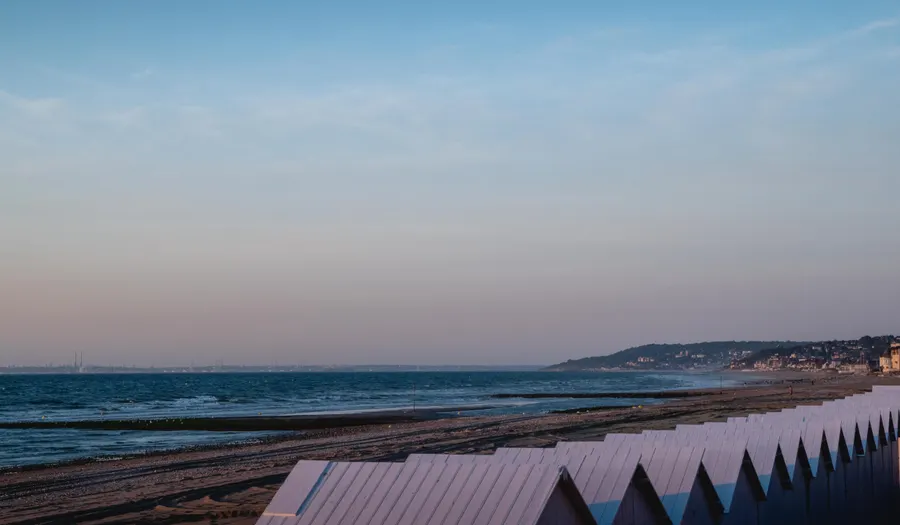
The coast begins about a dozen kilometres from the centre, behind a strip of protected lagoons and salt marshes. Villeneuve-lès-Maguelone is home to its 12th-century Romanesque cathedral, set on a former island amid vineyards and lagoons, free to enter. Palavas-les-Flots and Carnon offer sandy beaches with facilities, reached by tram as far as Pérols and then by regular bus. The Arnel and Méjean lagoons are full of flamingos, herons and terns, which you can watch from the cycle paths. In summer, the cycle path that follows the Lez links the centre to the sea in an hour by bike.
How many days, and which itinerary?
Two days are enough for L'Écusson, the Musée Fabre and the Peyrou. Three to four days add a folie, a day by the sea at Maguelone or Palavas, and a trip out to Sète or Saint-Guilhem-le-Désert.
🗺️ Day-by-day itinerary · 📓 Free printable Montpellier guide (PDF) · 🌍 All of France
City weekend (2 days)
Day 1: Place de la Comédie, the lanes of L'Écusson, the Musée Fabre in the afternoon, dinner around Place Saint-Roch. Day 2: the Arceaux market in the morning, the Peyrou and the aqueduct, Saint-Pierre cathedral and the Jardin des Plantes, then across Antigone to the Lez at the end of the day. No transport needed beyond the tram.
City and sea (4 days)
Two days in the centre, a day at Maguelone cathedral and on Villeneuve beach, and a day for the Château de Flaugergues and its tasting. The tram and the regional coaches cover all these journeys; a car only becomes useful for driving along the lagoons.
Montpellier and the Hérault (6 days)
Three days in Montpellier, a day in Sète and on Mont Saint-Clair, a day at Saint-Guilhem-le-Désert and the Pont du Diable, and a last one at the Cirque de Navacelles or in the wine cellars of Pic Saint-Loup. The first two can be done by train or coach; the others require a car.
Getting there and getting around
TaM ticket at €2.10 valid for 1h30, 24-hour pass at €6.50 and 7-day pass at €20.50: five tram lines cover everything a visitor is interested in.
Free public transport applies only to residents of the metropolitan area, with proof of address: visitors pay the standard fare, contrary to what you often read.
Some TGVs stop at Montpellier Sud de France, seven kilometres from the centre: check which station is on your ticket, as Saint-Roch is right in L'Écusson.
A car is pointless in the fully pedestrianised Écusson, and central car parks easily reach €20 a day: use a park-and-ride on the outskirts instead.
Where to stay in Montpellier?
Boutique hotel in a mansion in L'Écusson: €130 to 220 a night, with the downside of early-morning deliveries in the lanes.
Rental apartment in Beaux-Arts or Les Arceaux: €70 to 130, quiet neighbourhoods ten minutes' walk from the Comédie.
Chain hotel in Antigone or near Saint-Roch station: €75 to 120, handy for trains and without any particular charm.
B&B in a folie or a wine estate on the outskirts: €100 to 180, with a pool and vineyards, provided you have a car.
Our places to stay, stop by stop, at three budgets →
What to eat in Montpellier?
Tielle sétoise, an octopus pie in a spicy tomato sauce, can be found at Les Halles Castellane for €4 to 6 each.
Oysters and mussels from the Étang de Thau are enjoyed with a glass of Picpoul de Pinet, at around €12 to 18 a dozen.
The Arceaux market, on Tuesday and Saturday mornings beneath the aqueduct, brings together market gardeners, cheesemakers and winemakers from Languedoc.
Grisette de Montpellier, a little ball of honey and liquorice, and the wines of the Terrasses du Larzac complete the local table.
Entry requirements
Schengen area: an ID card or passport for EU citizens, 90 days visa-free for UK, US, Canadian and Australian passports.
Rules change: check your own government's travel advice before you go.
Frequently asked questions about Montpellier
Is public transport free for tourists?
No. Free travel applies only to residents of the metropolitan area, on presentation of proof of address and ID at a TaM office. A visitor pays €2.10 for a ticket valid for 1h30, €6.50 for a day or €20.50 for a week.
How do you get to the beach without a car?
Tram line 3 runs to Pérols Étang de l'Or, from where buses serve Carnon and Palavas-les-Flots in about fifteen minutes. For Villeneuve-lès-Maguelone and its cathedral, allow a bus followed by a seasonal shuttle or a half-hour walk from the car park. Plan on about an hour door to door from the Comédie.
When can you visit the Musée Fabre?
Tuesday to Sunday from 11am to 6pm, closed on Mondays, with ticket desks shutting half an hour before and galleries cleared at 5.45pm. Admission to the permanent collections costs €9 and is free on the first Sunday of every month, when you need to arrive right at opening time. The ticket includes the Hôtel de Cabrières-Sabatier d'Espeyran, open only on Wednesdays, Saturdays and Sundays.
Are Sète and Saint-Guilhem worth the detour?
Yes, they are the two best day trips. Sète is half an hour away by train, with its Mont Saint-Clair, its canals and its water jousting in summer; Saint-Guilhem-le-Désert needs a car or a coach and offers an 11th-century abbey listed by UNESCO at the mouth of the Hérault gorges. Set off early in both cases, as the car parks fill up before 10am in July and August.
Which season should you avoid?
July and August for the heat and the crowds on the coast, and mid-September to early November if you want to dodge the épisodes cévenols, Mediterranean storms that sometimes bring several months' worth of rain in a single day. May, June and the first half of September offer the best combination of bearable temperatures, an already warm sea and relative calm.
Similar destinations
 Country
🇪🇸 Spain
 City
City🇪🇸 Barcelona
 Region
🇫🇷 The French Riviera
 City
City🇫🇷 Bordeaux and Around
 Region
🇮🇹 The Amalfi Coast
 City
City🇵🇹 Lisbon
 City
City🇮🇪 Cork
 City
City🇬🇧 Belfast
 Country
🇳🇱 The Netherlands
 City
City