When to go to the Netherlands?
→ The detailed month-by-month page, with real weather records
Best time: April to June and September
At a glance
Why go to the Netherlands?
The Netherlands fits into a pocket handkerchief, and that is precisely its strength. In a few hours by train, you go from the ruler-straight canals of Amsterdam to endless polders striped with wind turbines, from museums of gold and light to wind-swept North Sea beaches. This flat country has perfected the art of making every square kilometre useful, lively and cyclable.
Here, cycling is not a hobby, it is a way of life. Cycle paths wider than some streets, dedicated traffic lights, multi-storey bike parks in front of stations: the bicycle shapes both town and countryside. Getting on a bike in the Netherlands means adopting the country's real rhythm, that of a people who tamed the water and refuse to waste time in traffic jams.
In spring, the country is covered in a patchwork of colour that seems unreal. Fields of red, yellow and purple tulips as far as the eye can see, the Keukenhof gardens in a floral explosion, flower markets perfuming the quays. This horticultural obsession tells an old story, that of the famous tulip mania of the seventeenth century, when a single bulb was worth the price of a canal house.
Map of the Netherlands: what is where?
The map shows the 6 places covered in this guide, to picture the distances and plan your route.
- Amsterdam
- Keukenhof
- Rotterdam
- Zaanse Schans
- Utrecht
- Texel
How much does a trip to the Netherlands cost?
The Netherlands sits in the upper-middle range for Western Europe, with Amsterdam pushing prices up. Staying on the outskirts and cycling quickly lightens the bill.
| Style | Per day | What it covers |
|---|---|---|
| Backpacker | €60-90/day | Dorm or accommodation on the outskirts, quick meals on the go, cycling and a selection of museums. |
| Comfort | €120-200/day | Mid-range hotel, restaurants, a canal cruise and museum tickets. |
| Premium | €250+/day | Houseboat or boutique hotel, gourmet restaurants and private excursions. |
The euro is the currency, and contactless payment is accepted almost everywhere, even for small amounts.
Is the Netherlands safe?
The Netherlands is one of the safest countries in the world and can be explored without worry, including alone or with family. The main thing to watch out for is bikes: keep scrupulously off the cycle paths, look both ways before crossing, as cyclists appear quickly and silently. Pickpockets operate in Amsterdam's tourist areas and on crowded public transport, so keep your belongings close. No particular vaccinations are required and the healthcare system is excellent; bring your European Health Insurance Card if you have one.
What to see and do in the Netherlands
- the canals of Amsterdam
- the tulips of Keukenhof
- the windmills of Kinderdijk
- the Dutch masters in the museum
- the Zuiderzee villages
Amsterdam

The capital unfurls its concentric UNESCO-listed canals, lined with narrow gabled houses. You can visit the Anne Frank House, the Rijksmuseum and its Night Watch, and the Van Gogh Museum with its blazing sunflowers. The Jordaan district is packed with brown cafés, galleries and small shops. Hire a bike to catch the city's true tempo, or glide by boat beneath the illuminated bridges in the evening.
Keukenhof and the tulip fields
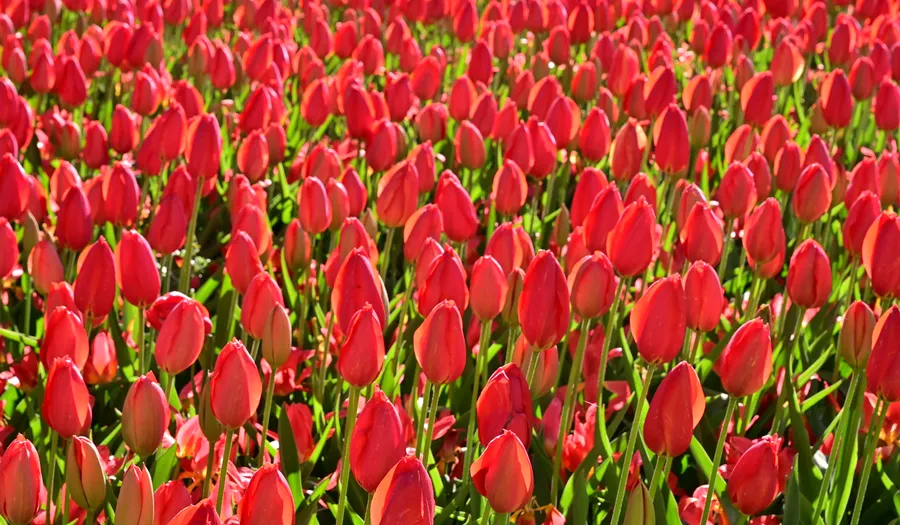
Open only from mid-March to mid-May, Keukenhof is the largest flower garden in the world, with seven million bulbs planted every year. All around, the Bollenstreek region turns into a chequerboard of bold colours. You cycle through the fields between Lisse and Noordwijk, camera over your shoulder. Book your tickets in advance, as crowds are huge on weekends at peak bloom. A hot-air balloon flight offers the most spectacular panorama.
Rotterdam

Razed during the war, Rotterdam has rebuilt itself as a laboratory of bold architecture. Piet Blom's Cube Houses, the great Markthal covered market with its monumental murals and the Erasmus Bridge draw a futuristic skyline unique in the Netherlands. Europe's largest port can be visited by boat or from the Euromast tower. The city exudes a young, cosmopolitan energy, very different from the Amsterdam postcard. Perfect for lovers of design and world food.
Zaanse Schans

Twenty minutes from Amsterdam, this museum hamlet lines up authentic green windmills along the River Zaan. You can see a working oil mill, a clog workshop and a traditional cheese dairy. The typical green wooden houses and little bridges make up the quintessential Dutch scene. Entry to the site is free; only the mills and workshops charge. Come early in the morning to avoid the tour coaches and enjoy the mist over the meadows.
Utrecht

Often overshadowed by Amsterdam, Utrecht charms with its two-level wharves, unique in the world, where old vaulted cellars now house terraces and restaurants at water level. The Dom Tower, the tallest church tower in the Netherlands, dominates the lively student old town. The Miffy Museum delights children, the Railway Museum the curious. You feel a local, authentic atmosphere here, far from the crowds. Ideal for a day trip.
The Wadden Islands

In the north, this string of islands borders the Wadden Sea, the world's largest expanse of tidal mudflats and a UNESCO World Heritage Site. Texel, the most accessible, offers wild beaches, bird reserves, red lighthouses and sheep farms. At low tide, people go wadlopen, a guided muddy walk out to the sandbanks. Seals bask on the islets and sunsets set the horizon ablaze. A breath of raw fresh air, light years from the urban bustle.
How many days, and which itinerary?
A week lets you combine Amsterdam, a few nearby towns and a nature escape to the north or to the tulip fields in spring.
🗺️ Day-by-day itinerary · 📓 Free printable Netherlands guide (PDF)
Classic grand tour (5 days)
Two days in Amsterdam for the museums and canals, a day at Zaanse Schans and its windmills, then Utrecht and Rotterdam for the architecture. Everything connects easily by train, with no journey longer than an hour.
Spring tulip escape (4 days)
Base yourself in Amsterdam or Leiden, with a full day at Keukenhof and another cycling through the fields of the Bollenstreek. Round it off with The Hague, its Scheveningen beach and the Mauritshuis museum, home to Girl with a Pearl Earring.
Nature and the far north (6 days)
Amsterdam to start, then head north to Texel and the Wadden Islands for the beaches and seals. Finish at Giethoorn, the village without roads criss-crossed by canals, before heading back south.
Getting there and getting around
Trains link all the major cities with exemplary punctuality and frequency. Get a rechargeable OV-chipkaart or pay by contactless.
The bike is king: easy rental everywhere, separate cycle paths across the whole country, perfectly flat terrain. It is often the fastest and most enjoyable way to get around.
In the cities, trams and buses complete a dense network; in Amsterdam, forget the car, as parking is scarce and very expensive.
From Schiphol Airport, a train reaches central Amsterdam in a quarter of an hour; the whole country can be crossed in under three hours.
Where to stay in the Netherlands?
Hostels and budget hotels: €30 to €60 a night for a dorm bed or small room, more in Amsterdam in high season.
Mid-range hotels and charming B&Bs along the canals: €100 to €180 a night for two.
Converted houseboats and design boutique hotels: €180 to €300, a typically Dutch experience on the water.
Tip: stay in Haarlem, Leiden or Utrecht and take the train into Amsterdam to save significantly on accommodation.
Our places to stay, stop by stop, at three budgets →
What to eat in the Netherlands?
Raw marinated herring, swallowed with your head tipped back, with onions and pickles: a true street ritual not to be missed.
Stroopwafels, thin waffles filled with caramel syrup, even better warm and bought at a market.
Bitterballen, crispy croquettes filled with ragout, served with mustard as a pre-dinner snack in brown cafés.
Thick Dutch fries, served in a paper cone with a generous dollop of mayonnaise, or with peanut sauce for the patatje oorlog version.
Entry requirements
Schengen area: an ID card or passport for EU citizens, 90 days visa-free for UK, US, Canadian and Australian passports.
Rules change: check your own government's travel advice before you go.
Cities and regions to discover

Frequently asked questions about the Netherlands
When is the best time to go?
April to May for the tulips in bloom, June to August for the mildest weather and long evenings. Spring remains unbeatable, but book early as crowds build.
What daily budget should you plan for?
Allow around €60 to €90 if you travel frugally, €120 to €200 for classic comfort. Amsterdam costs noticeably more than the rest of the country.
How do you get around?
Trains efficiently link all the cities and the bike rules everywhere. A car is unnecessary, even a handicap in city centres, where parking is scarce and expensive.
Do you need to speak Dutch to travel there?
Not at all, the Dutch are among the best English speakers in the world and speak it fluently. A few polite words in Dutch are always appreciated but by no means necessary.
Similar destinations
 City
City🇫🇷 Bordeaux and Around
 Country
🇪🇸 Spain
 City
City🇪🇸 Barcelona
 Country
🇮🇪 Ireland
 City
City🇬🇧 Northern Ireland
 City
City🇮🇪 Galway and Connemara
 Region
🇮🇹 Puglia
 City
City🇫🇷 Montpellier
 City
City