When to go to Milan?
→ The detailed month-by-month page, with real weather records
Best time: April to June and September to October
At a glance
Why go to Milan?
Milan is Italy's great misunderstood city. People call it cold, industrious, less beautiful than Rome or Florence, and then you climb onto the Duomo's rooftop terraces at sunset, walk among 135 pink marble spires with the Alps as a backdrop, and everything changes. The Lombard capital does not try to seduce; it makes you earn its treasures, and that is precisely what makes each discovery more intense.
It is also the most underrated art city in the country. Leonardo da Vinci's Last Supper, the most famous fresco in the world, hides in the refectory of Santa Maria delle Grazie. The Pinacoteca di Brera lines up Caravaggio, Raphael and Mantegna in a 17th-century palace, and the Sforza Castle shelters Michelangelo's last sculpture. All within a twenty-minute walk.
Finally, Milan lives life to the full. The aperitivo was invented here, and every evening the terraces of the Navigli fill up with spritz and boards of Lombard cured meats. Fashion and design permeate every shop window, every courtyard, every concept store on Via Tortona. One weekend is enough to understand why the Milanese would not live anywhere else.
Map of Milan: what is where?
The map shows the 6 places covered in this guide, to picture the distances and plan your route.
- Milan Cathedral
- Santa Maria delle Grazie
- Pinacoteca di Brera
- Sforza Castle
- Navigli
- San Siro
How much does a trip to Milan cost?
Milan is, along with Venice, the most expensive city in Italy, but an aperitivo that doubles as dinner and a cheap metro help keep the bill under control.
| Style | Per day | What it covers |
|---|---|---|
| Backpacker | €70-100/day | hostel or room on the outskirts, panzerotti from Luini at lunchtime, aperitivo as dinner, metro |
| Comfort | €130-200/day | well-located 3-4-star hotel, trattoria in the evening, Duomo terraces and museums, a few taxis |
| Premium | €300+/day | design hotel in Brera or a palace hotel in the Quadrilateral, Michelin-starred table, shopping on Via Montenapoleone |
Bank cards are accepted everywhere, including on the metro; keep a few euros for neighbourhood cafes.
Is Milan safe?
Milan is a safe city where the only real vigilance concerns pickpockets, active around the Duomo, on the metro and at Centrale station. Beware of bracelets or pigeon feed pressed on you in Piazza del Duomo: refuse politely and walk on. At night, the Navigli and the centre remain lively and calm; simply avoid the deserted surroundings of Centrale station late at night.
What to see and do in Milan
- Milan Cathedral
- Leonardo's Last Supper
- Galleria Vittorio Emanuele II
- Navigli district
- Pinacoteca di Brera
- Sforza Castle
- Fashion Quadrilateral
- San Siro Stadium
Milan Cathedral
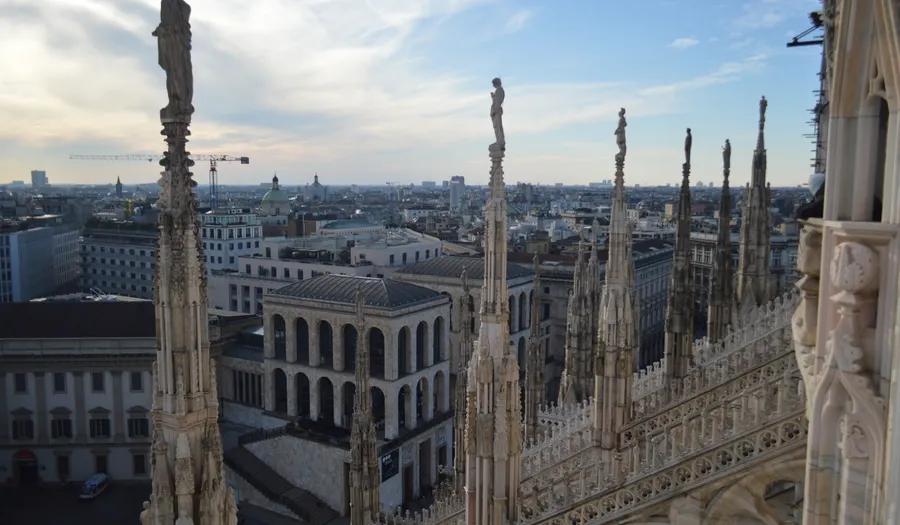
Europe's third-largest cathedral took almost six centuries to build. Its facade of Candoglia marble, its 3,400 statues and its golden Madonnina make it a Gothic masterpiece unique in Italy. The interior impresses with its 52 colossal pillars and flamboyant stained glass. But the real show is on the rooftop terraces, where you literally walk on the roof among the spires, with views over the whole city and, on clear days, the snow-capped Alps.
Santa Maria delle Grazie and the Last Supper

In the refectory of this UNESCO-listed Dominican convent, Leonardo da Vinci painted his Last Supper between 1495 and 1498, capturing the exact moment when Christ announces Judas's betrayal. The fragile fresco is visited in groups of 35 people for exactly 15 minutes. The emotion is real: the gestures, the glances, the perspective that extends the room. It is one of the most powerful artistic experiences in Europe, provided you have booked weeks in advance.
Galleria Vittorio Emanuele II

Milan's drawing room, inaugurated in 1877, links the Duomo to La Scala beneath a spectacular iron and glass roof. Prada opened its first shop here in 1913, and the Camparino café saw the birth of the aperitivo ritual. Look down at the mosaic floor: tradition has it that you spin three times on your heel on the bull of Turin's private parts to bring good luck. A thoroughfare that has become a monument in its own right.
Brera district

Cobbled lanes, antique shops, ochre facades draped in wisteria: Brera is the bohemian village at the heart of the city. Its Pinacoteca is one of the finest museums in Italy, with Mantegna's Dead Christ and Hayez's The Kiss. Nearby, the Orto Botanico offers a secret green interlude. In the evening, trattoria tables spill onto the pavements of Via Fiori Chiari and the atmosphere becomes delightfully romantic.
The Navigli

These canals, partly designed by Leonardo da Vinci, were used to carry the marble for the Duomo. Today the Naviglio Grande and the Naviglio Pavese concentrate Milan's nightlife: spritz bars, artists' studios, vintage shops and waterside trattorias. On the last Sunday of the month, a large antiques market sets up along the quays. At golden hour, the colourful facades reflected in the water make up the most beautiful scene in the city.
Sforza Castle and Sempione Park
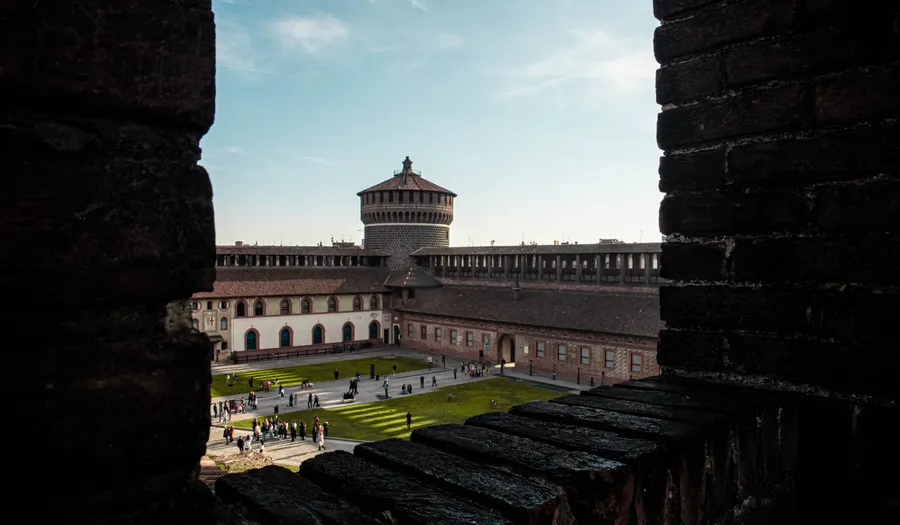
This 15th-century red-brick fortress was the residence of the Dukes of Milan, and Leonardo da Vinci worked here. Its museums house the Rondanini Pietà, Michelangelo's last, unfinished sculpture, displayed alone in a room designed for it. Behind the castle stretches Sempione Park, the green lung of the Milanese, with the Arco della Pace at the far end and the Torre Branca for a view from above. Half a day slips by effortlessly here.
How many days, and which itinerary?
Allow 3 days for the essentials, and 4 to wander without rushing and add Lake Como as an excursion.
🗺️ Day-by-day itinerary · 📓 Free printable Milan guide (PDF) · 🌍 All of Italy
Milan express (2 days)
Day 1: the Duomo and its terraces, the Galleria, La Scala, then Brera and its Pinacoteca. Day 2: the Last Supper (booked in advance), the Sforza Castle, Sempione Park, and an aperitivo evening on the Navigli.
Milan in full (3 days)
The first two days as above, then a third devoted to the Fashion Quadrilateral, the Monumental Cemetery and the Porta Nuova district with the Bosco Verticale. Finish with dinner in a trattoria in Isola.
Milan and the lakes (5 days)
Three days in Milan, then a day on Lake Como (Varenna and Bellagio, 40 minutes by train) and a final one on Lake Maggiore and its Borromean Islands. The most efficient city-and-lakes combination in Europe.
Getting there and getting around
Efficient metro: 4 lines, a ticket at €2.20, a 24-hour card at €7.60, and you can also pay contactless directly at the turnstiles
Historic 1928 trams: line 1 crosses the centre, an attraction in itself for the price of a ticket
From Malpensa: the Malpensa Express in 50 minutes (€13); from Linate: metro line M4 in 15 minutes
The centre is walkable: the Duomo, Brera and the Sforza Castle fit within a 20-minute triangle
Where to stay in Milan?
Navigli and Porta Romana: young atmosphere and aperitivo bars, decent doubles from €90 to €130
Brera: the most charming district, boutique hotels from €160 to €250
Duomo centre: ideal for doing everything on foot, allow €140 to €220 in a 4-star hotel
Isola and Porta Nuova: modern, well-connected Milan, apartments and design hotels from €100 to €160
Our places to stay, stop by stop, at three budgets →
What to eat in Milan?
Risotto alla milanese: saffron-scented and creamy, often served with ossobuco; the benchmark version is at Trattoria Masuelli San Marco
Cotoletta alla milanese: a breaded veal chop as thick as a book, best shared as it spills over the plate
Aperitivo: from 18:00 to 21:00, a spritz at €8-12 gives access to a buffet, an institution born at the Camparino
Panettone: the best addresses (Pasticceria Marchesi, Cova) sell it all year round, a far cry from the industrial product
Entry requirements
Schengen area: an ID card or passport for EU citizens, 90 days visa-free for UK, US, Canadian and Australian passports.
Rules change: check your own government's travel advice before you go.
Frequently asked questions about Milan
When is the best time to visit Milan?
April to June and September to October: mild temperatures, open terraces and superb light on the Duomo. Avoid August, muggy and deserted by the Milanese, and be aware that fashion weeks (late February, late September) send hotel prices soaring.
What daily budget should I plan for in Milan?
Allow €70 to €100 a day as a backpacker, €130 to €200 for a comfortable stay with a well-located hotel and restaurants, and much more if you give in to the lure of shopping. The aperitivo, which replaces dinner for €10-12, is the best ally of tight budgets.
How do I get around?
The metro (4 lines, €2.20 a journey, contactless payment at the turnstiles) covers the whole city, and the historic trams add charm to the ride. The historic centre is very walkable: the Duomo, Brera and the Sforza Castle fit within a twenty-minute triangle.
How many days should I plan?
Three days let you see the essentials without rushing: the Duomo and its terraces, the Last Supper, Brera, the Sforza Castle and an evening on the Navigli. With four or five days, add an excursion to Lake Como, just 40 minutes away by train.
Do I need to book to see Leonardo da Vinci's Last Supper?
Yes, absolutely, and well in advance: tickets (€15) are released quarterly on the official Cenacolo Vinciano website and sell out within hours. Failing that, guided city tours that include the Last Supper cost more but often save the day at the last minute.
Similar destinations
 Country
🇪🇸 Spain
 City
City🇪🇸 Barcelona
 City
City🇪🇸 Madrid
 City
City🇮🇹 Naples
 City
City🇮🇪 Cork
 City
City🇬🇧 Belfast
 Country
🇩🇪 Germany
 City
City🇧🇪 Brussels
 City
City🇩🇪 Munich
 City
City