When to go to Germany?
→ The detailed month-by-month page, with real weather records
Best time: May to September and December (markets)
At a glance
Why go to Germany?
Germany defies the clichés at every regional border. The country runs from Baltic beaches to Alpine peaks, from the steep vineyards of the Rhine to deep, dark forests, from hip megacities to medieval villages frozen in time. This diversity stems from a history long splintered into principalities, each of which left behind its own castle, its own beer and its own dialect.
Berlin alone embodies the creative energy of the reunified country. Along the line of the fallen Wall, the city has turned its scars into a canvas: derelict sites transformed into legendary clubs, open-air painted walls, Turkish and Vietnamese neighbourhoods teeming with life. No other European capital combines painful memory and unbridled artistic ferment with such confidence.
In the south, Bavaria rolls out the postcard the whole world associates with Germany. Fairy-tale castles perched on the Alpine foothills, beer steins raised in the Oktoberfest tents, villages with painted façades and onion-domed bell towers. Yet this folksy, so distinctive face tells only one side of a country far more varied than it first appears.
Map of Germany: what is where?
The map shows the 6 places covered in this guide, to picture the distances and plan your route.
- Berlin
- Munich
- Neuschwanstein
- Rothenburg ob der Tauber
- Hamburg
- Lorelei
How much does a trip to Germany cost?
Germany offers excellent value for Western Europe, with big variations between fairly affordable Berlin and noticeably pricier Munich.
| Style | Per day | What it covers |
|---|---|---|
| Backpacker | €45-75/day | Hostel, street food and sausages, public transport and free museums. |
| Comfort | €100-170/day | Mid-range hotel, restaurants, beer halls and paid entry to sights. |
| Premium | €220+/day | Boutique hotels, fine dining, Rhine cruises and guided tours. |
The euro is the currency, but Germany remains attached to cash: always carry some for small shops and cafés.
Is Germany safe?
Germany is a very safe country, with faultless infrastructure and an efficient, approachable police force. Precautions come down to common sense: watch out for pickpockets in stations, on public transport and at big events such as Oktoberfest. The healthcare system ranks among the best in the world, and the European Health Insurance Card covers treatment for EU citizens. No specific vaccinations are required, tap water is drinkable everywhere and pharmacies are plentiful and well signposted.
What to see and do in Germany
- Neuschwanstein Castle
- Berlin and its history
- the Romantic Road
- the Black Forest
- the Christmas markets
Berlin

The German capital has a rare intensity, poised between memory and the avant-garde. Here you can visit the Brandenburg Gate, the remains of the Wall at the East Side Gallery, the UNESCO-listed Museum Island and the moving Holocaust Memorial. The Reichstag and its glass dome offer a view you can book for free. By night, Berlin becomes the world capital of clubbing and partying. Its Kreuzberg and Neukölln districts buzz with a uniquely multicultural creativity.
Munich and Bavaria

Elegant and prosperous, Munich blends Bavarian tradition with urban sophistication. There is Marienplatz and its glockenspiel, historic beer halls such as the Hofbräuhaus, and the vast English Garden, where people surf a standing river wave. Every autumn, Oktoberfest draws millions of revellers in traditional dress. The city also makes an ideal base for heading out to the Alps, the lakes and the castles. Culture, beer and nature rub shoulders here with an unabashed love of the good life.
Neuschwanstein Castle
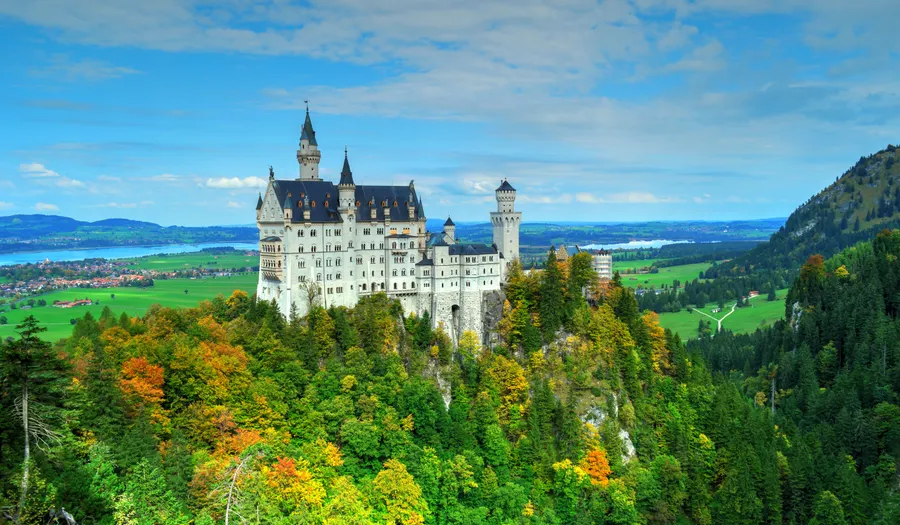
Perched on a rocky spur at the foot of the Alps, this fairy-tale castle inspired Sleeping Beauty's castle at Disney. Commissioned by King Ludwig II of Bavaria in the nineteenth century, it spreads out white turrets and sumptuous halls facing a dizzying panorama. The Marienbrücke bridge offers the most famous shot, with the castle floating above the gorge. You absolutely must book your tickets in advance, as time slots go fast. Combine the visit with neighbouring Hohenschwangau Castle.
The Romantic Road

This legendary route of nearly four hundred kilometres links Würzburg to Füssen through Bavaria and Baden-Württemberg. It strings together medieval gems such as Rothenburg ob der Tauber, a fortified town of cobbled lanes and perfectly preserved half-timbered houses. Vineyards, castles and flower-filled villages line the way. It is best driven by car, so you can stop wherever the mood takes you. At Christmas, the illuminated markets work their full magic.
Hamburg

The great port of the north, Hamburg has a maritime swagger and watery charm, with countless canals, more than in Venice. The ultra-modern HafenCity district is home to the Elbphilharmonie, a spectacular concert hall crowned with a wave of glass. The red-brick Speicherstadt warehouse district, a UNESCO site, lines romantic canals. The Reeperbahn, the famous nightlife district, never sleeps. Wealthy and green, Hamburg charms with its understated Hanseatic elegance.
The Romantic Rhine Valley

Between Bingen and Koblenz, the Rhine threads through a steep, UNESCO-listed gorge bristling with medieval castles and terraced vineyards. The legendary Lorelei rock looms over the river from a sheer cliff steeped in myth. You explore the region on a river cruise, gliding past wine villages and hilltop fortresses. Rüdesheim and Bacharach are packed with wine taverns and picturesque lanes. This is romantic Germany par excellence, the Germany of poets and painters.
How many days, and which itinerary?
Allow at least ten days to link Berlin, Bavaria and the Rhine Valley without rushing; two weeks let you add the north and Hamburg.
🗺️ Day-by-day itinerary · 📓 Free printable Germany guide (PDF)
Berlin and Bavaria (8 days)
Three days in Berlin for history and nightlife, then a fast train to Munich for Bavarian culture. Devote a day to Neuschwanstein Castle and an outing into the Alps.
Romantic Road and castles (7 days)
From Würzburg to Füssen, drive the Romantic Road with stops in Rothenburg and Augsburg. The grand finale comes at the foot of Neuschwanstein before heading to Munich for the journey home.
Grand tour of the country (14 days)
Berlin, Dresden and its rebuilt Baroque, Munich and the Alps, then the Rhine Valley by cruise. Finish with Cologne and its Gothic cathedral, before the maritime energy of Hamburg in the north.
Getting there and getting around
The rail network is dense and fast: ICE trains link the major cities at more than three hundred kilometres per hour. Book ahead for the best fares.
The motorways, some with no speed limit, make a car ideal for the Romantic Road and rural regions, but superfluous in the cities.
In every urban area, an integrated network of metro, tram and bus works beautifully on a single ticket. Buy it before you board.
Long-distance coaches and car-sharing offer budget alternatives; cross-border connections to neighbouring countries are plentiful.
Where to stay in Germany?
Hostels and simple guesthouses: 25 to 50 euros a night, with an excellent network even in small towns.
Mid-range hotels and traditional Gasthofs: 80 to 150 euros for two, often with a hearty German breakfast included.
Boutique hotels, converted castles and design addresses in the cities: 160 to 280 euros a night.
Tip: book the big cities early during trade fairs and Oktoberfest, when prices soar in Munich.
Our places to stay, stop by stop, at three budgets →
What to eat in Germany?
Sausage in every form: Berlin currywurst smothered in spicy sauce, white Bavarian weisswurst to be eaten in the morning, grilled bratwurst in a bun.
The giant pretzel, crisp and salty, the obligatory companion to a cold stein of beer in the beer gardens.
Schnitzel, a golden breaded escalope, and Bavarian roast pork with potato dumplings and cabbage.
Black Forest gateau, with chocolate, cherries and cream, and the famous dense wholegrain bread served at any hour.
Entry requirements
Schengen area: an ID card or passport for EU citizens, 90 days visa-free for UK, US, Canadian and Australian passports.
Rules change: check your own government's travel advice before you go.
Cities and regions to discover
 City
City🇩🇪 Berlin
 City
City🇩🇪 Munich
Frequently asked questions about Germany
When is the best time to go?
May to September for mild weather and open-air terraces, late September for Oktoberfest in Munich. December offers the unrivalled magic of the illuminated Christmas markets.
What daily budget should I plan for?
Around 45 to 75 euros as a backpacker, 100 to 170 euros for a comfortable stay. Berlin remains more affordable than Munich or Hamburg.
How do I get around Germany?
The high-speed ICE train links the major cities efficiently, while a car is the way to go for the Romantic Road and rural areas. Urban transport networks are exemplary.
Do I need to speak German to travel there?
It is not essential: English is widely understood in the cities and tourist spots. A few words of German make things easier in the countryside and are always well received.
Similar destinations
 Country
🇫🇷 France
 Country
🇮🇪 Ireland
 Region
🇫🇷 Béarn
 Region
🇫🇷 Normandy
 City
City🇫🇷 Bordeaux and Around
 Country
🇪🇸 Spain
 Country
🇮🇹 Italy
 Region
🇮🇹 Florence and Tuscany
 Region
🇮🇹 Sicily
 Country