When to go to Mongolia?
→ The detailed month-by-month page, with real weather records
Best time: June to September
At a glance
Why go to Mongolia?
Mongolia is the land of wide-open spaces par excellence, an immensity of steppe, dunes and mountains where nomads still live in yurts. You drive for hours without meeting a fence, between herds of horses and endless horizons. It is one of the last truly wild lands in Asia, barely touched by tourism.
Travelling in Mongolia means reconnecting with raw nature and an ancestral way of life, that of herders who follow their flocks with the seasons. You stay with local families, share salty milk tea and learn to ride like the descendants of Genghis Khan. The comfort is rustic but the human experience is overwhelming.
From the Gobi Desert to the northern forests by way of high-altitude lakes, the landscapes change radically from one region to the next. Every summer, the Naadam festival celebrates wrestling, archery and horse racing in an electric atmosphere. Mongolia has to be earned, but it rewards travellers in search of authenticity and adventure.
Map of Mongolia: what is where?
The map shows the 6 places covered in this guide, to picture the distances and plan your route.
- Ulaanbaatar
- Khongoryn Els dunes
- Terelj National Park
- Lake Khövsgöl
- Karakorum
- Bayanzag
How much does a trip to Mongolia cost?
Everyday life is cheap in Mongolia, but the long distances and the near-compulsory 4x4 with driver quickly push up the budget. Travelling on an organised circuit is often the most cost-effective option.
| Style | Per day | What it covers |
|---|---|---|
| Backpacker | €40-60/day | Hostels, local transport, nights in simple yurts and shared group tours. |
| Comfort | €80-140/day | Private 4x4 tour with driver, comfortable yurt camps and a few domestic flights. |
| Premium | €200+/day | Luxury camps, a dedicated guide speaking your language, domestic flights and tailor-made expeditions. |
Withdraw tögrög in cash in Ulaanbaatar before heading out to the regions, as cash machines and card payments are almost non-existent there.
Is Mongolia safe?
Mongolia is a safe country where violence against travellers is rare, but isolation is the main risk: breakdowns, changeable weather and the lack of rapid rescue mean you should travel with an agency or an experienced driver. In Ulaanbaatar, beware of pickpockets in crowded places. Bring what you need to cope with the unexpected, as medical facilities are limited outside the capital. Good equipment and solid organisation are the key to a stress-free trip.
What to see and do in Mongolia
- the Gobi Desert and its dunes
- the Orkhon Valley
- a night in a yurt with nomads
- Terelj National Park
- the Naadam festival
Gobi Desert
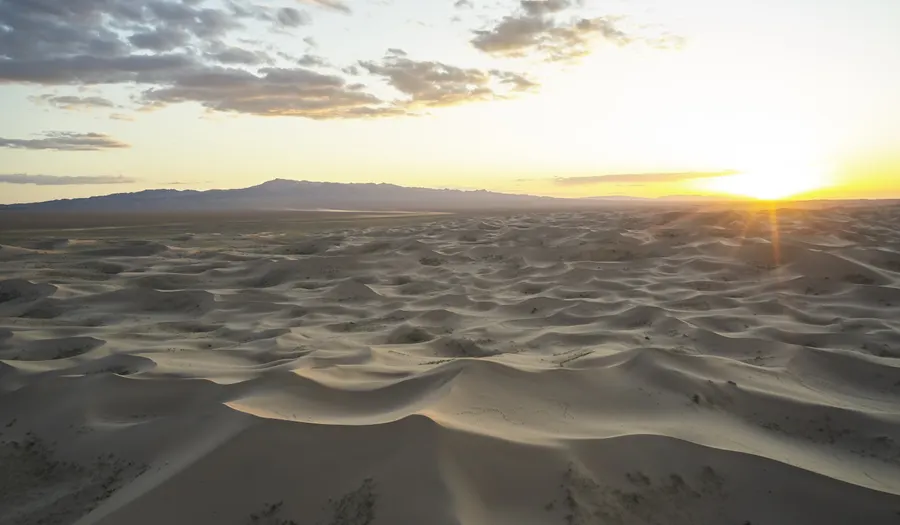
The Gobi is not just a sand desert: it is a world of icy canyons, red cliffs and singing dunes. The Khongoryn Els dunes rise several hundred metres, offering a striking panorama at sunset. At Bayanzag, the flaming cliffs yielded some of the first fossilised dinosaur eggs. You sleep in a yurt camp, lulled by absolute silence. A must on any grand Mongolian journey.
Ulaanbaatar

The capital is home to nearly half the country's population, in a striking mix of modern towers and yurt districts. Gandan Monastery, the heart of Mongolian Buddhism, houses an immense gilded statue and monks at prayer. Sükhbaatar Square and the National Museum trace the history of Genghis Khan and the Mongol Empire. It is the unavoidable starting point for any expedition. A city of contrasts, raw and endearing.
Terelj National Park

An hour and a half from Ulaanbaatar, Terelj National Park offers a foretaste of Mongolian nature without a long drive. Its green meadows are scattered with spectacular rocks, including the famous Turtle Rock. You can hike, ride horses and visit a temple perched on a hillside. Many yurt camps make it easy to spend a first night with the nomads. Ideal for a short, accessible escape.
Lake Khövsgöl
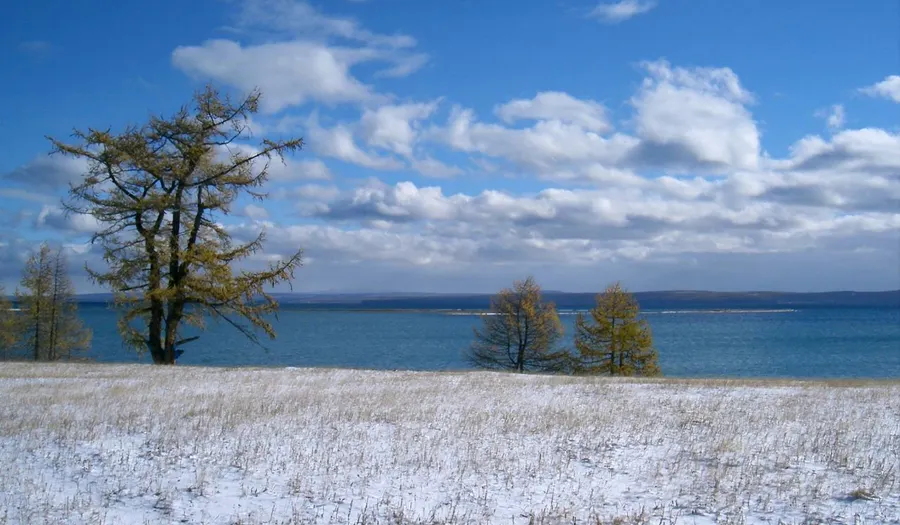
Nicknamed the blue pearl of Mongolia, Lake Khövsgöl is an immense body of crystal-clear water ringed by forests and mountains. Its shores are home to the Tsaatan people, reindeer herders who live in tepees. You hike, go out on the water and discover a landscape closer to Siberia than to the desert. In winter the lake freezes into a giant ice rink. A still-unspoilt jewel of the north.
Orkhon Valley

A UNESCO World Heritage Site, the Orkhon Valley is the historical cradle of the Mongol Empire and its former capitals. You visit the ruins of Karakorum and Erdene Zuu Monastery, enclosed by walls topped with stupas. The river winds between green meadows and waterfalls, the playground of herders on horseback. It is a concentrate of history and quintessentially Mongolian nature. A major cultural stop in the centre of the country.
Naadam festival and nomadic life
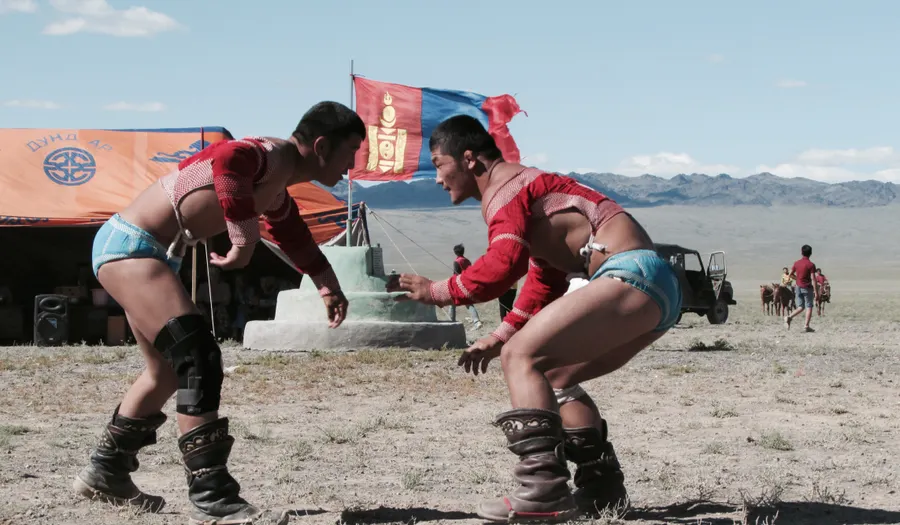
Every July, Naadam celebrates the three manly games: wrestling, archery and horse races ridden by children. In Ulaanbaatar as in the countryside, the atmosphere is festive and colourful, with traditional costumes and national pride. It is a chance to dive into the heart of nomadic culture, among the yurts and the herds. Sharing the daily life of a herding family remains the strongest memory of the trip. An incomparable human immersion.
How many days, and which itinerary?
Allow at least 12 to 15 days to combine the Gobi Desert, the Orkhon Valley and the north, as the distances are so great.
🗺️ Day-by-day itinerary · 📓 Free printable Mongolia guide (PDF)
Gobi and central Mongolia (12 days)
A 4x4 loop from Ulaanbaatar to the dunes of the Gobi, then the Orkhon Valley and Karakorum. You sleep in yurt camps and share the life of the herders. The driving days are long but the landscapes are grandiose.
Grand tour of the north and the desert (15 days)
The complete itinerary, adding Lake Khövsgöl and its forests to the Gobi and Orkhon circuit. You alternate between desert, steppe and the mountains of the north. Best kept for travellers ready for long tracks.
Short escape (7 days)
For a first taste: Ulaanbaatar, Terelj National Park and a foray into the central Gobi. Ideal if time is short, combining a domestic flight and a 4x4.
Getting there and getting around
A 4x4 with driver is essential outside the towns: roads are rare and the tracks demanding.
Domestic flights link Ulaanbaatar to remote regions such as the Gobi or Khövsgöl and save days on the road.
On horseback or by camel for excursions over short distances, the nomad way.
In town, taxis are affordable in Ulaanbaatar, but traffic is heavy and jams are frequent.
Where to stay in Mongolia?
Tourist yurt camps with beds and meals, allow €30 to €60 per person on full board.
A night with a nomadic family, more rustic and authentic, often around €15 to €25 with meals.
Hotels and hostels in Ulaanbaatar, from €20 in a dorm to €80 for good comfort.
Upmarket yurt camps in the Gobi, with private shower, from €90 a night.
Our places to stay, stop by stop, at three budgets →
What to eat in Mongolia?
Mongolian dishes are rich in meat: mutton, goat and beef, often boiled or stewed.
Buuz, steamed meat dumplings, and fried khuushuur are the great nomadic classics.
Dairy products punctuate herders' lives: salty milk tea, yoghurts and dried cheeses.
In Ulaanbaatar the food becomes more varied, with international and vegetarian restaurants easier to find.
Entry requirements
Visa-free for up to 30 days for EU, UK, Canadian and Australian passports (for the EU, UK and Australia under a temporary scheme that runs to the end of 2026), and for up to 90 days for US passports. Hotels register foreign guests with the immigration agency; if you stay with friends, register yourself.
Rules change: check your own government's travel advice before you go.
Frequently asked questions about Mongolia
When is the best time to go?
Summer, from June to September, offers the mildest climate; July coincides with the Naadam festival.
What daily budget should I plan for?
Allow around €40 to €60 a day on a budget, and €80 to €140 for a comfortable private tour.
How do you get around Mongolia?
Outside the towns, a 4x4 with driver is essential; domestic flights shorten the long distances.
Can you stay with nomads?
Yes, staying in a yurt with a herding family is one of the most memorable experiences of the trip.
Similar destinations
 Country
🇨🇳 China
 Country
🇯🇴 Jordan
 Country
🇯🇵 Japan
 Country
🇦🇷 Argentina
 Country
🇵🇪 Peru
 Country
🇴🇲 Oman
 Region
🇹🇷 Cappadocia
 City
City🇨🇳 Guilin and Yangshuo
 City
City🇱🇰 Sigiriya
 Country