When to go to Montreal and Quebec City?
→ The detailed month-by-month page, with real weather records
Best time: June to October
At a glance
Why go to Montreal and Quebec City?
Quebec has its own very particular way of letting America and Europe live side by side. You drive along wide avenues, pass English-language shop signs, then turn a corner and hear French, a lilting, rolling, warm-hearted French that reminds you this land was French before it was British. Montreal and Quebec City are the two poles of that identity: one a creative, bilingual metropolis set on its island beside the St Lawrence; the other a fortified museum-city, the only walled city north of Mexico, perched on its headland like a sentinel over the river.
What strikes you is the sheer theatre of the seasons. At the end of September the autumn colours set the maples ablaze in red and gold, one of the most celebrated autumn spectacles on the continent. Winter, for its part, does not pretend: the snow piles up, the roofs of Old Quebec turn white and the city takes on the look of an antique engraving. In between, summer is lived outdoors, on terraces, in parks and to the beat of one of the busiest festival seasons in North America.
People come here for the history, for the nature right on the doorstep and for an unashamed love of good food. Steaming poutine, bagels fresh from the wood-fired oven, smoked meat piled high on rye, maple syrup poured onto the snow at the sugar shacks: Quebec's table tells the story of a people attached to their roots and proud to share them. Two cities, roughly three hours' drive apart, and already the feeling of having crossed an entire country.
Map of Montreal and Quebec City: what is where?
The map shows the 7 places covered in this guide, to picture the distances and plan your route.
- Château Frontenac, Quebec City
- Old Montreal
- Plateau Mont-Royal
- Mount Royal Park
- Montmorency Falls
- Île d'Orléans
- Petit-Champlain, Quebec City
How much does a trip to Montreal and Quebec City cost?
Quebec is not the cheapest destination on the continent, but there is plenty of choice and generous portions often soften the bill. Here are rough figures per person per day, including accommodation, meals and sightseeing, excluding long-distance transport.
| Style | Per day | What it covers |
|---|---|---|
| Backpacker | CAD 90-140 (€60-95) | Youth hostel or modest room, street food and poutine, markets for supplies, public transport and free sights such as the parks and the Plains of Abraham. |
| Comfort | CAD 200-320 (€135-215) | Well-located boutique or mid-range hotel, neighbourhood restaurants, a few paid sights and museums, a mix of walking and car hire for day trips. |
| Luxury | CAD 450 and up (€300 and up) | A room at the Château Frontenac or a boutique hotel in Old Montreal, fine dining, guided experiences, a river cruise and private transfers. |
The currency is the Canadian dollar (CAD). Cards are accepted everywhere, contactless included, and mobile payment is common. Note that displayed prices exclude tax, with two taxes added at the till, and a tip of around 15 to 20 per cent is customary in restaurants and bars.
Is Montreal and Quebec City safe?
Montreal and Quebec City rank among the safest destinations in North America, with low crime and a relaxed atmosphere by day and by night. The usual precautions are enough: keep an eye on your belongings in tourist areas and on public transport, and stay alert at night in nightlife districts. The main challenge is the climate: the harsh winter calls for very warm clothing, non-slip shoes and care on icy pavements, while summer can be hot and humid. Always check the weather before heading out into nature.
What to see and do in Montreal and Quebec City
Old Quebec and the Château Frontenac

You climb up to the Upper Town through cobbled lanes lined with stone houses under tin roofs. The Château Frontenac, a monumental hotel with the air of a Loire château, crowns Cap Diamant and can be seen from everywhere. Below it, the Petit-Champlain district lines up its shops and cafés in one of the oldest commercial quarters in North America. Old Quebec, a UNESCO World Heritage Site, remains the only fortified city north of Mexico to have kept its ramparts. You stroll along Dufferin Terrace, skirt the Plains of Abraham with their weight of military history, and let yourself be carried along by the resolutely European atmosphere. Come evening, the floodlit façades give the place the look of a fairy-tale set.
Old Montreal

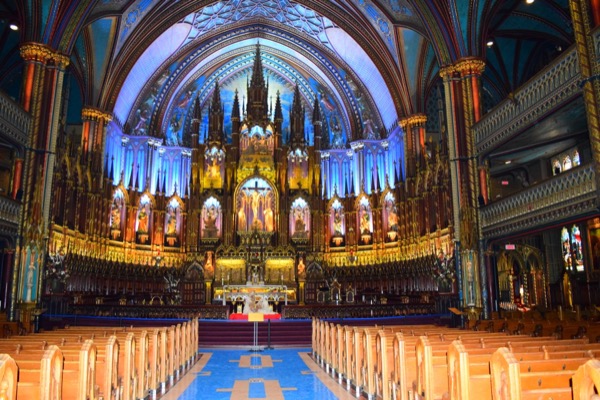
The historic heart of the metropolis, Old Montreal unrolls its cobbled streets between the river and the business district. Notre-Dame Basilica is its jewel: its deep blue nave, studded with gold stars and stained glass telling the city's story, rarely leaves anyone unmoved. Walk on to the Old Port, reborn as a promenade along the St Lawrence, to take the river's pulse. The old warehouses now house restaurants, galleries and boutique hotels. As soon as the fine weather arrives, Place Jacques-Cartier fills with musicians and terraces. This is the district where America and old Europe trade lines on every street corner.
The Plateau Mont-Royal and its murals

The Plateau is the Montreal people love for its neighbourhood soul. The famous spiral outdoor staircases climb to brightly painted homes, the city's architectural signature. On Boulevard Saint-Laurent and Avenue du Mont-Royal, giant murals turn blank gable walls into an open-air gallery, the legacy of the street art festival that takes over the area every summer. You drift from independent cafés to bookshops, record shops and neighbourhood restaurants. La Fontaine Park offers a green breathing space amid the bustle. This is where the creative, bohemian pulse of the city beats, somewhere between unapologetic bohemia and easy living.
Mount Royal Park

Known to Montrealers simply as the mountain, this wooded hill, laid out by the designer of Central Park, rises 233 metres above the city. You go up on foot, by bike or by horse-drawn carriage, along shady trails popular with joggers and families. From the Kondiaronk lookout, in front of the grand chalet, the view takes in the whole of downtown, the river and, on clear days, the distant mountains. Beaver Lake and its lawns host picnics in summer and skaters in winter. Every Sunday in the warmer months, the Tam-Tams draw drummers and dancers to the foot of the George-Étienne Cartier monument. A green lung at the centre of the island, the park offers the finest view of Montreal.
Montmorency Falls

Just a few minutes from Old Quebec, Montmorency Falls crashes down the cliff face. At 83 metres high, it is thirty metres taller than the famous Niagara Falls, something few visitors suspect. A suspension bridge spans the top, giving a dizzying view down onto the curtain of water and the St Lawrence. A panoramic staircase of several hundred steps runs along the rock face, while a cable car links the bottom to the manor house that crowns the site. In winter, the frozen spray builds an impressive ice cone, the sugar loaf, at the foot of the falls. The site suits a contemplative stroll as well as thrill-seekers, zip line included.
Île d'Orléans and the Quebec countryside

Linked to the mainland by a single bridge, Île d'Orléans is like rural Quebec in miniature. You loop round it on the road that circles the island, passing farms, orchards, sugar shacks and villages with white churches. Its strawberries, apples and artisan producers make it the larder of the Quebec City region. In spring the sugar shacks open their doors for sugaring season, when you taste maple taffy poured onto the snow, an unmissable treat. Country restaurants and cider houses invite you to slow down. This is the countryside at its most genuine, a stone's throw from the ramparts.
Festivals and the food scene

Few cities live to the rhythm of festivals quite like Montreal. The International Jazz Festival, one of the biggest in the world, takes over the downtown streets every summer, followed by Just for Laughs and its comedians from all over the globe. In winter, Igloofest gets bundled-up crowds dancing under the snowflakes, proof that the cold stops nothing here. At the table, the city claims an unabashed appetite: generous poutine, wood-fired Montreal bagels, smoked meat hand-piled in the historic delis. The Jean-Talon and Atwater markets overflow with local produce. Between a bubbling cultural scene and comforting food, the city is there to be savoured as much as visited.
How many days, and which itinerary?
Five to seven days let you enjoy both cities without rushing: three days in Montreal, two in Quebec City and one or two days for the trips around them (Montmorency Falls, Île d'Orléans, sugar shack country). A long weekend is enough for one of the two cities, but the appeal of the pair lies precisely in the contrast between the creative metropolis and the fortified city.
🗺️ Day-by-day itinerary · 📓 Free printable Montreal and Quebec City guide (PDF) · 🌍 All of Canada
3 days
Spend the whole stay in Montreal. Day one in Old Montreal and the Old Port, with Notre-Dame Basilica; day two in the Plateau Mont-Royal with its murals and cafés, then a climb up Mount Royal Park for sunset; day three at Jean-Talon Market and in the Mile End with its bagels, before an evening at a festival or show depending on the season.
5 days
Add Quebec City to the programme. After three days in Montreal, head to the old capital by train or car (about three hours). Two days to explore Old Quebec, the Château Frontenac, the Petit-Champlain district, the Plains of Abraham and the ramparts, with half a day at nearby Montmorency Falls.
7 days
The ideal format for taking your time. Three days in Montreal, two in Quebec City, then a day on Île d'Orléans among the orchards and sugar shacks, and a final day for a nature escape (Charlevoix, Jacques-Cartier National Park or whale watching at Tadoussac in summer, depending on your mood and the season).
Getting there and getting around
Flying remains the way in: Montréal-Trudeau handles international flights and is linked to downtown by express bus. Between Montreal and Quebec City, Via Rail trains or coaches make the trip in about three hours; driving takes the same time with the freedom to stop along the way. In town, Montreal has an efficient metro and an extensive bus network, plus bike-share in the warmer months.
Quebec City is best explored on foot, so compact is the historic centre, even if the steep streets and stairways call for good shoes. For trips to Montmorency Falls, Île d'Orléans or Charlevoix, a car is invaluable: public transport there is limited. In winter, allow extra time for snow and ice, and check the rental car's equipment.
Where to stay in Montreal and Quebec City?
In Montreal, Old Montreal appeals with its boutique hotels set in former stone warehouses, ideal for a first visit in the thick of things. The Plateau and the Mile End have a more local feel, among cafés and neighbourhood flats, while downtown gathers the big names and is close to the festival sites. Prices climb sharply during the summer season and major events.
In Quebec City, sleeping inside the walls of Old Quebec has incomparable charm, between historic inns and river views, but rates reflect it, especially around the Château Frontenac. The Saint-Roch and Saint-Jean-Baptiste neighbourhoods, a little further down, offer more affordable options and lively local life, a few minutes' walk from the ramparts. Booking early is the rule in high season.
Our places to stay, stop by stop, at three budgets →
What to eat in Montreal and Quebec City?
Quebec cooking is enjoyed without pretence. Poutine, chips smothered in brown gravy and cheese curds that squeak between your teeth, is its comforting emblem. In Montreal, the wood-fired bagel bakeries of the Mile End vie over which is oldest, while the historic delis serve smoked meat in mountains of house-smoked beef. Maple syrup finds its way into everything, from breakfast to the taffy poured onto snow at the sugar shacks in spring.
Beyond the classics, both cities nurture an inventive dining scene. The Jean-Talon and Atwater markets in Montreal and farm-to-table restaurants in Quebec City and on Île d'Orléans showcase local produce, from duck to farmhouse cheeses. Microbreweries number in the dozens, and ice cider, a purely Quebec speciality, deserves a tasting. You eat well and heartily, in a relaxed atmosphere that reflects the spirit of the place.
Entry requirements
US citizens need only a passport. EU, UK and Australian passports are visa-free for up to six months, but anyone flying in must first get an eTA online (not needed by road or sea; Romanian citizens need an electronic passport). No formalities for Canadians.
Rules change: check your own government's travel advice before you go.
Cities and regions to discover
 City
City🇨🇦 Montreal
 City
City🇨🇦 Quebec City
 City
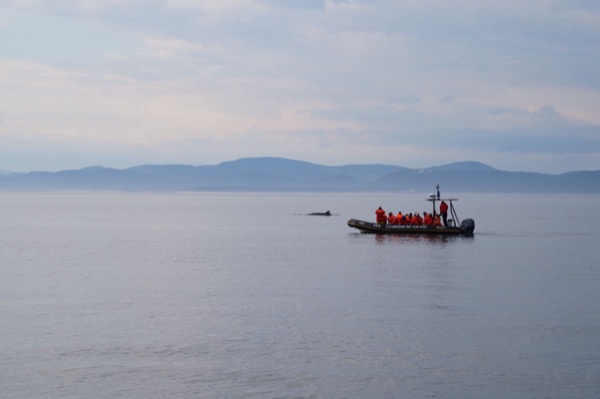
City🇨🇦 Charlevoix and Tadoussac
 City
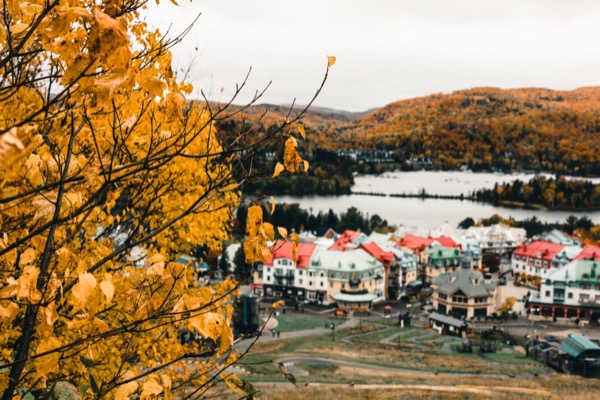
City🇨🇦 The Laurentians and Mont-Tremblant
Frequently asked questions about Montreal and Quebec City
When is the best time to visit Montreal and Quebec City?
Summer (June to August) brings warmth, terraces and an intense festival season. September and October unfold the spectacular autumn colours, an ideal and milder time to go. Winter, very snowy, appeals to lovers of white landscapes and Nordic activities, but demands gear suited to extreme cold.
How long does it take to travel between the two cities?
Montreal and Quebec City are about three hours apart, whether by train, coach or car. The road follows the St Lawrence and allows stops at Trois-Rivières or in riverside villages, making the journey a pleasure rather than a chore.
Is French spoken everywhere?
Yes, French is the official and everyday language of Quebec, especially in Quebec City. Montreal is more bilingual, but French is still everywhere. The warm, colourful Quebec accent can take some getting used to at first, without ever getting in the way of communication.
Do you need to hire a car?
Not necessarily for the two cities, which are very easy to get around on foot and by public transport. A car becomes useful for trips around Quebec City: Montmorency Falls, Île d'Orléans, Charlevoix or the national parks, where public transport is scarce.
Which specialities should you not miss?
Poutine, wood-fired Montreal bagels, smoked meat from the historic delis and, of course, anything to do with maple, from syrup to taffy poured onto the snow. Ice ciders and local farmhouse cheeses round off the experience.
Similar destinations
 City
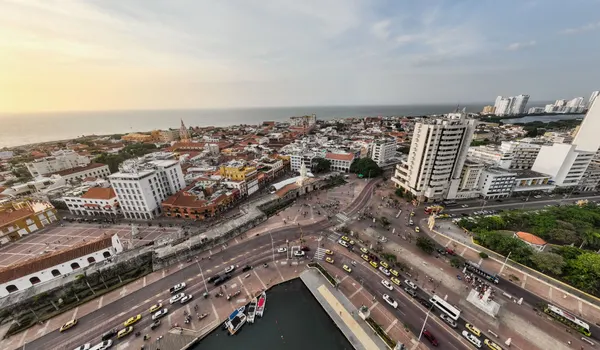
City🇨🇴 Cartagena
 City
City🇫🇷 Avignon
 Region
🇺🇸 Louisiana
 Country
🇫🇷 France
 Region
🇫🇷 Normandy
 Region
🇫🇷 Alsace
 Region
🇫🇷 The Loire Valley
 Country