When to go to Bolivia?
→ The detailed month-by-month page, with real weather records
Best time: May to October
At a glance
Why go to Bolivia?
Bolivia holds a place of its own on the South American continent: it is the highest, the most Indigenous and probably the most disconcerting country in the Andes. Quechua and Aymara are still widely spoken, coca leaves are chewed against the altitude, and Pachamama (Mother Earth) is celebrated with the same fervour as the Catholic festivals inherited from colonial times. Nothing here is smooth, and that is exactly what wins over travellers in search of authenticity: Bolivia has not bent itself out of shape to please, it shows itself as it is, rugged and proud.
Geographically, the country unfolds a stunning variety at dizzying altitudes. The Altiplano, an immense plateau perched at nearly 4,000 metres, gathers the postcard images: the Salar de Uyuni and its endless mirror, the red and green lagoons of Sud Lipez, and Lake Titicaca, cradle of the Incas. Lower down, the valleys of Sucre and Cochabamba enjoy a mild climate, while the Yungas tip over into tropical forest within a few dozen kilometres. This compression of landscapes makes Bolivia one of the most spectacular playgrounds in the Andean world.
Finally, there is the argument that weighs heavily in a traveller's suitcase: Bolivia remains one of the most affordable destinations in South America. You eat, sleep and get around for a fraction of the prices charged in neighbouring Chile or Argentina. This affordability, combined with raw nature and a living culture, explains why the country has carved out a solid reputation among backpackers and fans of guided adventure alike. You come to Bolivia to be shaken up, never to be reassured.
Map of Bolivia: what is where?
The map shows the 7 places covered in this guide, to picture the distances and plan your route.
- Salar de Uyuni
- Sud Lipez (Laguna Colorada)
- La Paz
- Lake Titicaca (Copacabana)
- Potosí
- Sucre
- Coroico (Yungas)
How much does a trip to Bolivia cost?
Bolivia is among the cheapest countries in South America, making it a paradise for small budgets without sacrificing experiences. Here are rough figures per person per day, including accommodation, meals and local transport, excluding organised 4x4 tours.
| Style | Per day | What it covers |
|---|---|---|
| Backpacker | 150-250 BOB (€20-33) | Hostel dorm, meals at the market and in local canteens, travel by bus and shared minibus. |
| Comfort | 300-550 BOB (€40-73) | Double room in a boutique or colonial hotel, good restaurants, a few domestic flights and guided excursions. |
| Luxury | 800 BOB and up (€105 and up) | The best addresses facing the salt flat, private 4x4 tours, personal guides and flights to make the most of your time. |
The currency is the boliviano (BOB). Cash is king: many shops, hostales and agencies do not accept cards, especially outside the big cities. You can withdraw bolivianos from ATMs in La Paz, Sucre or Uyuni, but it is best to carry enough cash before heading into Sud Lipez, which has no banks. US dollars in good condition are easy to exchange. Tipping is not compulsory but appreciated in restaurants and for guides.
Is Bolivia safe?
Bolivia is generally safe for travellers, but a few precautions are in order. Petty crime (pickpocketing, scams) exists in bus stations and the tourist districts of La Paz: keep an eye on your belongings and prefer taxis ordered by phone or app rather than hailed in the street. The main danger is medical: altitude sickness (soroche) frequently strikes above 3,500 metres. Acclimatise gradually, stay hydrated, avoid alcohol for the first few days and do not hesitate to turn to mate de coca. Demonstrations and road blockades, common in Bolivian political life, can disrupt travel: it is best to follow local news and keep your plans flexible.
What to see and do in Bolivia
The Salar de Uyuni 3 654 m

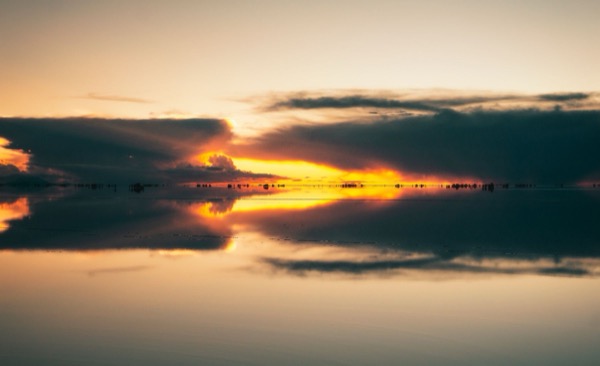
Covering 10,500 square kilometres, the Salar de Uyuni is the largest salt flat on the planet and Bolivia's undisputed jewel. In the dry season, its white crust cracks into a perfect hexagonal chequerboard running to the horizon. In the rainy season, from January to March, a thin film of water turns the surface into a giant mirror reflecting the sky to infinity, an unreal scene that has travelled around the world. In the middle, Isla Incahuasi bristles with giant, centuries-old cacti amid the white. It is usually explored by 4x4 over one to three days, often from Uyuni. Sunrise and sunset there offer light that few places on Earth can match.
The lagoons of Sud Lipez 4 288 m

South of the salt flat lies Sud Lipez, a high mineral territory where you climb to between 4,000 and 5,000 metres. Laguna Colorada spreads its blood-red waters there, tinted by algae and home to thousands of pink flamingos. Further on, Laguna Verde turns emerald at the foot of the Licancabur volcano. The route crosses the Siloli Desert and its famous stone tree sculpted by the wind, then the bubbling geysers of Sol de Mañana in the early morning. It often ends with a soak in the hot springs of Polques, facing a lunar panorama. It is one of the finest desert crossings on the continent, best kept for well-acclimatised travellers.
La Paz and its cable car 3 627 m

Clinging to the sides of a canyon between 3,200 and 4,000 metres, La Paz is the highest major city in the world and the seat of the Bolivian government. Its vertiginous terrain gave birth to Mi Teleférico, the largest urban cable car network on the planet, which links the basin to the El Alto plateau, gliding over the rooftops. You float above the city in striking silence, with snow-capped Illimani as a backdrop. In the steep streets of the centre, the Witches' Market sells herbs, amulets and llama foetuses for offerings to Pachamama. La Paz knocks the breath out of new arrivals, but fascinates with its raw energy and organised chaos.
Lake Titicaca and Isla del Sol 3 843 m

At 3,800 metres, Lake Titicaca is the highest navigable lake in the world and one of the most sacred sites in the Andes. Its deep blue waters border the small town of Copacabana, dominated by its white basilica where vehicles are blessed. From the port, a boat takes you to Isla del Sol, which Inca mythology names as the birthplace of the sun and of civilisation. You walk from village to village along ancestral paths, between farming terraces, ruins and laden donkeys, without a single vehicle. Sunset over the lake, with the Cordillera Real in the background, is among the most peaceful moments of a trip to Bolivia.
Potosí and Cerro Rico 3 962 m

Perched at more than 4,000 metres, Potosí was one of the richest and most populous cities in the world in the 17th century, thanks to the silver extracted from Cerro Rico, which towers above it. This red mountain financed the Spanish Empire at an appalling human cost, and its colonial centre, a UNESCO site, retains baroque churches and period facades. Miners still dig the rock there in conditions from another age. You can visit the tunnels with former miners, a gruelling and deeply moving experience that brings home the true price of the metal. Potosí is not a comfortable postcard: it is an open-air history lesson, dense and poignant.
Sucre, the white city 2 783 m

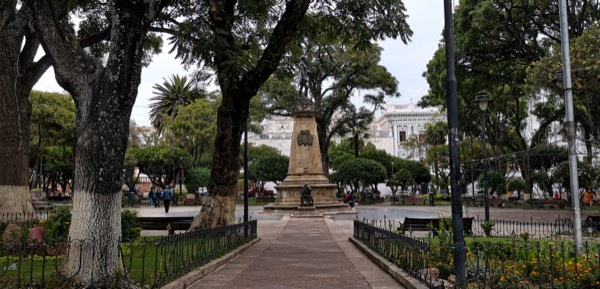
Bolivia's constitutional capital, Sucre is by common consent the most beautiful city in the country. At 2,800 metres, it enjoys a mild climate that contrasts with the harshness of the Altiplano, and its immaculate colonial centre earns it the nickname of the white city. Freshly painted facades, flower-filled patios and shady squares make an elegant setting, protected by UNESCO. You stroll without hurrying, climb to the Recoleta lookout to take in the tiled roofs, and visit the convent and museums of a country that declared its independence here in 1825. Many travellers settle in for a few days to learn Spanish, won over by the easy pace of local life.
Death Road (Yungas)

Linking La Paz to Coroico, the old Yungas road has earned a grim reputation and the nickname of Death Road. Cut into the cliff face, barely three metres wide and lined with drops of several hundred metres, it was long one of the most dangerous roads in the world. Since a modern road diverted the traffic, it has become the stage for a legendary mountain-bike descent. You plunge nearly 3,500 metres in elevation, from the icy Altiplano to the lush vegetation of the Yungas, in an exhilarating ride run by specialist agencies. Thrills guaranteed, provided you choose a reputable operator and a bike in good condition.
How many days, and which itinerary?
Two weeks is an ideal format for linking the must-sees without wearing yourself out with the altitude. In ten days you cover the essentials around La Paz, Titicaca and the salt flat. To add Sucre, Potosí and a full crossing of Sud Lipez, allow three weeks, especially as the distances and acclimatisation demand a measured pace.
🗺️ Day-by-day itinerary · 📓 Free printable Bolivia guide (PDF)
10 days, the essentials
Land in La Paz for two days of acclimatisation and cable cars, before heading to Lake Titicaca, Copacabana and Isla del Sol. Then reach Uyuni, by night bus or by plane, for a three-day 4x4 circuit across the salt flat and the lagoons of Sud Lipez. Back to La Paz to close the loop. A packed but coherent format, centred on the most striking images of the Altiplano.
3 weeks, Andean Bolivia
The full programme: La Paz and Titicaca to open, then down to colonial Sucre and mining Potosí, before diving into the Salar de Uyuni and Sud Lipez from the south. You can continue to the Chilean border and San Pedro de Atacama, or head back up to the Yungas for the mountain-bike descent. This pace leaves time to savour each city and respect acclimatisation at altitude.
Adventure and nature, 2 weeks
For lovers of wide open spaces: combine the Salar de Uyuni, the full three-day crossing of Sud Lipez, the Death Road descent by mountain bike and a hike on Isla del Sol. Add, if you fancy, a trek in the Cordillera Real from La Paz. A physical itinerary, best kept for travellers who are already acclimatised and in good shape.
Getting there and getting around
Bolivian distances are long and the terrain gruelling, so the bus remains the backbone of travel. So-called cama companies offer comfortable reclining seats on long overnight journeys between La Paz, Sucre, Potosí or Uyuni. Road conditions have improved markedly on the main routes, but some secondary stretches remain rough and slow. To save time, flights efficiently link La Paz to Uyuni, Sucre or Santa Cruz, at fares that stay reasonable given the hours of bus travel saved.
On the ground, 4x4s with a driver are the norm for exploring the salt flat and Sud Lipez, terrain that is impassable otherwise. In town, shared minibuses and cheap taxis cover everything, and the La Paz cable car is a means of transport in its own right as much as an attraction. Driving yourself is not advised for the uninitiated: altitude, approximate signposting and demanding tracks make it risky. Better to leave the wheel to local drivers used to these conditions.
Where to stay in Bolivia?
Bolivian accommodation covers the whole range, with excellent value for money at every level. Backpackers find hostels and hostales everywhere for a few euros, in a dorm or a single room, especially in student cities such as Sucre or La Paz. The mid-range offers boutique hotels set in old colonial mansions, particularly appealing in Sucre and Potosí, with patios and hearty breakfasts.
The Salar de Uyuni has a singular experience in store: salt hotels, built from blocks cut from the salt crust, walls, tables and beds included. You spend an unusual night on the edge of the white desert, often included in the 4x4 circuits. The top end remains modest by Bolivian standards, but a few design addresses have sprung up facing the salt flat, offering comfort and exceptional views. Booking ahead is a must in high season, from May to October, when the best places are full.
Our places to stay, stop by stop, at three budgets →
What to eat in Bolivia?
Bolivian cuisine is hearty, designed for the altitude and the cold of the Andes. The potato, of which the country claims hundreds of varieties, reigns supreme, alongside quinoa and corn. You feast on salteñas, juicy pastries filled with meat in sauce that are devoured first thing in the morning, and sopa de maní, a creamy peanut soup. Covered markets, such as Sucre's central market, serve the most authentic and cheapest meals, eaten at the counter among the locals.
For bolder flavours, pique macho piles beef, sausage, chips and chilli onto a generous plate, while the lowland regions offer river fish such as surubí. Coca leaves are taken as an infusion (mate de coca) to ease altitude sickness, an ancestral tradition that is perfectly legal here. As for drinks, Paceña beer goes with meals and singani, a grape brandy, is enjoyed in cocktails. Vegetarians get by well in the big cities, less so in rural areas where meat dominates.
Entry requirements
Visa-free for up to 90 days a year for UK, US, Canadian and Australian passports, and for EU citizens except Cypriots. US citizens have been exempt since December 2025. Make sure your passport is stamped on arrival: a missing stamp means a fine on the way out.
Rules change: check your own government's travel advice before you go.
Cities and regions to discover
 City
City🇧🇴 Salar de Uyuni and Sur Lípez
 City
City🇧🇴 La Paz and the Yungas Road
 City
City🇧🇴 Lake Titicaca (Copacabana)
 City
City🇧🇴 Sucre and Potosí
Frequently asked questions about Bolivia
When is the best time to visit Bolivia?
The dry season, from May to October, offers the most stable weather and the most passable roads: it is the ideal time for most trips. To see the mirror effect of the Salar de Uyuni, on the contrary, come in the rainy season, from January to March, accepting that access can sometimes be tricky.
How do I deal with altitude sickness in Bolivia?
Altitude is the real challenge of the trip: La Paz sits at nearly 3,600 metres, and some sites exceed 4,500 metres. Acclimatise gradually, avoid exertion and alcohol for the first few days, stay well hydrated and drink mate de coca. If symptoms become severe (violent headaches, breathlessness), descend to a lower altitude without delay.
How long should I plan for a trip to Bolivia?
Ten days let you cover the essentials around La Paz, Titicaca and the Salar de Uyuni. Two weeks offer a more comfortable pace, and three weeks let you add Sucre, Potosí and a full crossing of Sud Lipez without rushing, while respecting the acclimatisation that the altitude requires.
Is Bolivia an expensive destination?
No, on the contrary, it is one of the cheapest countries in South America. A backpacker can travel on €20 to €30 a day, meals and accommodation included. Even the more comfortable options, such as boutique hotels or 4x4 tours, remain very affordable compared with the standards of neighbouring Chile or Argentina.
Similar destinations
 Country
🇺🇸 The American West
 Country
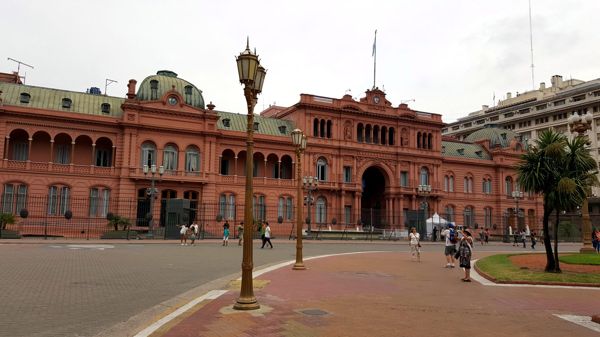
🇦🇷 Argentina
 Country
🇵🇪 Peru
 Country
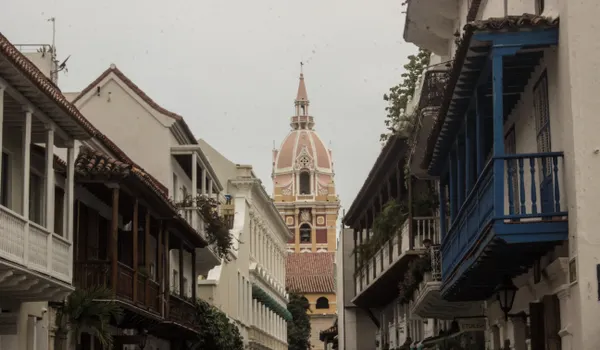
🇨🇴 Colombia
 Country
🇨🇱 Chile
 Country
🇪🇨 Ecuador
 Country
🇬🇹 Guatemala
 City
City🇬🇹 Lake Atitlán
 Region
🇲🇽 Chiapas
 City
City