When to go to Fez?
→ The detailed month-by-month page, with real weather records
Best time: March to May and September to November
At a glance
Why go to Fez?
Fez is the spiritual and cultural capital of Morocco, keeper of a thousand-year-old heritage that has survived intact. Its medina, Fez el-Bali, is the largest car-free urban area in the world, a UNESCO World Heritage labyrinth of nine thousand alleyways. Here you sink into a preserved medieval atmosphere, far from mass tourism. Few cities offer such complete immersion in another time.
Founded in the 9th century, Fez is home to the oldest university still in operation, al-Qarawiyyin, and to an exceptional craft tradition. Tanners, coppersmiths, weavers and potters carry on age-old techniques in a maze of souks. The city breathes religious fervour and ancestral know-how. It is a living museum where every workshop tells a story.
Beyond its spellbinding medina, Fez reveals sumptuous madrasas adorned with zellige tilework, stucco and carved cedar. The richness of its Marinid architecture makes it a jewel of Islamic art. Getting lost in its alleys is an intense sensory experience, somewhere between the scent of spices and the call to prayer. You come away changed and amazed.
Map of Fez: what is where?
The map shows the 6 places covered in this guide, to picture the distances and plan your route.
- Chouara Tannery
- Bou Inania Madrasa
- Bab Bou Jeloud
- Al-Qarawiyyin University
- Place Seffarine
- Royal Palace
How much does a trip to Fez cost?
Fez is an affordable destination where crafts and food remain very accessible.
| Style | Per day | What it covers |
|---|---|---|
| Backpacker | €25-40/day | simple riad, street food and self-guided visits |
| Comfort | €70-120/day | boutique riad, restaurants and a guide for the day |
| Premium | €250+/day | palace hotel, fine dining and private excursions |
Bring dirhams in cash, essential in the souks and small shops.
Is Fez safe?
Fez is a safe city where the main challenge is not getting lost in the labyrinth of the medina. Fake guides and touts can be pushy, so it is best to hire an official guide and stay firm but courteous. Petty theft is rare, but stay alert in crowded souks. If you respect local customs, especially regarding dress, your stay will go smoothly.
What to see and do in Fez
- the Fez el-Bali medina
- the Chouara tanneries
- Al-Qarawiyyin University
- the Bou Inania madrasa
- the monumental gates
Chouara Tannery

The Chouara tannery is the most iconic sight in Fez, in operation since the Middle Ages. From the terraces of the leather shops, you look down on the colourful vats where hides are dyed by hand. A sprig of mint helps you cope with the powerful smells. Watching the workers at their task is a striking spectacle.
Bou Inania Madrasa
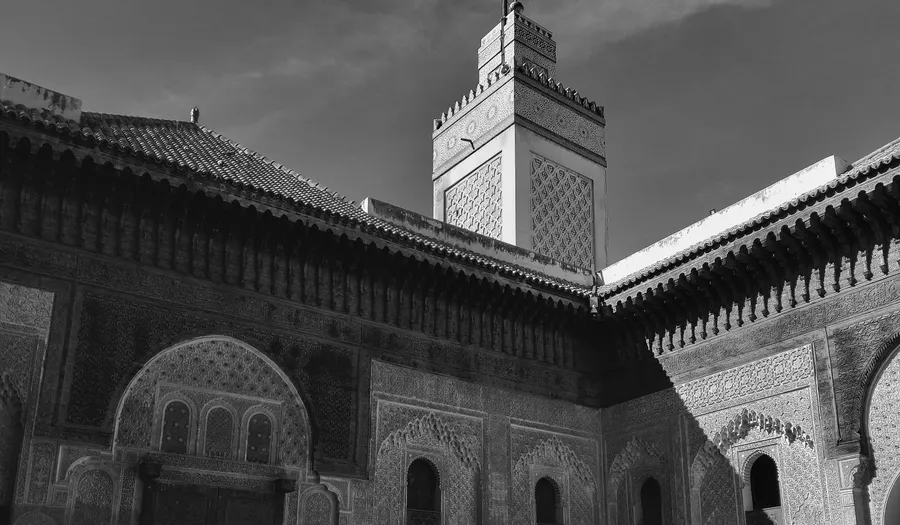
A masterpiece of Marinid art, this 14th-century madrasa dazzles with the finesse of its decoration. Zellige, chiselled stucco and carved cedarwood cover every surface with astonishing precision. It is one of the few religious buildings in Fez open to non-Muslims. The inner courtyard is breathtakingly beautiful.
Bab Bou Jeloud

The Blue Gate of Bou Jeloud marks the grand entrance to the Fez el-Bali medina. Its blue tiles on the outside and green ones on the inside make it a photogenic landmark. It is the ideal starting point for plunging into the maze of souks. The bustle here never stops and is utterly intoxicating.
Al-Qarawiyyin University

Founded in 859, al-Qarawiyyin is considered the oldest university in the world still in operation. Its vast mosque and historic library make it a great centre of learning. Although the interior is reserved for worshippers, the half-open doors offer a glimpse of its splendour. The site embodies the intellectual influence of Fez.
Place Seffarine
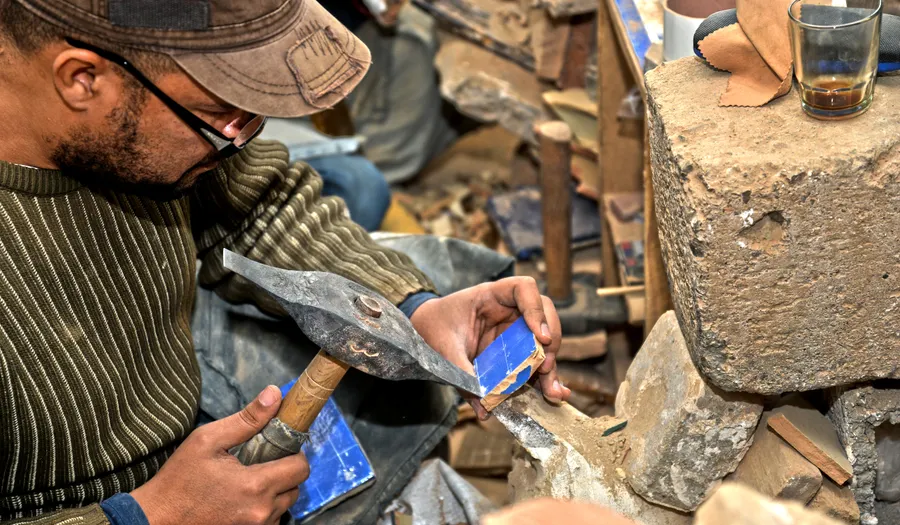
This lively square is the domain of the coppersmiths who hammer copper and brass. The ringing of hammers echoes through the heart of the medina like an open-air workshop. You can admire trays, teapots and lanterns shaped by hand. It is the traditional craftsmanship of Fez in a nutshell.
Royal Palace and Jewish Quarter

The Mellah, the former Jewish quarter of Fez, borders the sumptuous Royal Palace with its golden gates. These seven ornate gates of bronze and zellige are among the most beautiful in the country. The quarter bears witness to the long Jewish presence in the city. Its architecture is markedly different from the medina's.
How many days, and which itinerary?
Two to three days let you explore the Fez medina and its treasures without rushing.
🗺️ Day-by-day itinerary · 📓 Free printable Fez guide (PDF) · 🌍 All of Morocco
Essential Fez (2 days)
Spend the first day in the medina, from Bab Bou Jeloud to the Chouara tannery and the Bou Inania madrasa. Keep the second for the souks, Place Seffarine and the Mellah.
Fez in depth (3 days)
Add a guided themed tour of the crafts, a break in the Jnan Sbil gardens and a sunset panorama from the Marinid Tombs. The pace remains immersive.
Fez and the Middle Atlas (4 days)
Round it off with a trip to Meknes and the Roman site of Volubilis, or to the blue city of Chefchaouen. A complete change of scene just a few hours' drive away.
Getting there and getting around
The medina can only be explored on foot; no cars circulate inside.
An official guide is strongly recommended so you don't get lost in the maze of alleys.
The little red petits taxis run between the medina, the new town and the station.
Trains link Fez with Rabat, Casablanca and Marrakech in good conditions.
Where to stay in Fez?
Simple riads and hostels in the medina: €20-45 a night.
Restored boutique riads with a patio: €60-120 for a double room.
Luxury riads and palaces turned into hotels: €150-300.
Modern hotels in the new town: €50-100 a night.
Our places to stay, stop by stop, at three budgets →
What to eat in Fez?
Pastilla, a sweet and savoury pie with pigeon or chicken, is a Fez speciality.
Veal tagine with prunes and almonds showcases the city's refined cuisine.
Harira, the traditional soup, is enjoyed in the alleys for a few dirhams.
Honey and almond pastries go with mint tea on a terrace.
Entry requirements
90 days visa-free with a passport for EU, UK, US, Canadian and Australian citizens.
Rules change: check your own government's travel advice before you go.
Frequently asked questions about Fez
When is the best time to visit Fez?
Spring, from March to May, and autumn, from September to November, offer ideal temperatures. Summer can be very hot in the medina, while winter stays mild but sometimes rainy.
How many days should I spend in Fez?
Two to three days are enough to explore the medina and its main monuments. Add a day for a trip to Meknes, Volubilis or Chefchaouen.
What is the daily budget in Fez?
Allow around €35 a day as a backpacker, €100 for a comfortable stay and over €250 at the top end. Fez remains an inexpensive destination.
How do I get around Fez?
The medina can only be explored on foot, ideally with an official guide. The little red petits taxis link the medina with the new town and the railway station.
Which area should I stay in in Fez?
The Fez el-Bali medina is ideal for soaking up the atmosphere in a traditional riad. The new town has more modern, quieter hotels for travellers who prefer comfort.
Similar destinations
 City
City🇸🇳 Dakar
 Country
🇵🇹 Portugal
 City
City🇵🇹 Lisbon
 City
City🇵🇹 Porto
 City
City🇬🇷 Athens
 City
City🇨🇿 Prague
 City
City🇵🇱 Kraków
 City
City🇲🇦 Marrakech
 City
City🇲🇦 Essaouira
 Country