
Best time to travel in Uzbekistan?
→ The detailed month-by-month page, with 2015-2024 averages
Best time: April to May and September to October
- ✓Ideal temperatures for exploring Samarkand's Registan
- ✓Markets overflowing with melons and grapes in autumn
- ✓Flowering steppe and Chimgan mountains accessible in spring
- ✗Busiest period: book Afrosiyob trains early
- ✗Possible showers in spring
- ✓Sites of Bukhara and Khiva almost deserted early in the morning
- ✓Long, mild evenings once the heat has eased
- ✗35 to 38°C in the shade in the Silk Road cities
- ✗Sightseeing all but impossible in the middle of the day
Temperatures and rainfall modelled for Samarkand · averages over recent years, Open-Meteo data (ERA5 reanalysis).
Dry continental, with very hot summers and ideal springs and autumns. The best time to visit Uzbekistan is April, May, September and October, with temperatures reaching 35-38°C (summer). Conversely, January, February, March, June, July, August, November and December are generally less favourable (less pleasant weather or heavy crowds, depending on the destination), although a trip is still possible with some planning. In high season, book early: prices and crowds climb fast.
Go against the flow. To avoid the crowds without sacrificing too much on the weather, aim for March, June and November: the crowds thin out, prices drop too, and the climate stays pleasant.
Do these months appeal to you? See what's best elsewhere too: where to go in April · where to go in May · where to go in September · where to go in October.
At a glance
Why go to Uzbekistan?
Uzbekistan is the beating heart of the Silk Road, a land where caravans laden with spices and silk once stopped between China and the Mediterranean. Its ancient cities line up turquoise madrasas, slender minarets and tile-clad mausoleums, as if lifted from the Thousand and One Nights. Few destinations offer such a density of heritage at such gentle prices.
Long a well-kept secret, the country has opened up to travellers with a 30-day visa exemption for many nationalities and a network of high-speed trains linking the main cities. Today you travel easily from Tashkent to Samarkand, then on to Bukhara and Khiva, without ever giving up comfort. The country remains authentic, far from mass tourism.
Uzbek hospitality is legendary, made of shared green tea, steaming plov and bazaars where haggling is done with good humour. Between deserts, oases and mountains, the change of scene is total and the sense of safety rare for the region. It is an accessible cultural adventure, ideal for a first trip to Central Asia.
Tourist map of Uzbekistan: what's where?
The map below pinpoints the 6 places covered in this guide: a handy way to picture the distances between each stop and plan your route in Uzbekistan.
- Samarkand
- Bukhara
- Khiva
- Tashkent
- Margilan
- Lake Aydarkul
How much does a trip to Uzbekistan cost in 2026? Budget calculator
Estimate your budget for Uzbekistan based on your travel style: accommodation, meals, activities and local transport included (flights excluded). Adjust the length and the number of travellers, and the totals update.
Totals for all travellers over the chosen length; the daily amount is per person. Flights extra, indicative amounts to adjust depending on the season.
Pay in cash in som at the bazaars and small shops, as cards are only accepted in the big hotels.
Safety in Uzbekistan: should you be worried?
Uzbekistan is one of the safest countries in Central Asia, with low crime and a population very welcoming to travellers. The usual precautions are enough in the bazaars and crowded stations. Women travelling alone generally feel at ease. The language barrier can complicate exchanges, but hospitality more than makes up for any misunderstandings.
Things to see and do in Uzbekistan
Our first-hand favourites, and the great classics:
- the Registan in Samarkand
- the old town of Bukhara
- the fortified city of Khiva
- the bazaars and madrasas
- Tashkent and its metro
What to book before you go to Uzbekistan →
🧭 Discover the Uzbekistan itinerary, day by dayMap, timings, budget and where to stay: free to access, to fit your dates. Create my tailor-made itinerary →Samarkand and the Registan

The Registan is the most spectacular square in Central Asia, framed by three monumental madrasas with blue mosaic façades. At sunset, the tilework blazes and the square empties of its crowds. Nearby, the Shah-i-Zinda necropolis lines up mausoleums of extraordinary finesse. The Bibi-Khanym Mosque recalls the sheer scale of Tamerlane's empire. Allow at least two days to take it all in.
Bukhara

Bukhara is an open-air museum, with more than a hundred listed monuments and an almost intact historic centre. The Kalyan Minaret, spared by Genghis Khan, towers over a square lined with madrasas and merchants' domes. You wander through the old covered bazaars and take tea beside the Lyab-i-Hauz pool, shaded by mulberry trees. The atmosphere is more intimate and medieval than in Samarkand. It is many travellers' favourite city.
Khiva
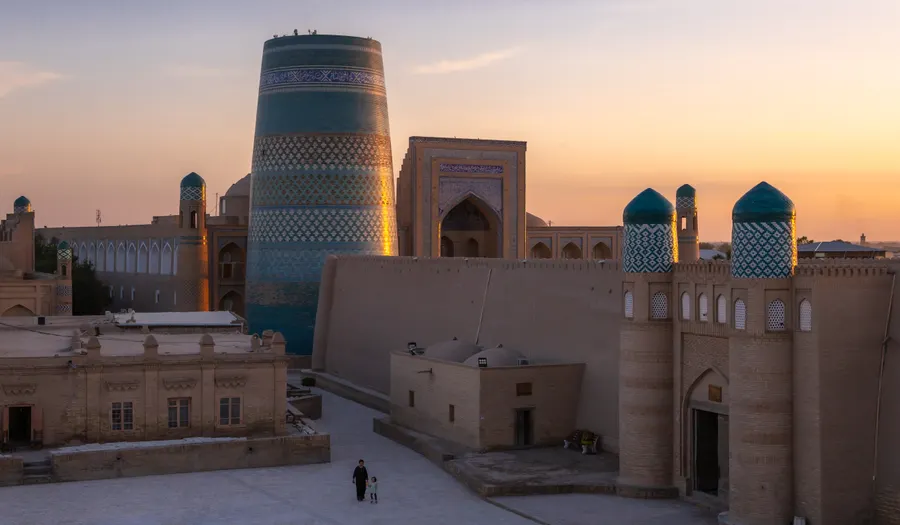
Khiva and its fortified old town of Itchan Kala seem frozen in time, girdled by mud-brick ramparts. Climb the walls at daybreak to watch the city wake up among its minarets and madrasas. The Kalta Minor minaret, squat and clad in turquoise tiles, is its unfinished emblem. In the evening, when the coaches leave, the city recovers its magical silence. A perfectly preserved film set.
Tashkent

The capital mixes broad Soviet avenues, restored mosques and a metro whose stations are decorated like palaces. Chorsu Bazaar, under its great turquoise dome, overflows with spices, dried fruit and golden breads. The museums tell the story of the region, from the Uthman Quran to the applied arts. It is often the point of arrival, modern and lively, before you head off to the Silk Road cities. A good introduction to the country.
Fergana Valley

The Fergana Valley is Uzbekistan's fertile breadbasket and craft heartland, still little visited by tourists. Here you can visit the silk workshops of Margilan, where ikat is still woven using ancestral methods. Rishtan is renowned for its deep-blue ceramics, shaped from generation to generation. The bazaars are more authentic and the welcome especially warm. An ideal detour to grasp the country's living crafts.
Kyzylkum Desert and yurts
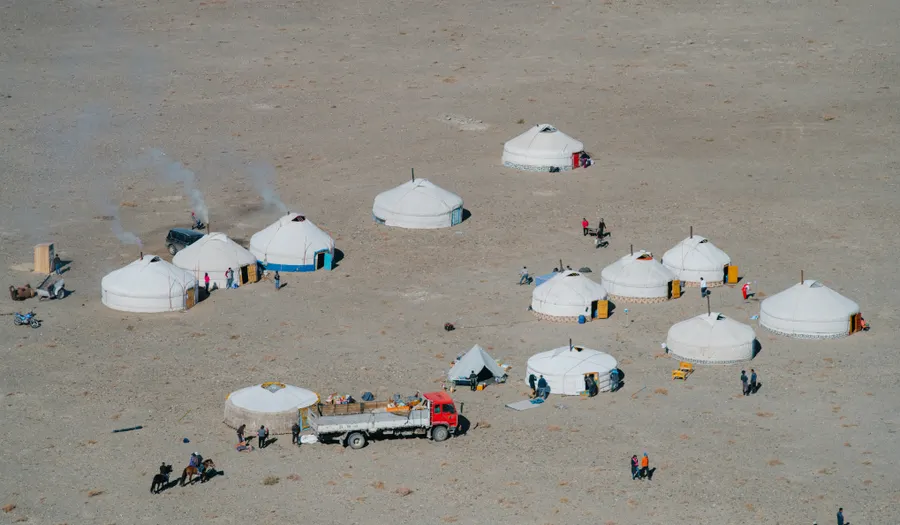
Between Bukhara and Khiva stretches the Kyzylkum Desert, a vastness of sand and steppe. You can spend the night in a yurt camp near Lake Aydarkul, where you can swim in summer. In the evening, around the fire, a nomad singer sends his laments ringing out under a starry sky. A camel ride at sunset completes the experience. A nature interlude between two history-laden oases.
How many days, and which itinerary in Uzbekistan?
Allow 10 to 14 days to link Tashkent, Samarkand, Bukhara and Khiva without rushing, with a night in a yurt in the desert.
🗺️ Day-by-day Uzbekistan itinerary · 📓 Printable Uzbekistan travel guide (PDF)
The Silk Road cities (10 days)
A great classic between Tashkent, Samarkand, Bukhara and Khiva, linked by the high-speed Afrosiyob trains. You alternate madrasa visits, bazaar strolls and tea breaks. The pace stays gentle, with two nights in each city.
Full loop and desert (14 days)
The same route, enriched with a night in a yurt at Lake Aydarkul and a detour through the Fergana Valley. Silk and ceramic crafts are added to the mix. Ideal for capturing every facet of the country.
How to get to Uzbekistan and get around?
The high-speed Afrosiyob trains link Tashkent, Samarkand and Bukhara in a few hours, comfortably and on time.
For Khiva, a night train or a domestic flight spares you long hours of desert.
Shared taxis and cars with drivers are cheap for short journeys or excursions.
In town, walk around the historic centres; in Tashkent, the metro is both practical and spectacular.
Where to stay in Uzbekistan?
Traditional guesthouses in the old towns, around €20-35 a night with breakfast.
Boutique hotels set in former madrasas or merchants' houses, €40-70.
Yurt camps in the Kyzylkum Desert, around €30-50 with full board.
Comfortable international hotels in Tashkent and Samarkand, from €80 for a higher standard.
Our picks stop by stop, in three price ranges →
What to eat in Uzbekistan?
Plov, rice slow-cooked with mutton, carrots and onions, is the national dish, served everywhere and at any hour.
Grilled meat skewers (shashlik) and flaky samsas baked in a tandoor oven are unmissable.
The round golden bread (non), baked every morning, accompanies every meal and varies from city to city.
Green tea flows freely in the chaikhanas, teahouses where you settle on carpeted platforms.
Which kind of traveller is it for?
Uzbekistan lends itself to a cultural and active trip. Whether you go as a couple, solo or even with friends, everyone can find their own pace there. As for accommodation, it is mostly classic hotels and boutique hotels.
Entry requirements & practical info
Visa-free for up to 30 days for EU, UK, US, Canadian and Australian passports (US citizens since 1 January 2026). You must be registered within three days of arrival: hotels do it for you, and private stays are registered online.
Rules change: before you leave, check your country's official travel advice.
Once there, to stay online without paying roaming charges, an Uzbekistan eSIM activates in a few minutes and works as soon as you land (plans from €5.99). Remember suitable travel insurance too.
Cities & regions to discover

Frequently asked questions about Uzbekistan
When is the best time to go?
Spring (April-May) and autumn (September-October) offer an ideal climate; summer is scorching and winter harsh.
What daily budget should I plan for?
Allow around €25-40 a day travelling simply, and €50-90 for a comfortable stay.
How do I get between cities?
The high-speed Afrosiyob trains link the major cities in a few hours; book ahead in high season.
Is Uzbekistan safe for travellers?
Yes, it is a very safe and welcoming country; basic precautions are enough in very busy places.
Similar destinations
 Countries
🇮🇳 India
 Region
🇮🇳 Rajasthan
 Countries
🇲🇦 Morocco
 Countries
🇹🇳 Tunisia
 City
🇪🇬 Cairo
 Countries
🇯🇴 Jordan
 Countries
🇹🇭 Thailand
 City
🇹🇭 Bangkok
 City
🇹🇭 Chiang Mai
 Countries