When to go to Provence?
→ The detailed month-by-month page, with real weather records
Best time: May to September
At a glance
Why go to Provence?
Provence is one of the rare places where the landscape truly looks like the paintings it inspired. Cézanne painted the Sainte-Victoire, Van Gogh the fields of Arles, and a century later the light has not moved. The hilltop villages of the Luberon, from Gordes to Bonnieux, cling to the hills in shades of honey-coloured stone that the evening sun sets literally ablaze.
It is also a destination to savour. Provençal markets, such as L'Isle-sur-la-Sorgue on Sundays or Apt on Saturdays, overflow with tapenade, Cavaillon melons, goat's cheeses from the Alpilles and olive oil from the Vallée des Baux. You eat well everywhere, from the village food truck to the Michelin-starred tables of Lourmarin, often on a terrace beneath the plane trees.
Above all, Provence lends itself beautifully to slow travel. Distances are short, often just a quarter of an hour between two listed villages, and every detour reveals a Romanesque abbey, a lavender field or a view of Mont Ventoux. It is the ideal destination for a stress-free road trip, where you plan little and wander a lot.
Map of Provence: what is where?
The map shows the 6 places covered in this guide, to picture the distances and plan your route.
- Gordes
- Roussillon
- Avignon
- Les Baux-de-Provence
- Valensole
- Arles
How much does a trip to Provence cost?
Provence can be visited on any budget, but prices climb noticeably in July and August in the Luberon.
| Style | Per day | What it covers |
|---|---|---|
| Backpacker | €70-90/day | camping or simple room, market picnics, free sites |
| Comfort | €120-180/day | charming B&B, a restaurant every day, hire car |
| Premium | €300+/day | mas with pool or 5-star hotel, fine dining |
Cards accepted everywhere, but keep some cash for markets and small producers.
Is Provence safe?
Provence is a very safe destination. The only points to watch are thefts from cars in tourist car parks (leave nothing visible), plus the sun and the mistral, which dehydrate you quickly, so take water and a hat when hiking. In summer, keep an eye on fire alerts, which can close the hill ranges.
What to see and do in Provence
- Gordes
- Roussillon and the Ochre Trail
- Sénanque Abbey
- The Palais des Papes in Avignon
- Les Baux-de-Provence
- Lavender on the Valensole plateau
- The Arles amphitheatre
- L'Isle-sur-la-Sorgue market
Gordes
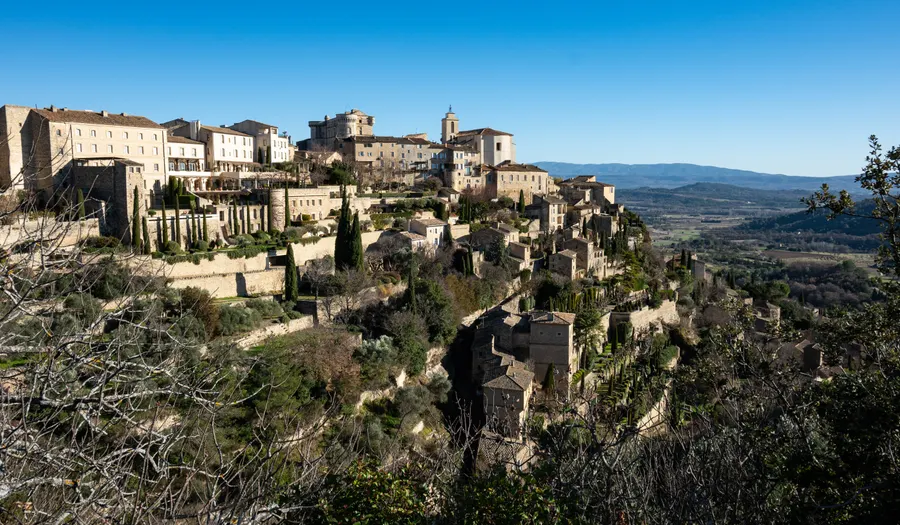
The most photographed village in the Luberon deserves its reputation. Its dry-stone houses rise in tiers on a rocky spur facing the Calavon valley. Arrive via the Cavaillon road for the legendary viewpoint, then lose yourself in the calades, the cobbled lanes climbing up to the Renaissance château. On Tuesday mornings, the market takes over the central square. Out of season, the village recovers a delightful calm.
Roussillon

Roussillon blazes with a thousand shades of ochre, from straw yellow to blood red. The Ochre Trail, a former quarry site, takes 30 or 60 minutes to walk among sculpted cliffs worthy of Colorado. The village itself is worth the stroll, with its pigment-washed façades and artists' galleries. Avoid white clothes, as the ochre dust stains. The late-afternoon light here is unreal.
Avignon

The City of the Popes packs exceptional heritage behind its intact ramparts. The Palais des Papes, the largest Gothic palace in the world, is visited with an augmented-reality tablet that recreates its 14th-century interiors. The Pont Saint-Bénezet, the Place de l'Horloge and the Rue des Teinturiers round off the walk. In July, the festival turns the city into a giant stage. Allow a full day.
Les Baux-de-Provence
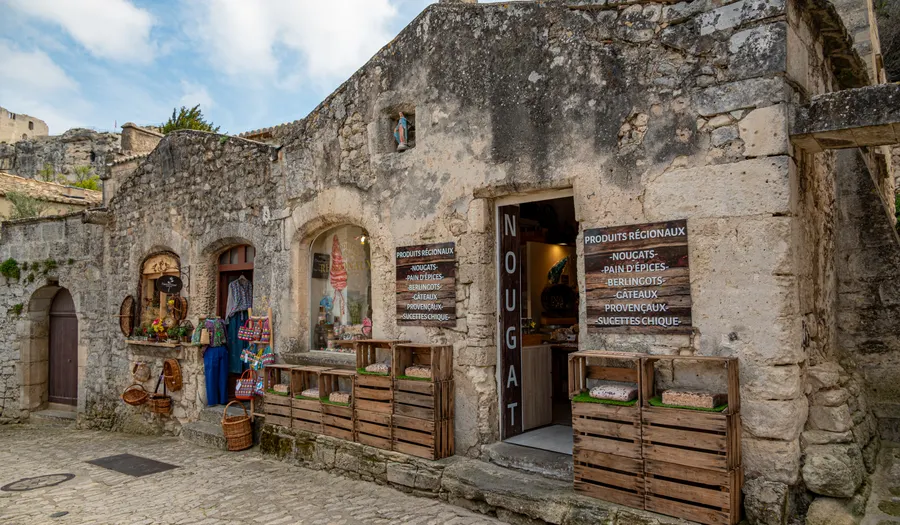
This eagle's nest in the Alpilles, listed among the most beautiful villages in France, looms over a spectacular rocky chaos. The ruined medieval castle offers a panorama stretching all the way to the Camargue. Below, the Carrières de Lumières projects monumental immersive exhibitions onto the walls of a former quarry. Come early in the morning, as the village is overrun from 11am in season. The surrounding olive groves produce a renowned AOP oil.
Valensole Plateau

From mid-June to mid-July, the Valensole plateau becomes the greatest show in Provence, with kilometres of lavender rows as far as the eye can see. The fields around the D6 road and the village of Valensole are the most photogenic. Sunrise and sunset bring the most beautiful light and the mildest temperatures. Respect the crops and pick nothing. Combine with the nearby Verdon Gorge.
Arles

Arles combines two thousand years of history with a unique artistic energy. The Roman arena, the ancient theatre and the cryptoporticus are well worth the detour, as are the places Van Gogh painted, from the café on the Place du Forum to the Espace Van Gogh. The Luma foundation, with its Frank Gehry tower, has brought the city into the 21st century. On Saturday mornings, the market on the Boulevard des Lices is one of the largest in Provence.
How many days, and which itinerary?
Allow 5 to 7 days to savour the Luberon, Alpilles and Avignon triangle without rushing.
🗺️ Day-by-day itinerary · 📓 Free printable Provence guide (PDF) · 🌍 All of France
Luberon essentials (4 days)
Base yourself in Gordes or Bonnieux. Day 1 Gordes and Sénanque, day 2 Roussillon and the Ochre Trail, day 3 Lourmarin and Bonnieux, day 4 the L'Isle-sur-la-Sorgue market and Fontaine-de-Vaucluse.
Classic Provence (7 days)
Three days in the Luberon, then two days between Avignon and the Pont du Gard, and two days in the Alpilles with Les Baux, Saint-Rémy and Arles. The best distillation of the region.
Lavender and Verdon grand tour (10 days)
The 7-day circuit extended with the Valensole plateau in lavender season, the Verdon Gorge and the Lac de Sainte-Croix. Ideal in late June to combine villages and fields in bloom.
Getting there and getting around
A car is essential, as the Luberon villages are poorly served by public transport.
Hire a car as soon as you arrive at Avignon TGV station; allow €40 to €60 a day in season.
Distances are short, rarely more than 30 minutes between two major sites.
An e-bike is a great option around L'Isle-sur-la-Sorgue and on the Calavon cycle route.
Where to stay in Provence?
Charming B&Bs in the Luberon villages, €90 to €150 a night with breakfast.
Provençal mas farmhouses with pools between Gordes and Bonnieux, €150 to €300 a night in summer.
Hotels inside Avignon's walls, convenient without a car, €80 to €140 a night.
Family campsites near Apt and Roussillon, pitches from €25 and mobile homes from €70 a night.
Our places to stay, stop by stop, at three budgets →
What to eat in Provence?
Tapenade, aubergine caviar and petits farcis (stuffed vegetables) as starters, everywhere and always.
Alpilles lamb and Ventoux truffles in winter at the finer restaurants.
The markets of L'Isle-sur-la-Sorgue (Sunday), Apt (Saturday) and Coustellet (Sunday) to stock up on local produce.
Lunch menu in a village bistro around €20 to €25, fine dining in Lourmarin or Gordes from €60.
Entry requirements
Schengen area: an ID card or passport for EU citizens, 90 days visa-free for UK, US, Canadian and Australian passports.
Rules change: check your own government's travel advice before you go.
Cities and regions to discover
 City
City🇫🇷 Marseille
 Region
🇫🇷 Aix-en-Provence
 City
City🇫🇷 Avignon
 Region
🇫🇷 The Camargue
 Region
🇫🇷 The Verdon Gorge
 Region
🇫🇷 The Luberon
 Region
🇫🇷 Drôme Provençale
Frequently asked questions about Provence
When is the best time to visit Provence?
May, June and September offer the best balance between gentle warmth and reasonable crowds. For lavender in bloom, aim for mid-June to mid-July on the Valensole plateau.
What daily budget should I plan for?
Allow €90 to €160 a day per person for a comfortable trip, including charming accommodation, restaurants and a hire car. Camping and picnicking, €70 is enough.
How do I get around?
A car is all but essential to link the villages of the Luberon and the Alpilles. Pick one up at Avignon TGV station; distances are short and the roads superb.
How many days do I need?
5 to 7 days let you cover the Luberon, Avignon and the Alpilles at a relaxed pace. A long weekend is enough for a foretaste focused on the Luberon.
When can you see the lavender fields?
Flowering runs from mid-June to late July depending on altitude, peaking in early July at Valensole. Harvesting often begins around 14 July, so don't leave it too late.
Similar destinations
 Region
🇫🇷 The Loire Valley
 Country
🇮🇹 Italy
 Region
🇮🇹 The Amalfi Coast
 City
City🇮🇹 Amalfi and Ravello
 Region
🇮🇹 Puglia
 Region
🇮🇹 The Italian Lakes
 City
City🇫🇷 Colmar
 City
City🇬🇷 Corfu
 Region
🇭🇷 Istria
 City
City