When to go to Turin?
→ The detailed month-by-month page, with real weather records
Best time: April to June and September to October
At a glance
Why go to Turin?
Turin has been a capital twice: of the Duchy and then the Kingdom of Savoy for three centuries, and of unified Italy from 1861 to 1865. That double role gave it something no other Italian city has to the same degree: a coherent urban plan. The streets still follow the grid of the Roman castrum, the squares are lined with identical façades and eighteen kilometres of continuous arcades allowed the court to move about sheltered from the rain. You are walking through a political project drawn with a ruler here, not a medieval tangle.
The second story is industrial and much harsher. Fiat was born here in 1899, the Lingotto factory with its test track on the roof opened in 1923, the Mirafiori plant would employ up to sixty thousand people, and hundreds of thousands of families from southern Italy came north to work on the assembly lines in the 1950s and 1960s. When that economy collapsed, the city was left with gigantic derelict sites and mass unemployment. Its reinvention, begun in the 1990s and accelerated by the 2006 Winter Olympics, consisted of turning those shells into museums, universities and concert halls: the Lingotto now houses an art gallery on its roof, next to the preserved test track.
The third point is strategic for the traveller. Turin is still largely overlooked by visitors, who rush on to Milan, Florence or the lakes, and in very concrete terms that means cheaper hotels, restaurants you can walk into without booking and major museums without queues, the Egyptian Museum being the only exception. The city has no single sight to tick off; it works through accumulation: a cinema museum in a 167-metre tower, a Juvarra basilica on a hill, one of the largest open-air markets in Europe and a century-old coffee ritual.
Map of Turin: what is where?
The map shows the 6 places covered in this guide, to picture the distances and plan your route.
- Egyptian Museum
- Mole Antonelliana
- Royal Palace and Piazza Castello
- Porta Palazzo
- Valentino Park
- Basilica of Superga
How much does a trip to Turin cost?
Turin is markedly cheaper than Milan, Venice or Florence, for comparable heritage, and that is probably its best argument. The gap shows mostly on hotels and on dinner, where the bill stays within the standards of a provincial Italian city.
| Style | Per day | What it covers |
|---|---|---|
| Small budget | €55-90/day | Hostel or B&B, set lunch menu and aperitivo instead of dinner, walking and a day ticket, markets and state museums free on the first Sunday of the month |
| Comfort | €120-190/day | Central 3-star hotel, Torino+Piemonte Card, two restaurant meals, an excursion to Venaria or Superga |
| Generous | €320+/day | Boutique hotel under the arcades, Michelin-starred tables, private tours and a day in the Langhe with a driver |
Bank cards are accepted almost everywhere, even for a €1.20 coffee, but keep a few notes for the markets and small neighbourhood bars. The price depends on where you drink: a coffee taken standing at the counter costs two to three times less than the same one served at a table, and many restaurants add a coperto of €2 to €3 per person. Tipping is not expected; leave your small change if the service was good.
Is Turin safe?
Turin is a safe city by European standards, but it requires a little more attention than its quiet reputation suggests. The real problems are pickpockets, concentrated on metro line 1 at rush hour, around Porta Nuova station and above all in the crowds at the Porta Palazzo market, where you carry your bag in front of you and keep your phone in an inside pocket. The Aurora district, just north of Porta Palazzo, and the immediate surroundings of the station change atmosphere markedly after 22:00: nothing dramatic, but nothing either that justifies lingering there on foot at night. Thefts from parked cars are common, so never leave luggage visible, even in a paid car park. Two less discussed points are worth knowing: the city empties in August, with many restaurants and shops closed for two to three weeks, which leaves the centre strangely deserted in the evening; and the banks of the Po by the Murazzi, the historic nightlife district, are poorly lit and quiet on weekdays, so it is better to go with company. Classic tourist scams, on the other hand, are almost non-existent, as the city sees few tourists.
What to see and do in Turin
- Egyptian Museum
- Mole Antonelliana and the National Museum of Cinema
- Royal Museums and Royal Palace
- Historic cafés and bicerin
- Quadrilatero Romano and Porta Palazzo
- Valentino Park and Borgo Medievale
- Basilica of Superga
- Reggia di Venaria Reale
The Egyptian Museum
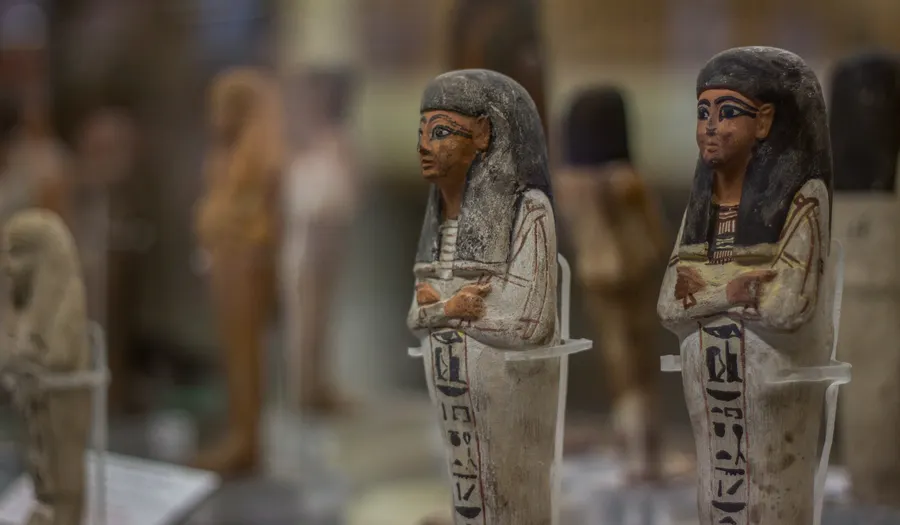
Founded in 1824 when Charles Felix of Savoy bought the collection of the consul Drovetti, it is the oldest museum devoted entirely to ancient Egypt and the most important in the world after the one in Cairo. Thirty-two thousand objects are displayed over four levels, reorganised in 2015 into a clear chronological route and complemented by an extension opened for the bicentenary in 2024. The centrepiece is the tomb of the architect Kha and his wife Merit, discovered intact at Deir el-Medina in 1906 with its complete furniture, clothing and food. The gallery of sarcophagi and the hall of monumental statues, staged with a play of mirrors, produce an effect few museums achieve. Tickets cost €18, are sold exclusively online with a time slot, and the museum closes at 14:00 on Mondays.
Piazza Castello and the Royal Museums
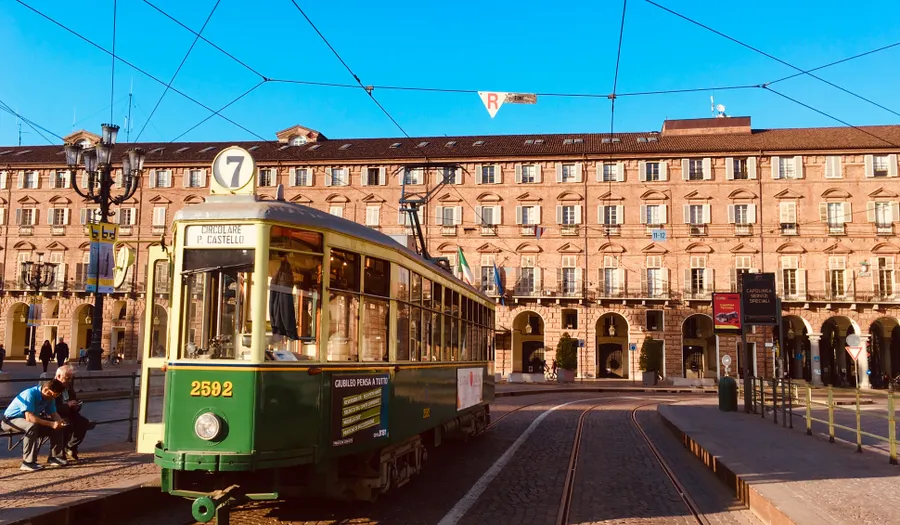
Turin's central square brings together in a single space the Palazzo Madama, whose Juvarra façade hides a medieval castle and a Roman gate, and the entrance to the Royal Palace of the House of Savoy. The Royal Museums group the palace, the Royal Armoury, the Galleria Sabauda, the Museum of Antiquities and the gardens under a single €15 ticket. The Armoury is the real surprise of the lot: a hundred and ten metres of gallery lined with tournament armour, sabres and horse harnesses in a setting untouched since the 19th century. The Chapel of the Holy Shroud, ravaged by fire in 1997 and reopened in 2018 after twenty years of restoration, can be visited from the palace. The shroud itself is not on display: it lies folded in a reliquary in the neighbouring cathedral and is shown only at rare expositions.
The Mole Antonelliana and the cinema
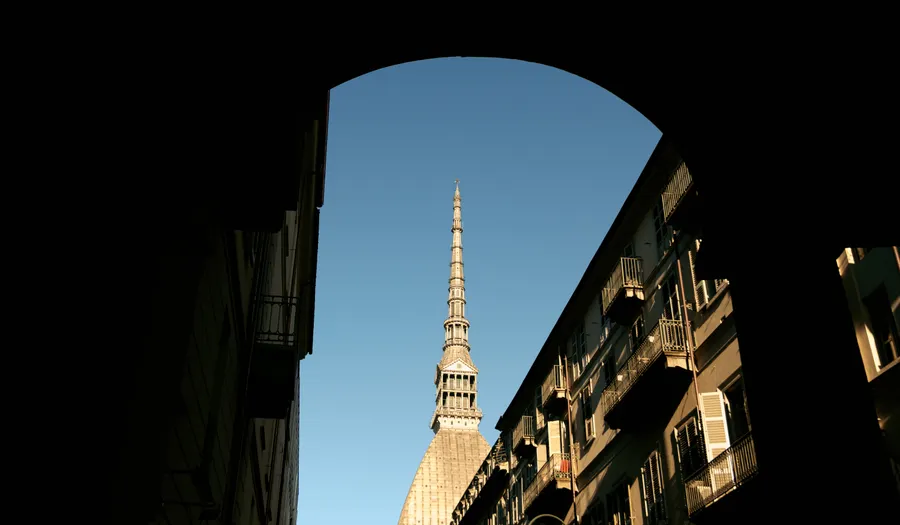
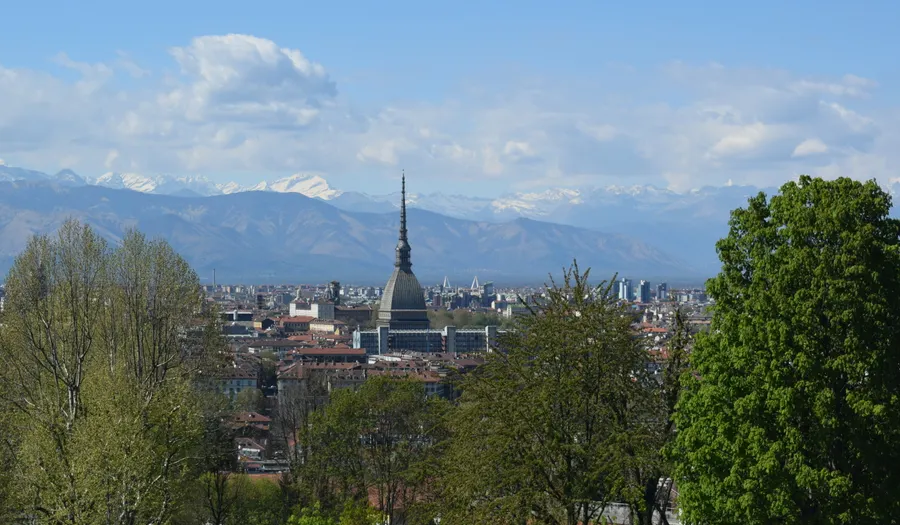
Begun in 1863 as a synagogue and completed as a municipal building after decades of architectural one-upmanship, the Mole rises to 167 metres and appears on the Italian two-cent coin. Since 2000 it has housed the National Museum of Cinema, whose design by François Confino unfolds a spiral ramp around the empty central space of the dome. You pass magic lanterns, pre-cinema devices, reconstructed sets and a central nave fitted with red loungers where you watch film clips lying down. A panoramic lift rises through the glass dome and emerges 85 metres above the city, with the line of the Alps as a backdrop. The museum costs €18, the lift €9, the combined ticket €23, and the whole site closes on Tuesdays.
The historic cafés and the bicerin
Bicerin is served in a small glass in which espresso, hot chocolate and milk cream stay in three distinct layers that you must on no account stir. The recipe was born in the 18th century at the Al Bicerin café, a tiny place facing the Consolata sanctuary, where Cavour came to drink it, and which closes on Wednesdays. Around it, a dozen 19th-century cafés survive with their wood panelling, mirrors and painted ceilings: Baratti & Milano under the Galleria Subalpina, Caffè Torino and Caffè San Carlo on Piazza San Carlo, and Mulassano with its four-table room near Piazza Castello. Allow €6 to €7.50 for a bicerin seated, more on Piazza San Carlo. It is the only place in the city where the price of a drink is justified by the decor rather than by what is in the glass.
The Quadrilatero and Porta Palazzo
The Quadrilatero preserves the grid layout of the Roman castrum, with its narrow streets, trattorias, wine bars and the Piazza della Consolata for a breather. On its northern edge, Porta Palazzo claims the title of Europe's largest open-air market, with nearly a thousand stalls spread across covered halls, a fish hall, a clothes market and a producers' section. It is also Turin's most mixed district, where Piedmontese, Moroccans, Romanians, Chinese and Nigerians cross paths, and where you eat for a third of the price of the Baroque centre. On Saturdays, the Balôn flea market takes over in the streets of Borgo Dora, with the antique dealers' Gran Balôn on the second Sunday of the month. The market runs Monday to Friday mornings and into the early afternoon on Saturdays; there is nothing to see on Sundays.
Superga, the Valentino and the hills

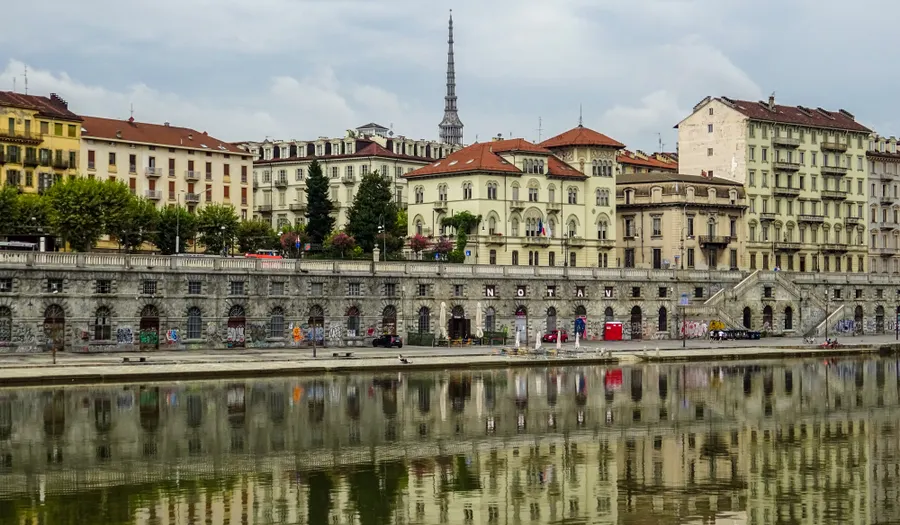
The Po separates the flat city from its hills, and it is on that side that Turin becomes photogenic. The Valentino park, Italy's first public park, opened in 1856, runs along the river with its Savoyard castle and the Borgo Medievale, a fake village built entirely for the 1884 Exhibition as a faithful copy of 15th-century Piedmontese architecture. Opposite, the Gran Madre church and the Monte dei Cappuccini offer the best free bird's-eye view of the city and the Alps. Higher up, at 670 metres, the Basilica of Superga, designed by Juvarra in 1731, holds the royal tombs of the House of Savoy and the memorial to 4 May 1949, when the plane bringing home the entire Grande Torino team crashed into its rear wall. You go up by a rack railway opened in 1884, which climbs from Sassi station in eighteen minutes and does not run on Wednesdays.
How many days, and which itinerary?
Two days are enough for the Egyptian Museum, the Mole and the Baroque centre; four days let you add Superga, Venaria, the Valentino and the markets without churning through museums one after another.
🗺️ Day-by-day itinerary · 📓 Free printable Turin guide (PDF) · 🌍 All of Italy
The weekend (2 days)
The Egyptian Museum at opening time on the first morning, then Piazza Castello, the Royal Museums and an aperitivo in San Salvario; the next day, the Quadrilatero and Porta Palazzo in the morning, the Mole Antonelliana and its panoramic lift in the afternoon. Compact, entirely on foot, with just one booking to make.
All of Turin (4 days)
The two-day base, plus a day for the Reggia di Venaria and its gardens, and a last one for the Superga rack railway, the Valentino park and the Monte dei Cappuccini at sunset. This is the format in which the Torino+Piemonte Card pays for itself.
Turin and Piedmont (6 days)
Three days in the city, then the Sacra di San Michele an hour away, the Langhe around Alba for wine and truffles in autumn, and Ivrea or Lake Orta. Trains serve Alba and Asti directly from Porta Nuova, though a car is still more practical in the hills.
Getting there and getting around
The centre can be covered entirely on foot beneath eighteen kilometres of arcades, which means you can get from Porta Nuova to Piazza Castello without opening an umbrella.
GTT runs the automatic metro, trams and buses: the City ticket, valid for 100 minutes, costs €2 on paper and €1.90 in digital form, and the day ticket €4.50, or €3.70 on the app.
The 48-hour Torino+Piemonte Card at €39.90 covers entry to the Egyptian Museum, the Mole, the Royal Museums and Venaria, but it does not include city transport, which is paid separately.
The direct Paris-Turin TGV takes 5h39 with three return services a day. Note that works in the Mont Cenis tunnel cancel all direct trains from 11 September to 9 October 2026.
Where to stay in Turin?
A 3- or 4-star hotel around Porta Nuova and Via Roma: €90 to €170 a night, with the whole centre within walking distance.
A flat or boutique hotel in the Quadrilatero: €120 to €250, an old-world setting and restaurants on your doorstep, but noise at weekends.
B&Bs and rentals in San Salvario, behind the station: €60 to €120, this is the aperitivo and bar district, very lively and sometimes too much so.
Youth hostels and dorm beds: €30 to €55. Avoid staying just north of Porta Palazzo, in the Aurora area, if you plan to walk home late.
Our places to stay, stop by stop, at three budgets →
What to eat in Turin?
The Piedmontese aperitivo is not a cocktail with three crisps: between 18:30 and 21:00, €8 to €12 a glass gets you access to a buffet that often replaces dinner. Vermouth, invented in Turin in 1786, is its historic base.
Agnolotti del plin, tiny hand-pinched ravioli, vitello tonnato and tajarin made with lots of egg yolks are the three plates to look for in a trattoria, at €10 to €16.
Bagna cauda, a hot garlic and anchovy sauce into which you dip raw and cooked vegetables, is only served from October to March and is shared around a single earthenware pot.
Gianduja was born here from the Continental Blockade, when a shortage of cocoa pushed chocolatiers to cut the paste with hazelnuts from the Langhe: gianduiotti are sold by weight at Guido Gobino or Peyrano, at around €60 to €90 a kilo.
Entry requirements
Schengen area: an ID card or passport for EU citizens, 90 days visa-free for UK, US, Canadian and Australian passports.
Rules change: check your own government's travel advice before you go.
Frequently asked questions about Turin
Turin or Milan?
The two are nothing alike. Milan is the city of work, fashion and design, more expensive and harder to get into; Turin is more Baroque, slower, cheaper and far easier to visit in a few days. They are an hour apart by train, so you can sleep in Turin and see Milan on a day trip for much less money.
How many days should I plan?
Two full days cover the Egyptian Museum, the Mole and the Baroque centre. Four days give you time to add Venaria, Superga, the Valentino and the markets without turning the stay into a museum marathon, and let you get your money's worth from the Torino+Piemonte Card.
Is the Torino+Piemonte Card worth it?
It costs €39.90 for 48 hours and pays for itself from three major entries. The Egyptian Museum alone costs €18, the Reggia di Venaria €18 and the Royal Museums €15: the maths is quickly done. Note that it does not include city transport, which you need to budget for on top.
Do I need to book the Egyptian Museum?
Yes, it is compulsory. Tickets are sold only online with a time slot, and weekends sell out several days ahead. On Mondays, the museum only opens from 9:00 to 14:00, whereas it closes at 18:30 on other days.
Which closing days should I watch out for?
Contrary to popular belief, not all Turin museums close on Mondays and each has its own day. The National Museum of Cinema in the Mole closes on Tuesdays, the Royal Museums on Wednesdays, the Superga rack railway also on Wednesdays, and the Al Bicerin café on Wednesdays. Check each place before planning your day.
Similar destinations
 Country
🇫🇷 France
 Region
🇫🇷 Normandy
 Region
🇫🇷 Alsace
 Region
🇫🇷 The Loire Valley
 City
City🇫🇷 Paris
 City
City🇫🇷 Lyon
 City
City🇪🇸 Seville
 City
City🇮🇹 Rome
 Region
🇮🇹 Florence and Tuscany
 Region